Heat Exchanger Automated Laser Welding

HEAT EXCHANGER
December 26, 2025
Category Connection: Heat Exchanger
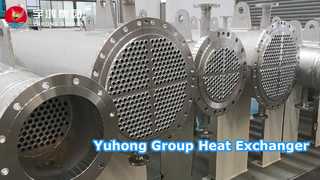
Brief: Discover how this floating head heat exchanger with 316L tubes and SA350 LF2/316L clad tubesheet works in this detailed demonstration. You'll see how the automated laser welding process ensures robust corrosion resistance at critical joints while optimizing cost-efficiency for demanding industrial applications.
Related Product Features:
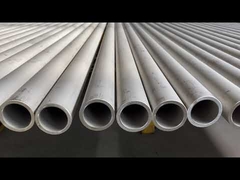
  • Features AISI 316L stainless steel tubes for superior corrosion and chloride pitting resistance.
  • Utilizes an SA350 LF2 carbon steel tubesheet with a roll-bonded 316L cladding layer for targeted corrosion protection.
  • Floating head design allows independent thermal expansion and contraction, eliminating stress.
  • Enables easy removal of the tube bundle for inspection, cleaning, and maintenance.
  • Optimizes total project cost by applying corrosion-resistant materials only where needed.
  • Suitable for services with significant differences in tube-side and shell-side fluid corrosiveness.
  • Shell and baffles typically use cost-effective carbon steel like SA516 Gr. 70.
  • Ideal for chemical processing, offshore platforms, and closed-loop cooling systems.
FAQs:
  • What is the main advantage of using a clad tubesheet in this heat exchanger?
    The clad tubesheet provides targeted corrosion resistance at critical tube-to-tubesheet joints and the tube-side face, where corrosion is most prevalent, while using a cost-effective carbon steel base for structural strength, optimizing overall project costs.
  • How does the floating head design benefit maintenance?
    The floating head design allows the entire tube bundle to be easily removed, facilitating thorough inspection, mechanical cleaning, and maintenance of the 316L tubes and tubesheet surfaces without major disassembly.
  • In which applications is this heat exchanger most suitable?
    This exchanger is ideal for processes with significant differences in fluid corrosiveness between tube-side and shell-side, such as in chemical industry heaters/coolers, offshore platform cooling systems, and other scenarios requiring cost-effective corrosion management.