Yuhong Holding Group Co.,LTD
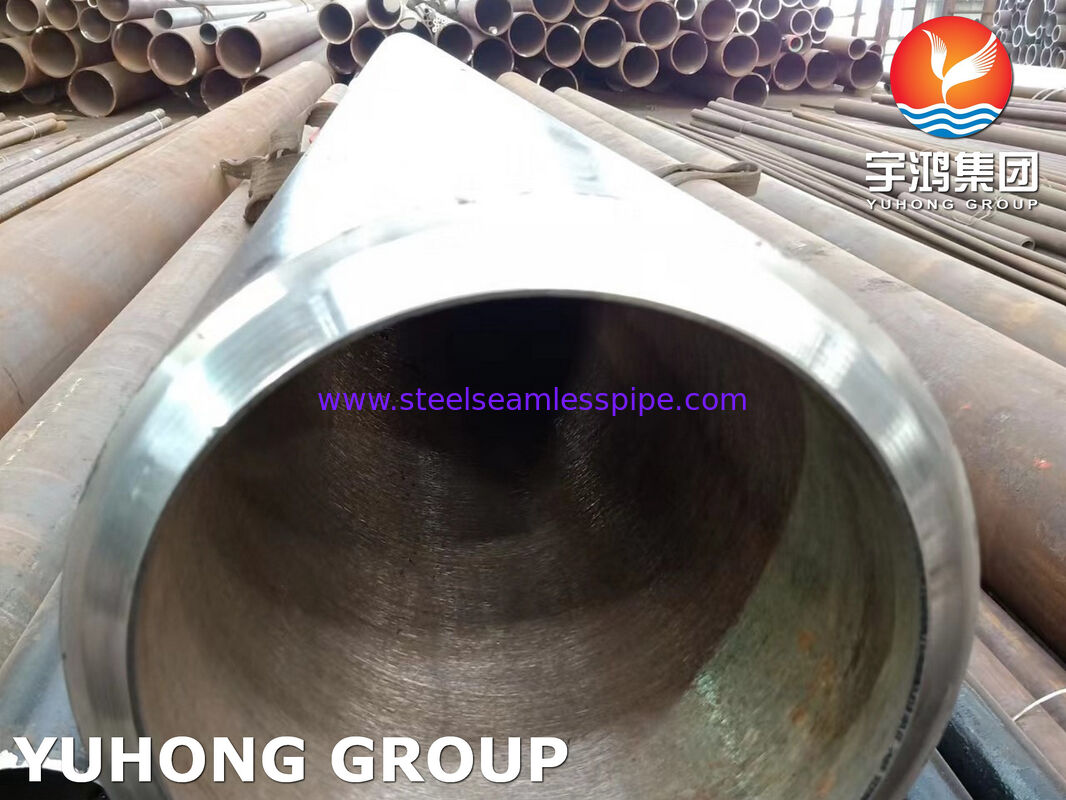 |
| Place of Origin: | CHINA |
| Brand Name: | YUHONG |
| Certification: | ISO9001-2008 |
| Model Number: | P91 |
| Minimum Order Quantity: | 500KGS |
|---|---|
| Price: | Negotiation |
| Packaging Details: | Bundle / Ply-wooden Case |
| Delivery Time: | Depends on quantity |
| Payment Terms: | T/T, L/C at sight |
| Supply Ability: | 10000 tons per month |
| Material Grade: | ASTM A335 | Standard: | P91 |
|---|---|---|---|
| NDT: | ET HT UT PT | Packing: | Ply-wooden Case / Iron Case / Bundle |
| Highlight: | ASTM A335 P91 seamless pipe,P91 alloy steel high-temperature pipe,Seamless alloy steel tube |
||
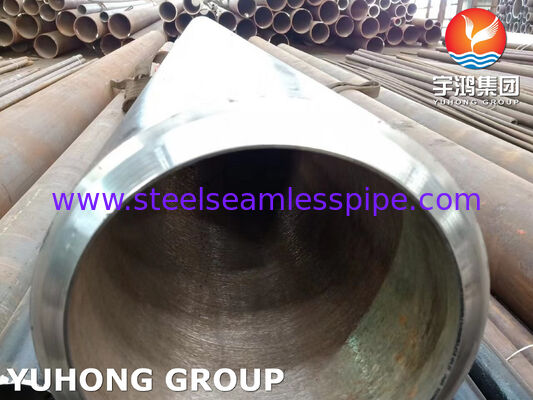
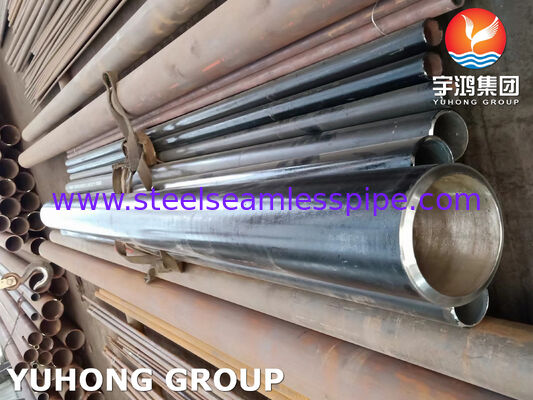
ASTM A335 P91 Alloy Steel Seamless Pipe For High-Temperature Service
Product Overview
ASTM A335 P91 alloy steel seamless pipe is a modified 9Cr-1Mo-V-Nb alloy steel pipe designed for high-temperature service. It contains approximately 9% chromium and 1% molybdenum, with additional alloying elements such as vanadium, niobium, and nitrogen to enhance its high-temperature mechanical properties.
Compared with conventional chromium-molybdenum steels such as P11, P22, and P9, P91 offers higher creep strength and improved resistance to deformation under elevated-temperature conditions. Its performance depends on precise chemical composition control and proper heat treatment.
ASTM A335/A335M covers seamless ferritic alloy-steel pipe intended for high-temperature service. P91 is commonly specified for main steam lines, hot reheat piping, power generation facilities, petrochemical plants, and other high-temperature pressure systems.
Technical Specifications
| Item | Description |
|---|---|
| Product Name | Alloy Steel Seamless Pipe |
| Material Grade | P91 |
| Grade Classification | P91 Type 1 / Type 2, as specified |
| UNS | K90901 in newer editions; K91560 in earlier editions |
| Common Designation | Modified 9Cr-1Mo-V-Nb |
| Material Type | Ferritic Alloy Steel |
| Standard | ASTM A335/A335M |
| ASME Standard | ASME SA335/SA335M, when specified |
| Manufacturing Process | Seamless |
| Manufacturing Method | Hot Finished or Cold Drawn, as applicable |
| Size | As per customer requirements |
| Outer Diameter | As per applicable pipe dimensions |
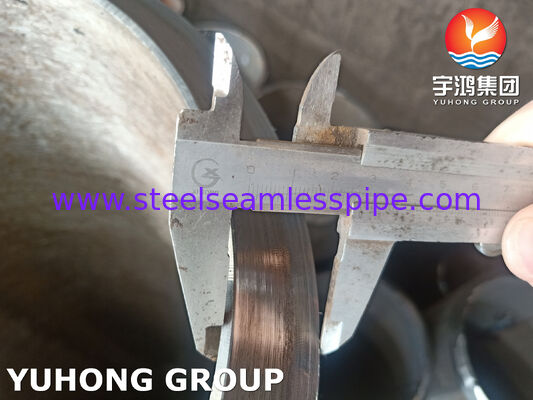
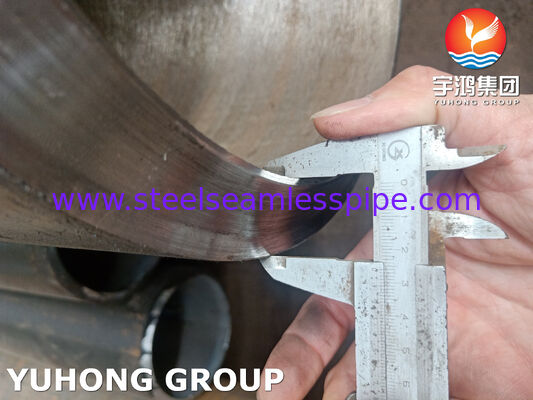
| Wall Thickness | As per schedule or customer requirements |
| Length | Random or specified length |
| Heat Treatment | Normalizing and Tempering, or Quenching and Tempering, as permitted by the specification |
| Surface Condition | As agreed |
| Inspection | Applicable mechanical, dimensional, and nondestructive tests |
| Documentation | Material Test Certificate (MTC) |
Chemical Composition of ASTM A335 P91
P91 contains a controlled combination of chromium, molybdenum, vanadium, niobium, and nitrogen. These elements contribute to its high-temperature strength and microstructural stability.
Typical chemical composition requirements for P91 Type 1 are listed below.
| Element | Composition (%) |
|---|---|
| Carbon (C) | 0.08–0.12 |
| Manganese (Mn) | 0.30–0.60 |
| Silicon (Si) | 0.20–0.50 |
| Phosphorus (P) | ≤ 0.020 |
| Sulfur (S) | ≤ 0.010 |
| Chromium (Cr) | 8.00–9.50 |
| Molybdenum (Mo) | 0.85–1.05 |
| Vanadium (V) | 0.18–0.25 |
| Niobium (Nb) | 0.06–0.10 |
| Nitrogen (N) | 0.030–0.070 |
| Nickel (Ni) | ≤ 0.40 |
| Aluminum (Al) | ≤ 0.02 |
| Titanium (Ti) | ≤ 0.01 |
| Zirconium (Zr) | ≤ 0.01 |
Note: The table represents typical P91 Type 1 requirements. P91 Type 2 has additional chemical composition controls and separate heat/product analysis requirements. Always verify the applicable ASTM edition and purchase specification.
Mechanical Properties
Typical minimum mechanical requirements for ASTM A335 P91 pipe include:
| Property | Requirement |
|---|---|
| Tensile Strength | ≥ 585 MPa |
| Yield Strength (0.2% Offset) | ≥ 415 MPa |
| Elongation (Longitudinal) | ≥ 20% |
| Hardness (HBW) | 190–250 |
| Hardness (HV) | 196–265 |
| Hardness (HRBW / HRC) | 91 HRBW–25 HRC |
Mechanical test requirements and specimen dimensions should be confirmed against the applicable ASTM A335/A335M edition.
Key Characteristics of ASTM A335 P91 Pipe
P91 is designed for elevated-temperature service where resistance to creep deformation is an important material consideration. Its alloy design and controlled heat treatment help maintain mechanical performance during prolonged exposure to high temperatures.
The chromium content contributes to oxidation resistance, while molybdenum supports high-temperature strength. These elements make P91 suitable for selected high-temperature steam and process piping applications.
Vanadium and niobium contribute to precipitation strengthening and microstructural stability. Together with nitrogen, they help develop the mechanical properties associated with modified 9Cr-1Mo steel.
P91 requires carefully controlled normalizing and tempering or an approved quenching and tempering route. Heat treatment is essential to achieving the specified mechanical properties and microstructure.
Heat Treatment Requirements
Heat treatment is a critical part of P91 pipe manufacturing and quality control.
Typical normalizing and tempering temperatures are:
| Process | Temperature |
|---|---|
| Normalizing | 1040–1080°C |
| Tempering | 730–800°C |
Quenching and tempering may also be permitted under the applicable specification.
The actual heat treatment route, holding time, cooling method, and acceptance requirements must comply with the specified ASTM A335/A335M edition.
For P91 piping systems, post-weld heat treatment is also an important consideration. Welding procedures, preheating, interpass temperature, and post-weld heat treatment should be established according to the applicable construction code and qualified welding procedures.
Manufacturing Process
ASTM A335 P91 pipe is manufactured through a seamless production process.
Typical production and quality control stages include:
Alloy steel billet selection and chemical composition verification.
Billet heating and piercing.
Hot rolling or other applicable seamless pipe forming processes.
Normalizing and tempering or other permitted heat treatment.
Surface conditioning and dimensional finishing.
Mechanical testing and hardness inspection.
Applicable nondestructive examination and hydrostatic testing.
Final inspection, marking, and material documentation.
Heat treatment records and material traceability are particularly important for P91 products.
Applications of ASTM A335 P91 Alloy Steel Pipe
Power Generation: Main steam and hot reheat piping in thermal power plants.
Boiler Systems: Selected high-temperature pressure piping systems.
Petrochemical Processing: High-temperature process piping and equipment.
Oil Refineries: Process lines and systems operating under elevated temperatures.
Industrial Steam Systems: High-temperature steam distribution and pressure systems.
Energy Infrastructure: High-temperature piping in conventional and other industrial energy facilities.
Final material selection should consider operating temperature, pressure, design stress, creep requirements, and applicable construction codes.

Contact Person: Maverick
Tel: +8618747244292
Fax: 0086-574-88017980