Yuhong Holding Group Co.,LTD
 |
| Place of Origin: | China |
| Brand Name: | YUHONG |
| Certification: | ISO9001:2015; ISO14001:2015; ISO45001:2018; PED 2014/68/EU; WPS/PQR/WPQ; ISO 3834 |
| Model Number: | N/A |
| Minimum Order Quantity: | 500kgs |
|---|---|
| Price: | To be discussed |
| Packaging Details: | Plywood case or Iron frame wooden case |
| Delivery Time: | 50-120 days |
| Payment Terms: | L/C,T/T |
| Supply Ability: | 5000 meters/day |
| Product: | HFW Fin Tube | Material: | ASTM A106 Gr.B |
|---|---|---|---|
| Application: | Waste Heat Recovery Systems | Package: | Plywood Case Or Iron Frame Wooden Case |
HFW Finned Tubes for Waste Heat Recovery Systems – ASME SA106 Grade B
1.Product Overview
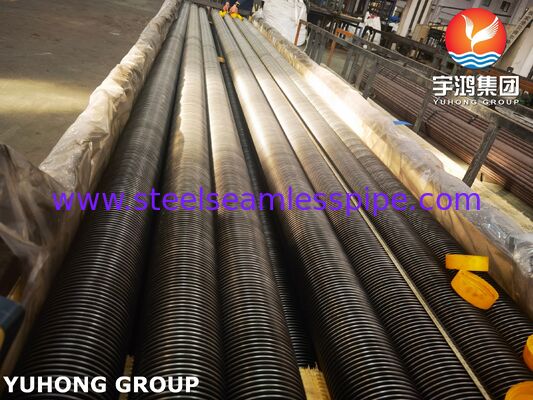
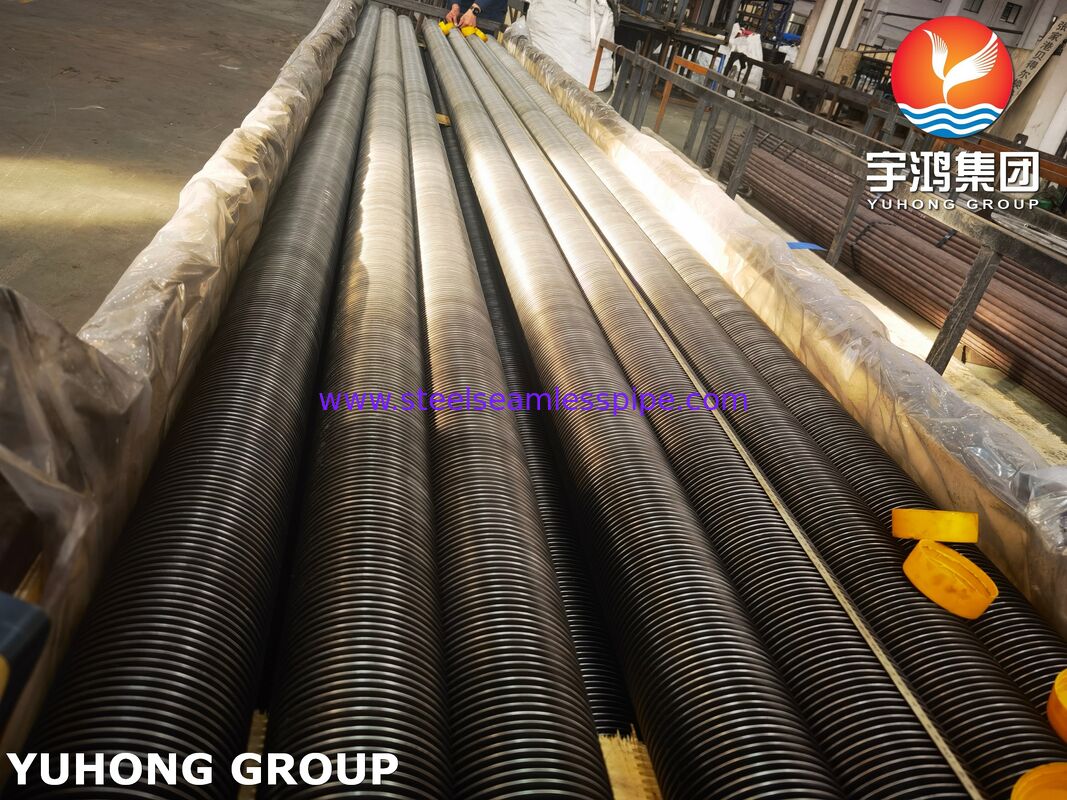
HFW Finned Tubes for Waste Heat Recovery Systems – ASME SA106 Grade BHigh-frequency welded (HFW) finned tubes for waste heat recovery systems, manufactured with ASME SA106 Grade B carbon steel base tubes, are designed to improve heat-transfer efficiency and recover thermal energy from industrial exhaust gases.
These finned tubes are widely used in waste heat recovery boilers, economizers, industrial furnaces, exhaust gas heat exchangers, and other thermal energy recovery equipment.
The product consists of a pressure-bearing carbon steel base tube with continuous helical fins attached by high-frequency resistance welding. The welded fins increase the external heat-transfer surface area, allowing more energy to be transferred from hot flue gas to the working fluid inside the tube.
ASME SA106 Grade B is a seamless carbon steel pipe material commonly selected for high-temperature pressure service. It offers a combination of mechanical strength, weldability, and cost-effectiveness, making it suitable for many industrial heat-recovery applications when operating conditions are within its design limits.
Our HFW finned tubes are manufactured using controlled welding parameters and dimensional tolerances to achieve consistent fin attachment, reliable heat transfer, and stable product quality.
Product specifications
|
Item |
Description |
|---|---|
|
Product name |
HFW Finned Tubes for Waste Heat Recovery |
|
Base tube standard |
ASME SA106 / ASTM A106 |
|
Material grade |
Grade B |
|
Base tube material |
Seamless carbon steel |
|
Fin material |
Carbon steel or specified compatible alloy |
|
Fin type |
Helical solid fin |
|
Fin attachment |
High-frequency resistance welding |
|
Manufacturing process |
High-frequency welded finning |
|
Main applications |
Waste heat recovery boilers, economizers, industrial exhaust heat exchangers |
1. Improved heat-transfer efficiency
The external fins increase the effective heat-transfer surface area, enabling more efficient recovery of thermal energy from industrial exhaust gases.
2. Reliable fin-to-tube welding
High-frequency resistance welding creates a continuous metallurgical bond between the fin strip and base tube when the welding procedure is properly qualified and controlled.
3. Strong carbon steel base tube
ASME SA106 Grade B offers suitable mechanical strength for many industrial pressure and heat-transfer applications.
4. Optimized thermal performance
Fin height, thickness, and pitch can be customized to balance heat-transfer capacity, gas-side pressure drop, and fouling characteristics.
5. Flexible manufacturing dimensions
Different tube diameters, wall thicknesses, fin configurations, and lengths can be manufactured according to engineering drawings.
6. Economical material selection
Carbon steel base tubes and compatible carbon steel fins provide a practical and cost-effective solution for many conventional waste heat recovery systems.
7. Industrial operating reliability
Properly manufactured finned tubes can withstand normal operating conditions and thermal cycling when the material, design, and welding requirements are correctly selected.
|
Application |
Main function |
|---|---|
|
Waste heat recovery boilers |
Recovers energy from high-temperature exhaust gases |
|
Boiler economizers |
Preheats boiler feedwater using flue gas |
|
Industrial furnaces |
Recovers heat from furnace exhaust |
|
Cement plants |
Utilizes waste heat from kiln and cooler exhaust |
|
Steel manufacturing |
Recovers thermal energy from industrial furnace gases |
|
Power generation |
Improves energy utilization in thermal recovery systems |
|
Petrochemical plants |
Recovers heat from selected process exhaust streams |
|
Gas turbine exhaust systems |
Supports exhaust heat recovery equipment |
Application note: The appropriate tube and fin materials should be selected according to flue-gas temperature, gas composition, dew point, corrosion potential, pressure, and thermal cycling conditions.
The following dimensions represent typical commercial manufacturing ranges for HFW finned tubes. They are indicative manufacturing ranges, not dimensional requirements established by ASTM A106.
|
Parameter |
Typical specifications |
|---|---|
|
Base tube outside diameter |
25.4–76.2 mm |
|
Base tube wall thickness |
3.0–10.0 mm |
|
Tube length |
3,000–18,000 mm |
|
Fin height |
10–25 mm |
|
Fin thickness |
0.8–2.0 mm |
|
Fin pitch |
2.5–8.0 mm |
|
Fin type |
Solid helical fin |
|
Base tube material |
ASME SA106 Grade B |
|
Fin material |
Carbon steel / compatible alloy steel |
|
Fin attachment |
High-frequency resistance welding |
|
Fin coverage |
Full-length or partial-length |
|
Surface condition |
As welded, cleaned, or specified coating |
Customized manufacturing options:
Different base tube diameters and wall thicknesses.
Customized fin height, pitch, and thickness.
Carbon steel or alloy steel fin materials.
Un-finned tube ends for welding and installation.
Special tube lengths according to equipment drawings.
Customized surface protection and packaging.
For waste heat recovery applications, fin geometry should be optimized according to flue-gas velocity, dust loading, gas-side pressure drop, heat-transfer requirements, and cleaning accessibility.
Standards clarification: ASME SA106/ASTM A106 specifies seamless carbon steel pipe for high-temperature service. It does not define fin dimensions or HFW fin attachment requirements. These should be covered by separate manufacturing specifications and project drawings.
ASME SA106 Grade B is a carbon steel material with controlled chemical composition to provide the required strength, ductility, and high-temperature service characteristics.
The following table shows the commonly specified chemical composition limits for Grade B.
|
Chemical element |
Composition (wt.%) |
|---|---|
|
Carbon (C) |
≤ 0.30 |
|
Manganese (Mn) |
0.29–1.06 |
|
Phosphorus (P) |
≤ 0.035 |
|
Sulfur (S) |
≤ 0.035 |
|
Silicon (Si) |
≥ 0.10 |
|
Chromium (Cr) |
≤ 0.40 |
|
Copper (Cu) |
≤ 0.40 |
|
Molybdenum (Mo) |
≤ 0.15 |
|
Nickel (Ni) |
≤ 0.40 |
|
Vanadium (V) |
≤ 0.08 |
The combined content of chromium, copper, molybdenum, nickel, and vanadium shall not exceed 1.00%. The standard also permits specified manganese adjustments when carbon content is below its maximum.
Material characteristics:
Carbon contributes to the strength and hardness of the steel.
Manganese improves strength and supports steel manufacturing quality.
Silicon acts as a deoxidizing element and contributes to strength.
Phosphorus and sulfur are controlled to maintain suitable material properties.
The controlled alloy-element limits help maintain the characteristics of a carbon steel pipe grade.
The above chemical composition applies to the SA106 Grade B base tube. The fin strip must be specified and inspected according to its own material grade.
The base tube must comply with the mechanical property requirements specified for ASTM A106 Grade B.
|
Mechanical property |
Requirement |
|---|---|
|
Tensile strength |
≥ 415 MPa |
|
Yield strength |
≥ 240 MPa |
|
Elongation, longitudinal, standard round specimen |
≥ 22% |
|
Elongation, transverse, standard round specimen |
≥ 12% |
Elongation requirements depend on specimen type, orientation, dimensions, and applicable standard provisions. The values above are not universal for every specimen configuration.
Mechanical performance characteristics:
Good tensile strength for conventional industrial pressure piping and heat-recovery equipment.
Suitable ductility for fabrication and installation.
Good weldability when appropriate welding procedures and consumables are selected.
Practical mechanical performance for many carbon steel heat-transfer applications.
These mechanical properties apply to the base pipe, not automatically to the complete HFW finned tube assembly.
Our HFW finned tubes are manufactured through a controlled production process to ensure consistent fin geometry and reliable fin-to-tube welding.
Step 1 – Base tube selection
Seamless ASME SA106 Grade B carbon steel pipes are selected according to the required outside diameter, wall thickness, and length. Material certificates and heat numbers are reviewed before production.
Step 2 – Surface preparation
The outside surface of the base tube is cleaned to remove contaminants, scale, and other substances that may affect the welding process.
Step 3 – Fin strip preparation
Carbon steel or specified alloy steel fin strips are prepared according to the required thickness, height, and profile.
Step 4 – High-frequency welding
The fin strip is helically wound around the base tube and continuously attached using high-frequency resistance welding. Welding current, pressure, speed, and other process parameters are controlled to achieve consistent bonding.
Step 5 – Dimensional adjustment
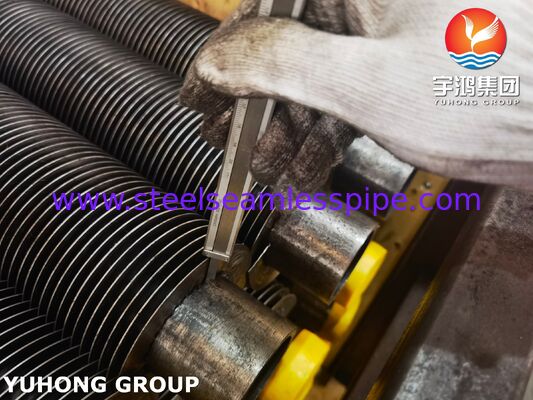
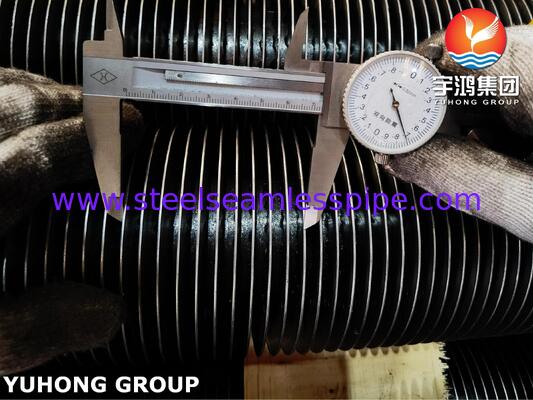
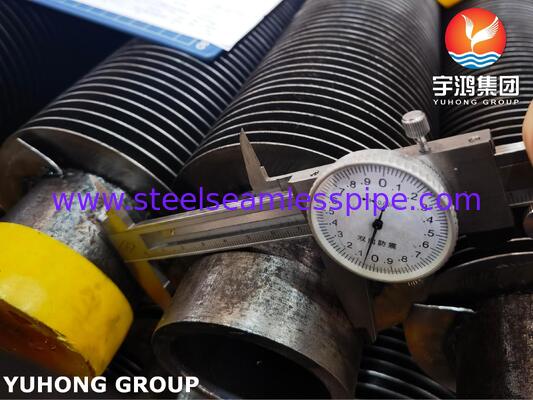
Fin pitch, height, alignment, and tube straightness are checked and adjusted according to the approved manufacturing drawings.
Step 6 – Finishing
Un-finned ends are prepared according to project requirements. The finished tubes are cleaned and treated with specified protective coatings where required.
Step 7 – Final inspection
The completed products undergo dimensional inspection, visual examination, fin-weld integrity checks, and required documentation review before packaging.
Quality inspection is essential for HFW finned tubes used in waste heat recovery equipment, particularly in applications involving elevated temperatures, thermal cycling, and corrosive exhaust gases.
|
Inspection method |
Inspection purpose |
|---|---|
|
Mill Test Certificate review |
Verifies SA106 Grade B material grade and traceability |
|
Chemical composition analysis |
Confirms base tube chemical composition |
|
Tensile testing |
Verifies tensile strength, yield strength, and elongation |
|
Hardness testing |
Checks material hardness where specified |
|
Dimensional inspection |
Measures tube OD, wall thickness, and length |
|
Fin height measurement |
Checks fin height consistency |
|
Fin pitch inspection |
Verifies spacing between adjacent fins |
|
Fin thickness measurement |
Confirms fin strip dimensions |
|
Visual inspection |
Identifies surface defects and visible welding irregularities |
|
Fin weld integrity testing |
Evaluates fin-to-tube bonding quality |
|
Ultrasonic testing (UT) |
Detects relevant base tube discontinuities where specified |
|
Eddy current testing (ET) |
Provides additional examination of suitable tube-wall discontinuities |
|
Hydrostatic testing |
Verifies pressure integrity of the base tube where required |
|
Final inspection |
Confirms dimensions, marking, surface condition, and packaging |
Quality assurance considerations:
Base tubes should comply with the applicable ASME SA106 requirements.
Hydrostatic testing and nondestructive examination should follow the applicable pipe specification and purchase order.
Fin-weld integrity should be evaluated using an agreed inspection method and acceptance criteria.
The welding process should be qualified and monitored to prevent incomplete bonding, excessive heat input, or damage to the base tube.
Material traceability should be maintained throughout manufacturing.
ASTM A106 includes requirements covering chemical analysis, tensile properties, bending, flattening, hydrostatic testing, and nondestructive examination under the applicable provisions.
1. Increased heat recovery capacity
The additional fin surface improves gas-side heat transfer, helping industrial plants recover more energy from exhaust gases.
2. Reliable fin attachment
High-frequency resistance welding creates a continuous metallurgical bond, helping maintain fin stability during normal operating conditions.
3. Suitable for industrial boiler systems
SA106 Grade B provides a practical carbon steel base tube option for many conventional waste heat recovery applications.
4. Improved equipment efficiency
Properly designed finned tube banks can increase thermal recovery and reduce the amount of unused heat discharged through exhaust systems.
5. Flexible engineering design
Different tube sizes and fin geometries can be selected to match the thermal and mechanical requirements of individual projects.
6. Cost-effective heat-transfer solution
The combination of carbon steel base tubes and compatible steel fins offers a competitive material solution for many industrial applications.
7. Custom manufacturing capability
Fin pitch, fin height, tube length, and un-finned sections can be customized to suit boiler manufacturers and EPC contractors.
To protect the finned tubes during transportation and storage, products can be supplied with:
Bundled packaging with suitable supports to prevent bending.
Protective end caps to prevent contamination.
Moisture-resistant wrapping where required.
Wooden cases or export-standard packaging.
Clear identification labels showing material grade, dimensions, quantity, and order number.
Customized packaging according to international shipping requirements.
Material certificates, inspection reports, and other agreed quality documents can be provided with each shipment.
For accurate quotations and technical evaluation, customers should provide the following information:
|
Item |
Required information |
|---|---|
|
Product |
HFW finned tubes for waste heat recovery |
|
Base tube standard |
ASME SA106 / ASTM A106 |
|
Material grade |
Grade B |
|
Base tube OD |
As per drawing |
|
Wall thickness |
As per drawing |
|
Tube length |
As required |
|
Fin material |
Carbon steel / specified alloy |
|
Fin height |
As required |
|
Fin thickness |
As required |
|
Fin pitch |
As required |
|
Fin configuration |
Helical solid fin |
|
Quantity |
As per purchase order |
|
Operating temperature |
Project-specific |
|
Inspection requirements |
As per project specification |
|
Packaging |
Export or customized packaging |
We welcome inquiries from waste heat recovery boiler manufacturers, EPC contractors, power plant engineering companies, industrial furnace manufacturers, and heat-exchanger suppliers worldwide.
Contact Person: Nancy
Tel: +8619965117039
Fax: 0086-574-88017980