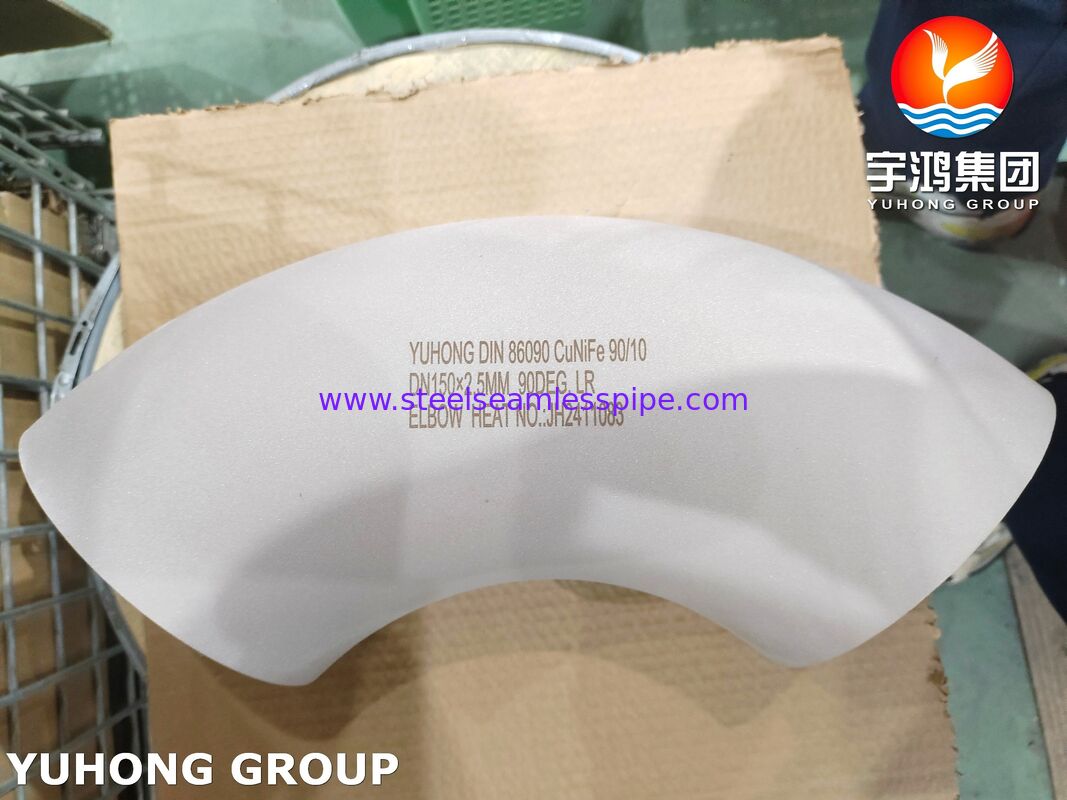
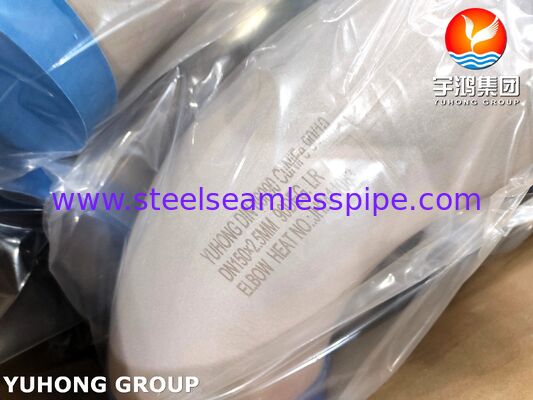
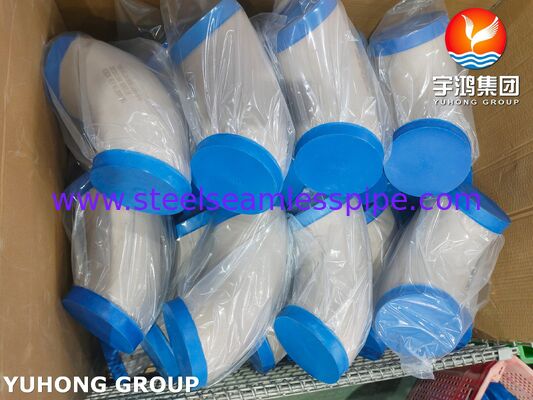
DIN 86090 CuNi 90/10 Elbow C70600 Copper Nickel Pipe Fitting
The DIN 86090 CuNi 90/10 Elbow is a copper-nickel butt weld fitting designed for copper-nickel alloy piping systems. The elbow provides a controlled change in piping direction while maintaining a welded connection suitable for continuous-duty piping installations.
Product Overview
CuNi 90/10 fittings are commonly associated with CuNi10Fe-based copper-nickel alloys, including related designation UNS C70600, which are widely used in marine, seawater and other corrosion-resistant piping systems. The exact material designation and chemical composition should be confirmed against the applicable purchase specification.
Manufactured according to DIN 86090, the fitting can be supplied in different elbow angles, dimensions and wall thicknesses according to project requirements.
Technical Specifications
| Item |
Specification |
| Product Name |
CuNi 90/10 Copper Nickel Elbow |
| Product Type |
Butt Weld Elbow |
| Standard |
DIN 86090 |
| Material |
Copper Nickel Alloy |
| Grade |
CuNi 90/10 / CuNi10Fe-based |
| Related UNS Grade |
C70600* |
| Copper-Nickel System |
Cu-Ni-Fe-Mn |
| Connection Type |
Butt Weld |
| Elbow Angle |
45° / 90° / Customized |
| Manufacturing |
Formed / Seamless or welded construction according to specification |
| Size |
Customized / According to DIN 86090 |
| Wall Thickness |
Matching pipe specification |
| End Preparation |
Butt weld end |
| Surface |
Mill finish / Pickled or customized |
| Heat Treatment |
According to material and production requirements |
| Inspection |
Dimensional, visual and material inspection |
* C70600 should be treated as a related material designation rather than an automatic one-to-one equivalent. The chemical composition should be checked against the actual DIN 86090 material grade before claiming exact equivalence.
DIN 86090 Standard
DIN 86090 is specifically associated with copper-nickel alloy elbows for butt welding into copper-nickel alloy pipelines.
The standard is relevant to applications where the fitting needs to maintain compatibility with copper-nickel piping systems and their welding configuration.
Key considerations include:
- Elbow dimensions
- Outside diameter and wall thickness
- Elbow radius
- Butt-weld end preparation
- Material designation
- Delivery condition
- Dimensional tolerances
For project orders, the fitting dimensions should be specified together with the corresponding pipe size and wall thickness.
CuNi 90/10 Material
CuNi 90/10 copper-nickel alloy is widely selected for piping systems exposed to seawater and marine environments.
Material Characteristics:
- Copper-nickel alloy with approximately 90% copper and 10% nickel
- Good resistance to seawater corrosion
- Good resistance to erosion-corrosion under appropriate flow conditions
- Suitable for marine piping systems
- Good fabrication and welding characteristics
- Compatible with copper-nickel piping systems
- Suitable for long-term service where copper-nickel materials are specified
The addition of iron and manganese in CuNi 90/10 grades contributes to the material's performance in marine service. Exact chemical limits depend on the applicable material specification.
Product Structure
The DIN 86090 elbow is designed with butt-weld ends, allowing the fitting to be directly welded to compatible copper-nickel pipe.
Main Design Features:
- Elbow configuration: 45° or 90° according to requirement
- Connection: Butt weld
- Bend geometry: Controlled radius for piping installation
- End preparation: Suitable for butt welding
- Wall thickness: Selected to correspond with the connected pipe
- Dimensional control: Based on applicable DIN 86090 requirements
This configuration provides a continuous welded piping connection without introducing a flanged joint at the elbow location.
Manufacturing Process
The manufacturing route is selected according to the required size, material condition and production specification.
- Raw Material Selection
Copper-nickel alloy material is selected according to the specified grade and chemical requirements.
- Material Verification
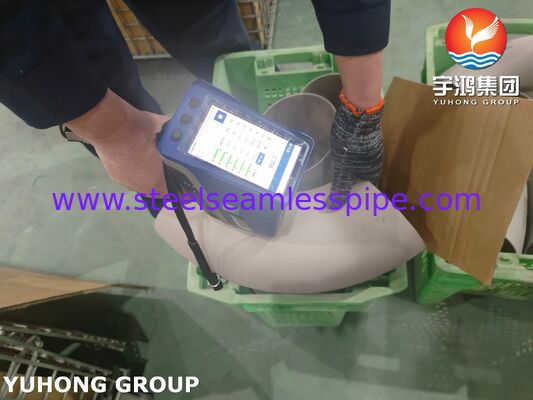
Chemical composition and material identification are checked before forming.
- Elbow Forming
The tubular material is formed into the required elbow geometry.
- End Preparation
Butt-weld ends are prepared to facilitate connection with the mating CuNi pipe.
- Heat Treatment
Heat treatment is performed when required by the material specification and production procedure.
- Dimensional Inspection
Outside diameter, wall thickness, bend angle, radius and end dimensions are checked.
- Surface Inspection
The fitting is visually inspected for surface defects and forming-related irregularities.
- Final Inspection & Marking
Product identification and inspection documentation are completed before packing.
Applications
DIN 86090 CuNi 90/10 elbows are particularly suitable for piping systems where copper-nickel alloys are specified.
Marine & Shipbuilding
- Seawater cooling lines
- Sea chest piping
- Fire-fighting seawater systems
- Ballast piping
- Bilge and drainage systems
- Marine cooling circuits
Offshore & Seawater Systems
- Seawater intake lines
- Cooling water piping
- Offshore platform utility piping
- Desalination-related piping
- Seawater circulation systems
Industrial Piping
- Heat exchanger piping
- Condenser systems
- Cooling water systems
- Corrosion-resistant process piping
- Power plant auxiliary cooling systems
Why Use CuNi 90/10 Elbows?
- Seawater Corrosion Resistance
CuNi 90/10 alloys are widely used in seawater piping because of their resistance to corrosion in properly designed and operated marine environments.
- Good Resistance to Erosion-Corrosion
Copper-nickel alloys can provide useful resistance to erosion-corrosion in flowing seawater when velocity, water chemistry and system design remain within appropriate service conditions.
- Welded Piping Configuration
The butt-weld design allows the elbow to form part of a continuous welded copper-nickel piping system.
- Material Compatibility
Using CuNi fittings with compatible CuNi pipe helps maintain material consistency throughout the piping system.
- Project-Specific Dimensions
Elbow angle, diameter, wall thickness and other dimensional requirements can be supplied according to the piping design and applicable specification.
Inspection & Testing
Inspection requirements can be customized according to the project specification.
| Inspection / Test |
Availability |
| Chemical Composition |
Available |
| PMI |
Available upon request |
| Visual Inspection |
Standard |
| Dimensional Inspection |
Standard |
| Wall Thickness Inspection |
Available |
| Elbow Angle Inspection |
Available |
| Bend Radius Inspection |
Available |
| Surface Inspection |
Standard |
| Welding Inspection |
According to construction |
| NDT |
According to project requirement |
| MTC / Material Certificate |
Available |
| Third-Party Inspection |
Upon request |
Available Product Configurations
| Parameter |
Options |
| Material |
CuNi 90/10 |
| Related Grade |
C70600* |
| Elbow Type |
45° / 90° |
| Connection |
Butt Weld |
| Size |
DIN / Customized |
| Wall Thickness |
Customized |
| Bend Radius |
According to design |
| End Preparation |
Butt Weld |
| Surface Condition |
Mill / Customized |
| Inspection |
Standard / Project Specific |
*Final material equivalency should be confirmed by chemical composition and applicable specification.
Customization Options
The elbow can be manufactured or supplied according to project-specific requirements, including:
- Nominal pipe size
- Outside diameter
- Wall thickness
- Elbow angle
- Bend radius
- End preparation
- Material condition
- Inspection requirements
- Marking requirements
- Certificate requirements
- Packing requirements
Certificates & Documentation
Typical documentation may include:
- Material Test Certificate (MTC)
- EN 10204 3.1 certificate
- Chemical composition report
- Mechanical test report
- PMI report
- Dimensional inspection report
- Visual inspection report
- NDT report when specified
- Third-party inspection report
- Certificate of conformity
- Packing list
Documentation can be prepared according to the purchase order and project requirements.