Yuhong Holding Group Co.,LTD
 |
| Place of Origin: | China |
| Brand Name: | YUHONG |
| Certification: | ISO9001:2015; ISO14001:2015; ISO45001:2018; PED 2014/68/EU; WPS/PQR/WPQ; ISO 3834 |
| Model Number: | N/A |
| Minimum Order Quantity: | 500kgs |
|---|---|
| Price: | To be discussed |
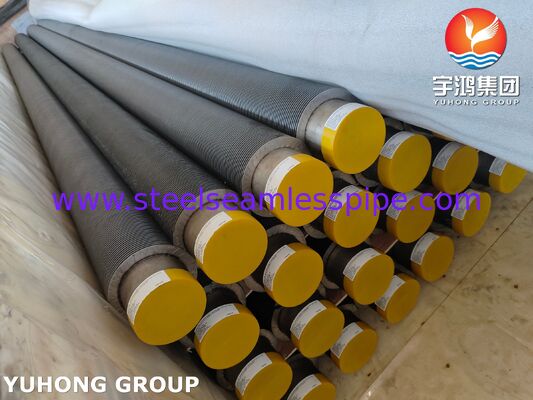
| Packaging Details: | Iron frame wooden case |
| Delivery Time: | 50-120 days |
| Payment Terms: | L/C,T/T |
| Supply Ability: | 5000 meters/day |
| Product: | HFW Fin Tube | Material: | ASTM A378 TP347 |
|---|---|---|---|
| Application: | Power Plants | Package: | Iron Frame Wooden Case |
| Highlight: | TP347H finned tubes for power plants,high-frequency welded fin tubes,power plant finned tubes TP347H |
||
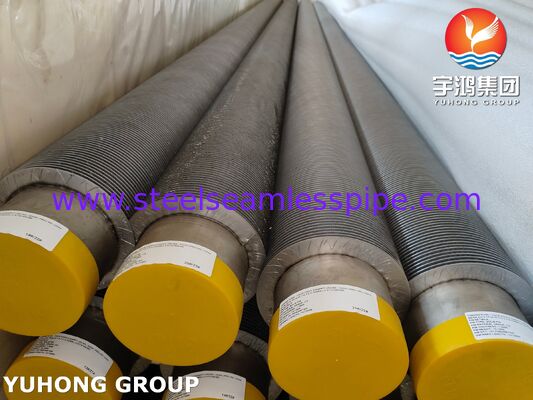
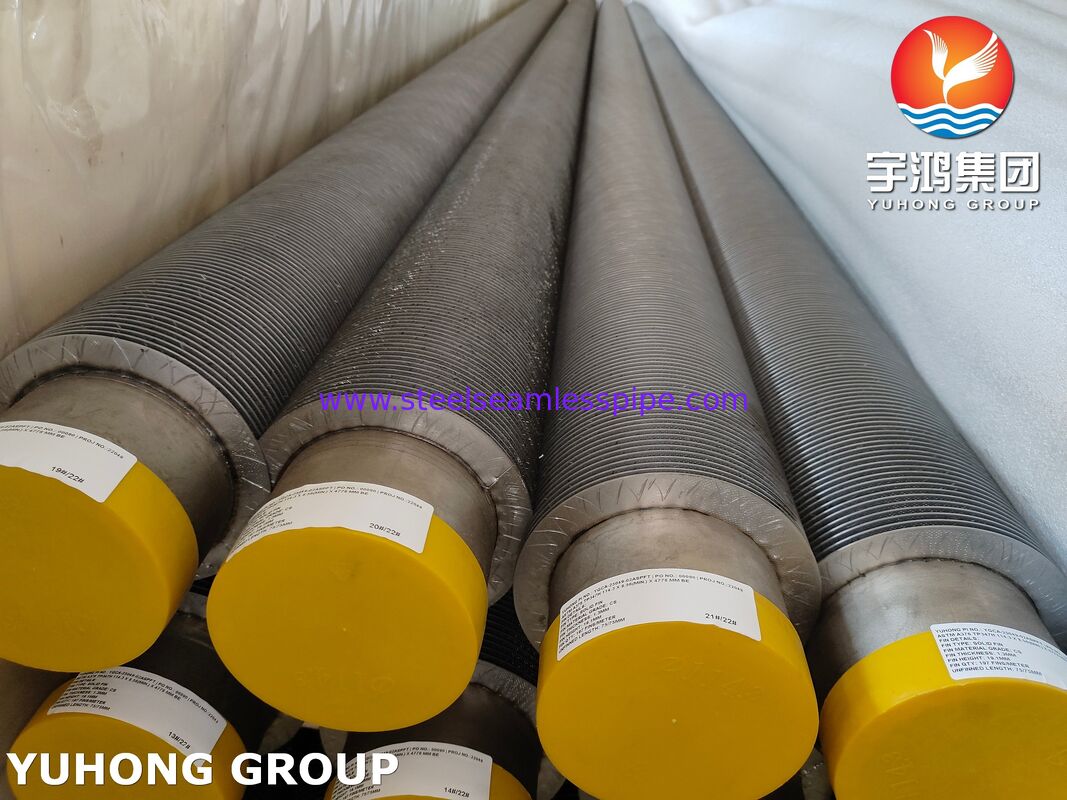
Our high-frequency welded finned tubes for power plants are engineered heat-transfer components designed for high-temperature boiler, heat-recovery, superheater, reheater, economizer, and other thermal-energy applications. Manufactured with TP347H austenitic stainless steel tube material, these finned tubes combine the excellent high-temperature strength and corrosion resistance of stabilized stainless steel with the enhanced heat-transfer surface provided by continuously welded fins.
TP347H is a niobium-stabilized austenitic stainless steel developed for elevated-temperature service. Its stabilized chemistry helps reduce the risk of intergranular corrosion associated with sensitization, while its high chromium and nickel content provides good resistance to oxidation and corrosive environments. TP347H is particularly suitable where tubes are exposed to elevated temperatures for prolonged periods.
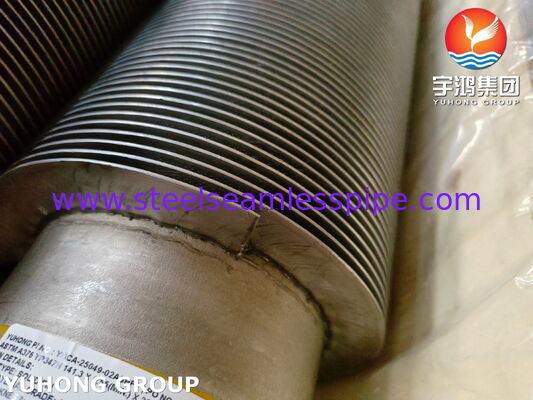
In power-plant heat-transfer equipment, the finned construction substantially increases the external heat-transfer area compared with a plain tube of the same diameter. This allows equipment designers to achieve the required thermal duty with a more compact heating surface, while the high-frequency welding process provides a continuous and mechanically robust connection between the fin and tube.
Technical note: TP347H is commonly specified under ASTM A213 for seamless boiler/superheater/heat-exchanger tubing and ASTM A249 for welded austenitic boiler, superheater, heat-exchanger and condenser tubing. The exact tube standard, fin material, dimensions, and welding requirements should be confirmed against the customer's project specification.
TP347H high-frequency welded finned tubes can be supplied for a variety of power-generation heat-transfer applications, including:
Superheater sections operate at elevated temperatures and require tubing with good oxidation resistance, creep strength, and long-term dimensional stability. TP347H is suitable for selected high-temperature superheater applications.
Reheater tubes experience repeated exposure to high-temperature steam and combustion-gas environments. The combination of TP347H's high-temperature capability and increased finned surface area can provide an effective solution for heat recovery and steam-temperature control.
Finned tubes can increase heat-transfer surface area on the gas side of an economizer, helping recover sensible heat from exhaust gases and improve overall boiler efficiency. Material selection should be based on actual gas temperature, corrosion conditions, dew-point considerations, and design requirements.
High-frequency welded finned tubes can be used in waste heat boilers and heat-recovery equipment where high gas-side heat-transfer efficiency and reliable tube-fin attachment are required.
The technology is applicable to selected heat-recovery sections where increased heat-transfer area is required without proportionally increasing the overall equipment size.
Our high-frequency welded finned tubes are manufactured using controlled tube preparation, fin forming, high-frequency welding, dimensional control, and final inspection.
The typical manufacturing sequence includes:
The high-frequency welding process is particularly valuable for finned tubes because a continuous fin-to-tube connection can provide better thermal conductivity than mechanically attached fins where an air gap may develop between the fin and tube.
Dimensions can be customized according to heat-exchanger design requirements. Typical ranges for high-frequency welded finned tubes include:
| Parameter | Typical Range |
|---|---|
| Tube outside diameter | 12.7–63.5 mm |
| Tube wall thickness | 1.5–6.0 mm |
| Overall tube length | Up to approximately 18 m, subject to equipment and transportation requirements |
| Fin height | 6–25 mm |
| Fin thickness | 0.8–2.5 mm |
| Fin pitch | Approximately 2.0–10.0 mm |
| Finning ratio | Approximately 2–10 times the bare-tube external area |
| Fin configuration | Solid, serrated, or other engineered profiles |
| Fin material | Stainless steel, carbon steel, low-alloy steel, or other specified alloys |
These are typical engineering ranges rather than universal ASTM requirements. Final dimensions should be established according to the heat-transfer calculation, allowable pressure drop, gas velocity, operating temperature, thermal expansion, tube-sheet arrangement, and customer drawings.
For power-plant projects, commonly supplied tube sizes may include approximately 25.4 mm, 31.8 mm, 38.1 mm, 44.5 mm, 50.8 mm, and 63.5 mm outside diameter, subject to project requirements.
TP347H is a stabilized austenitic stainless steel. Typical ASTM composition limits include:
| Element | TP347H Requirement, % |
| Carbon (C) | 0.04–0.10 |
| Manganese (Mn) | 2.00 max. |
| Silicon (Si) | 1.00 max. |
| Phosphorus (P) | 0.045 max. |
| Sulfur (S) | 0.030 max. |
| Chromium (Cr) | 17.0–19.0 |
| Nickel (Ni) | 9.0–13.0 |
| Molybdenum (Mo) | Not specified |
| Niobium (Nb) | 8 × C minimum to 1.10 max. |
| Iron (Fe) | Balance |
The TP347H composition shown above follows the commonly published ASTM requirements for TP347H tubing.
The niobium addition is an important characteristic of TP347H. Niobium stabilizes carbon and helps reduce chromium-carbide-related sensitization during elevated-temperature exposure. This makes TP347H attractive for high-temperature boiler and heat-recovery applications.
Typical minimum room-temperature mechanical requirements for TP347H tubing include:
| Property | Requirement |
| Tensile strength | 515 MPa min. |
| Yield strength | 205 MPa min. |
| Elongation in 50 mm | 35% min. |
| Hardness | 192 HBW / 200 HV max.; 90 HRB max. |
These values correspond to commonly specified TP347H tubing requirements.
Actual mechanical properties of the finished finned tube depend on the tube manufacturing condition, heat treatment, cold working, welding process, dimensions, and applicable product standard.
Fin-to-tube weld quality is critical to the performance of a finned heat-transfer surface. Our manufacturing controls focus on:
For high-temperature power-plant service, the fin material and welding parameters should be selected with consideration of the difference in thermal expansion between the tube and fin.
Depending on the purchase specification, application, and applicable tube standard, inspection may include:
Positive material identification or laboratory chemical analysis can be performed to verify the TP347H alloy composition. PMI is particularly useful for confirming chromium, nickel, and niobium-containing stainless-steel grades.
Tensile testing verifies ultimate tensile strength, yield strength, and elongation. ASTM requirements for TP347H tubing establish minimum room-temperature mechanical properties.
Rockwell, Brinell, or Vickers hardness testing can be performed according to the applicable specification.
Hydrostatic pressure testing may be applied to the tube in accordance with the applicable tubing specification and customer requirements.
Nondestructive electric testing can be used to detect discontinuities that could affect tube integrity. ASTM A213, for example, requires each tube to undergo either a nondestructive electric test or hydrostatic test.
Flattening testing evaluates tube ductility and resistance to deformation and is part of the standard testing requirements for applicable austenitic tubing.
Where required by the applicable tube specification, a flaring test evaluates the tube's ability to withstand controlled expansion without cracking.
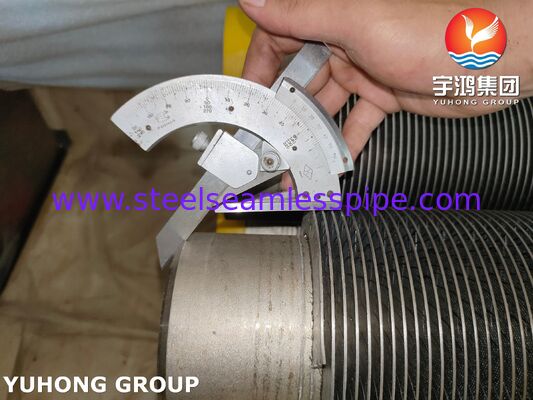
Finished finned tubes are checked for:
Depending on the project specification, fin-to-tube weld quality may be evaluated by visual examination, dimensional inspection, destructive sampling, metallographic examination, or mechanical bond-strength testing.
Additional NDT methods can be provided when required by the purchaser or engineering specification.
The exact standard combination should be confirmed before procurement. Common standards relevant to TP347H tubing include:
ASTM confirms that A213 covers seamless ferritic and austenitic alloy-steel boiler, superheater, and heat-exchanger tubes, while A249 covers welded austenitic tubes and specifically identifies TP347H as a high-temperature grade.
Power-plant heat-transfer equipment must operate reliably under high temperatures, thermal cycling, oxidation, corrosion, vibration, and long operating periods. TP347H offers a combination of austenitic stainless-steel corrosion resistance, high-temperature strength, and niobium stabilization.
When combined with high-frequency welded fins, the tube provides a significantly expanded heat-transfer surface while maintaining a continuous connection between the fin and tube. This makes the construction particularly useful when designers need high gas-side heat-transfer performance within a controlled equipment envelope.
Proper material selection remains essential. Operating temperature, steam pressure, flue-gas chemistry, ash characteristics, sulfur/chloride exposure, thermal cycling, fin material, and design life should all be considered before selecting TP347H.
We can manufacture high-frequency welded finned tubes according to customer drawings and heat-transfer requirements, including:
High-frequency welded TP347H finned tubes are high-performance heat-transfer components developed for demanding power-generation and high-temperature heat-recovery applications. Their combination of TP347H's elevated-temperature properties and continuously welded fin construction provides an effective solution for increasing heat-transfer area, improving thermal efficiency, and optimizing heat-exchanger size.
For power plants requiring reliable heat-transfer surfaces in superheaters, reheaters, economizers, waste-heat recovery systems, and other high-temperature equipment, TP347H high-frequency welded finned tubes can be engineered to meet specific thermal, mechanical, dimensional, and inspection requirements.
Contact Person: Vantin
Tel: 19537363734
Fax: 0086-574-88017980