Yuhong Holding Group Co.,LTD
 |
| Place of Origin: | CHINA |
| Brand Name: | YUHONG |
| Certification: | ABS, GL, BV, GOST, TS, CCS, CNNC, ISO |
| Model Number: | TP316L |
| Minimum Order Quantity: | 500kgs |
|---|---|
| Price: | To be discussed |
| Packaging Details: | Plywood case |
| Delivery Time: | 40-120 days |
| Payment Terms: | T/T,L/C |
| Supply Ability: | 5000 meters/day |
| Material Grade: | ASTM A312 TP316L | Manufacturing Route: | Seamless Or Welded |
|---|---|---|---|
| Nominal Pipe Size: | NPS 1/8 To NPS 30 | Wall Thickness: | Schedule 5S, 10S, 40S, 80S |
| Tensile Strength: | 515 MPa Min. | Yield Strength: | 205 MPa Min. |
| Highlight: | Waste Heat Recovery Stainless Steel Seamless Pipe,Corrosion Resistant TP316L Stainless Steel Pipe,TP316L ASTM A312 Stainless Steel Pipe |
||
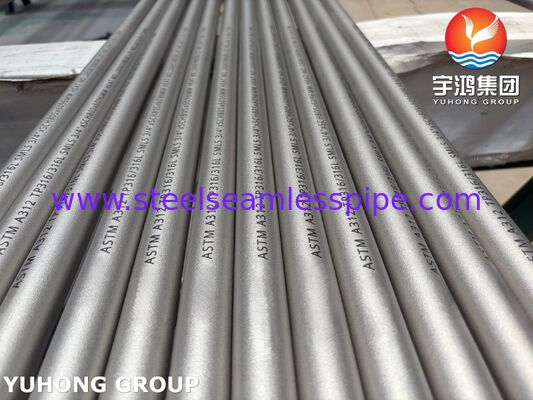
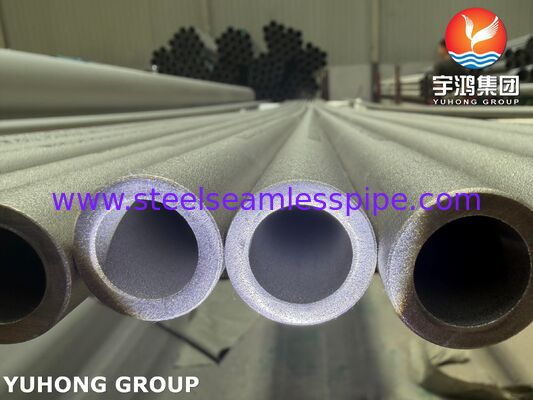
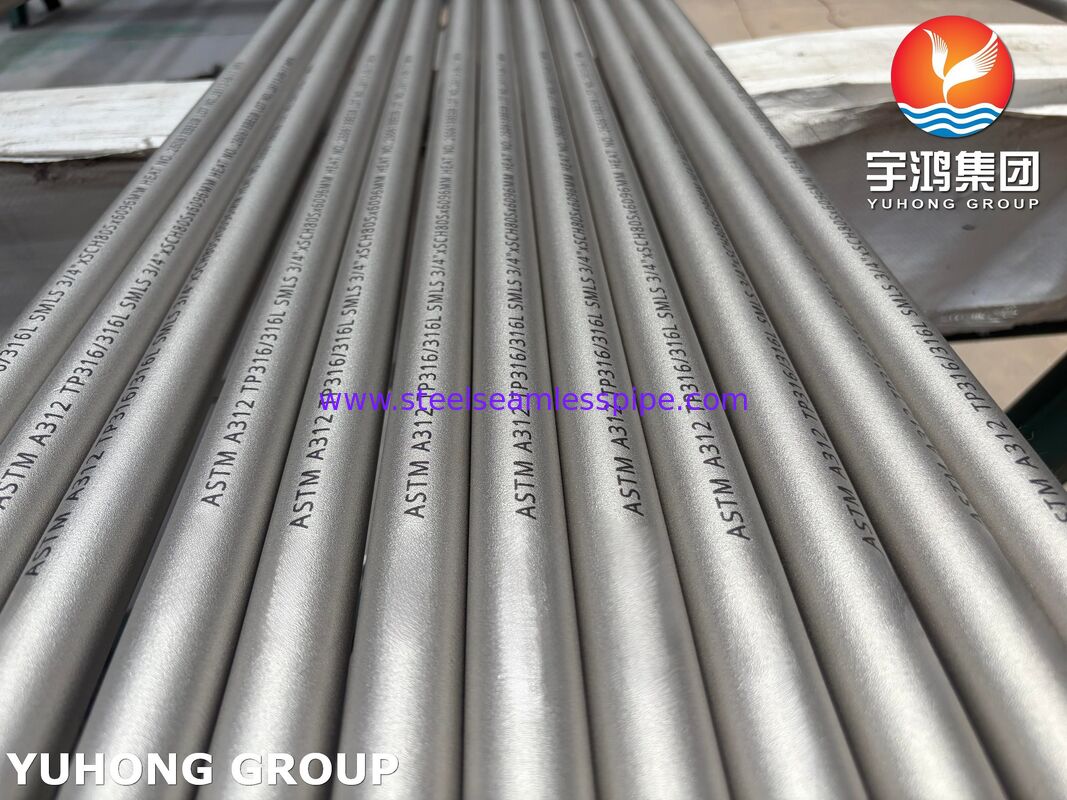
ASTM A312 TP316L Stainless Steel Pipe for Waste Heat Recovery Equipment is designed for industrial heat recovery systems that require reliable fluid containment, corrosion resistance, and consistent material quality under demanding operating conditions. Manufactured from TP316L austenitic stainless steel in accordance with the applicable ASTM A312/A312M requirements, this pipe is suitable for use in heat exchanger assemblies, process fluid circuits, and other piping systems associated with recovering thermal energy from industrial exhaust gases and process streams. It can be specified in seamless or welded construction, depending on the project requirements, design conditions, and required manufacturing route.
In industrial waste heat recovery installations, the stainless steel pipe serves as a pressure-containing or fluid-conveying component within the engineered equipment. Depending on the heat exchanger configuration, it may carry water, thermal transfer fluids, process liquids, or other compatible media while heat is transferred between the internal fluid and an external hot gas or process stream. Its primary functions are to maintain the required flow path, withstand the specified pressure and temperature conditions, and provide adequate resistance to the corrosion mechanisms associated with the operating environment. The pipe itself does not include fins; heat transfer performance is determined by the complete equipment design, including the pipe arrangement, external heat transfer surface, flow conditions, and exchanger configuration.
TP316L is particularly relevant to waste heat recovery systems where moisture, condensate, or selected corrosive compounds may be present. Its chromium-nickel-molybdenum alloy composition offers improved resistance to pitting and certain forms of chloride-related corrosion compared with TP304L under comparable conditions. Its low carbon content also helps reduce the risk of sensitization associated with welding and thermal fabrication when suitable procedures are applied. These properties make TP316L a candidate material for heat recovery equipment used in chemical processing, petrochemical production, industrial heating, and other applications where both corrosion resistance and fabrication reliability are important.
For systems recovering heat from industrial furnaces, boiler exhaust, chemical process gases, or other elevated-temperature streams, the correct pipe specification must be selected according to the actual operating conditions. Important factors include design pressure, minimum and maximum metal temperature, process fluid composition, condensate chemistry, chloride concentration, thermal cycling, and the required service life. TP316L should not be selected solely on the basis of its nominal alloy designation; the possibility of acid dew-point corrosion, high-temperature oxidation, chloride stress corrosion cracking, and other service-specific degradation mechanisms must also be evaluated.
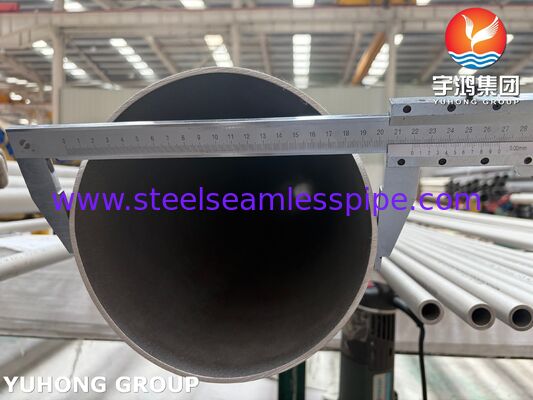
The pipe can be supplied in project-specific outside diameters, wall thicknesses, lengths, and manufacturing conditions within the manufacturer's capabilities. Standardized stainless steel pipe dimensions may be selected with reference to ASME B36.19M, while the applicable ASTM A312/A312M edition governs the specified pipe material and associated requirements. Depending on the purchase specification, quality documentation may include material test certificates, chemical analysis, mechanical test results, dimensional inspection records, and hydrostatic or nondestructive electric test documentation.
For procurement and engineering purposes, this product should be identified as ASTM A312 TP316L stainless steel pipe for waste heat recovery equipment, with the required pipe construction, dimensions, schedule, design conditions, inspection scope, and documentation stated in the technical inquiry. This approach helps ensure that the supplied pipe is evaluated against the actual requirements of the heat recovery system rather than relying on a general material description alone.
| Application | Operating conditions or challenge | Function of TP316L stainless steel pipe |
|---|---|---|
| Industrial exhaust heat recovery systems | Recoverable heat from hot exhaust gases and process streams | Carries the designated heat transfer medium within the engineered heat exchanger |
| Boiler exhaust heat recovery equipment | Elevated exhaust temperatures and possible condensate formation | Provides a fluid passage where the material is compatible with the selected operating conditions |
| Chemical process heat recovery | Process fluids may contain corrosive chemical compounds | Offers a corrosion-resistant pipe material for compatible process media |
| Petrochemical heat recovery systems | Variable operating temperatures, process fluids, and maintenance cycles | Supports fluid circulation within appropriately designed heat recovery equipment |
| Industrial furnace heat recovery | High-temperature surroundings and thermal cycling | Provides the required pipe flow path when the grade is suitable for the design temperature and environment |
| Thermal oil heat recovery circuits | Elevated fluid temperatures and continuous circulation | Carries thermal transfer fluid within the applicable pressure and temperature limits |
| Industrial hot-water recovery systems | Continuous circulation and heat transfer requirements | Supports hot-water transport and heat exchanger circulation |
| Process liquid preheating systems | Heat recovery from one process stream to another | Provides a fluid-containing passage in the heat recovery assembly |
Application qualification: The suitability of TP316L depends on the actual service conditions. High-temperature exhaust gas containing sulfur compounds, chlorides, acidic condensate, or other aggressive species may require a detailed corrosion assessment before the material is selected.
Corrosion management
TP316L may provide improved resistance to pitting and certain localized corrosion mechanisms compared with TP304L in compatible environments. This is relevant when the pipe is exposed to moisture, selected process chemicals, or condensate. Material selection should consider the actual chemical composition and concentration of the medium.
Reliable fluid containment
The pipe provides the required flow passage for the designated heat transfer medium. The appropriate outside diameter, wall thickness, material condition, and manufacturing route must be selected according to the equipment design and applicable code.
Fabrication and installation requirements
TP316L can be fabricated using suitable stainless steel processing and welding procedures. The pipe dimensions, end preparation, tolerances, and surface condition should be specified according to the equipment manufacturer's assembly requirements.
Material traceability
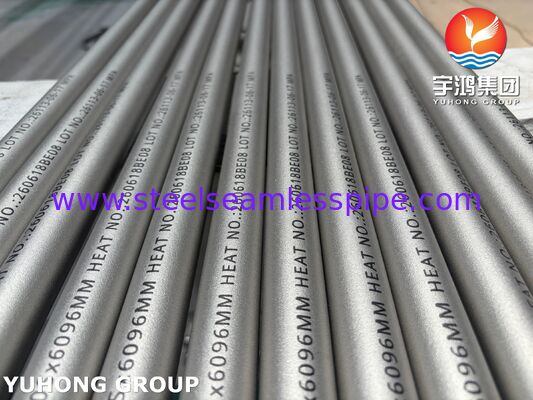
When required by the purchase order, heat numbers and material certificates can be used to link the supplied pipe to its reported chemical composition and mechanical test results. This supports incoming inspection and project quality documentation.
Maintenance and lifecycle considerations
The selection of a suitable stainless steel grade can help manage corrosion-related maintenance risks. Actual service life depends on the complete operating environment, fabrication quality, installation, inspection, and maintenance practices.
The following table provides a preliminary reference for specifying stainless steel pipe for heat recovery equipment. Actual dimensions must be confirmed against the applicable dimensional standard, material availability, manufacturing route, and project requirements.
| Parameter | Typical specification or option | Remarks |
|---|---|---|
| Product name | Stainless steel pipe for waste heat recovery equipment | Plain pipe; fins are not included |
| Material grade | ASTM A312 TP316L | Confirm the applicable standard edition |
| Manufacturing route | Seamless or welded | Specify the required construction |
| Nominal pipe size | NPS 1/8 to NPS 30 as a broad standardized size reference | Availability and dimensional coverage depend on the selected schedule and manufacturing route |
| Outside diameter | According to the selected NPS or specified metric dimensions | Nonstandard dimensions require confirmation |
| Wall thickness | Schedule 5S, 10S, 40S, 80S, or other available thickness | Schedule availability varies with nominal size |
| Pipe length | Common mill lengths or project-specific cut lengths | Confirm production and transport limitations |
| End type | Plain end, bevelled end, or other agreed preparation | Subject to the purchase order |
| Surface condition | As manufactured, pickled, or otherwise specified | Confirm the required finish |
| Heat treatment | As required by the applicable ASTM A312/A312M requirements | Manufacturing condition must be documented as applicable |
| Inspection | According to the applicable standard and purchase order | Additional inspection may be agreed |
| Material documentation | MTC and other agreed quality records | Availability must be confirmed before order placement |
Important: The nominal size range above is a broad reference, not a guarantee that every size and schedule combination is available. ASTM A312 permits standardized dimensions and, subject to compliance with the specification, other agreed dimensions. The final dimensions must be verified against the relevant tables and the manufacturer's actual production capability.
| Dimension or requirement | Reference | Application |
|---|---|---|
| Pipe material and grade | ASTM A312/A312M | TP316L chemical composition, mechanical properties, and applicable manufacturing and testing requirements |
| Standardized stainless steel pipe dimensions | ASME B36.19M | Nominal pipe sizes, outside diameters, and standardized wall thickness designations |
| Design and construction | Applicable equipment or piping design code | Determined by the project engineer and the intended service |
| Pipe ends and dimensional tolerances | Applicable material standard and purchase specification | Confirmed in the technical order |
| Inspection and acceptance | ASTM A312/A312M and agreed inspection plan | Defines required tests and acceptance criteria |
The applicable edition of each standard should be confirmed at the time of quotation and purchase. ASTM A312/A312M is the material product specification; it does not independently establish every design requirement for the completed waste heat recovery equipment.
The following values represent commonly specified chemical composition limits for TP316L. They are specification limits rather than guaranteed actual analysis results for an individual production heat. The applicable ASTM A312/A312M edition and the supplied material test certificate take precedence.
| Chemical element | Symbol | Common specification limit, wt.% |
|---|---|---|
| Carbon | C | 0.035 max. |
| Manganese | Mn | 2.00 max. |
| Phosphorus | P | 0.045 max. |
| Sulfur | S | 0.030 max. |
| Silicon | Si | 1.00 max. |
| Chromium | Cr | 16.00–18.00 |
| Nickel | Ni | 10.00–14.00 |
| Molybdenum | Mo | 2.00–3.00 |
| Nitrogen | N | 0.10 max. |
The actual chemical analysis must be checked against the material test certificate. The values above should not be presented as the measured composition of a specific batch.
The following are commonly specified minimum tensile properties for ASTM A312 TP316L pipe. Elongation requirements depend on the applicable specimen orientation, dimensions, and standard provisions.
| Mechanical property | Common requirement |
|---|---|
| Minimum tensile strength | 515 MPa |
| Minimum yield strength at 0.2% offset | 205 MPa |
| Minimum elongation | Commonly 35% for applicable longitudinal specimens |
| Hardness | Subject to the applicable specification requirements |
| Heat treatment | As required by the applicable ASTM A312/A312M edition |
These values are base-pipe requirements, not a complete pressure or temperature rating for the finished equipment.
The allowable operating pressure depends on pipe outside diameter, wall thickness, design temperature, material allowable stress, joint efficiency where applicable, corrosion allowance, and the governing design code. Maximum service temperature must also be evaluated against the applicable code and the actual corrosion environment.
For high-temperature applications involving significant creep, stress rupture, or prolonged exposure to aggressive exhaust gases, the design engineer should assess whether TP316L is appropriate or whether a different material grade is required.
Inspection should be based on the applicable ASTM A312/A312M requirements, the selected manufacturing route, and the purchaser's technical specification.
| Inspection or test | Purpose | Application |
|---|---|---|
| Material Test Certificate review | Verifies reported material grade, chemical analysis, and mechanical test results | Material traceability |
| Chemical composition analysis | Confirms the reported chemical composition | Material verification |
| Tensile testing | Evaluates tensile strength, yield strength, and elongation | Mechanical property verification |
| Flattening test | Evaluates the pipe's ability to withstand the specified deformation without unacceptable defects | Applicable pipe inspection requirements |
| Hydrostatic testing | Evaluates pressure integrity under the prescribed test conditions | Where required by the applicable specification and order |
| Nondestructive electric testing | Examines the pipe for relevant discontinuities using an applicable method | As required by the governing specification |
| Dimensional inspection | Checks outside diameter, wall thickness, length, and other specified dimensions | Dimensional conformity |
| Visual inspection | Identifies visible surface defects and manufacturing irregularities | Product condition |
| Positive Material Identification (PMI) | Provides additional alloy identification verification | Where specified |
| Additional corrosion or supplementary testing | Addresses specific service or purchaser requirements | Only when required and technically applicable |
ASTM A312/A312M includes requirements for applicable mechanical testing and hydrostatic or nondestructive electric testing. Additional testing may be specified when a greater level of verification is required. The precise inspection scope depends on the applicable standard edition and the purchase order.
Not every optional inspection method is automatically required for every pipe. Additional tests should be agreed in advance, including the method, sampling frequency, acceptance criteria, and documentation requirements.
| Standard | Scope | Relevance to the product |
|---|---|---|
| ASTM A312/A312M | Austenitic stainless steel pipe | Governs the specified TP316L pipe material and applicable product requirements |
| ASME B36.19M | Stainless steel pipe dimensions | Provides standardized dimensional references |
| ASME B31.3 | Process piping design and construction | Applicable where specified for the associated process piping system |
| ASME Boiler and Pressure Vessel Code | Pressure equipment design and construction | Relevant where the equipment falls within the scope of the applicable code |
| ISO 9001 | Quality management systems | May be claimed only when the relevant organization holds a valid certificate within the applicable scope |
| Project inspection and test plan | Project-specific quality requirements | Defines additional inspection, testing, documentation, and acceptance criteria |
Compliance statement: ASTM A312 TP316L identifies the base pipe material specification. It should not be interpreted as automatic certification of the complete heat recovery equipment, compliance with every pressure equipment code, or certification of the manufacturer under ISO 9001 or another quality scheme.
Subject to the manufacturer's actual capabilities and the purchase agreement, the following documentation may be provided:
| Document | Purpose |
|---|---|
| Material Test Certificate (MTC) | Records the material grade and applicable test results |
| Chemical analysis report | Documents the reported chemical composition |
| Mechanical test report | Documents applicable mechanical test results |
| Dimensional inspection report | Records measurements against the specified dimensions |
| Hydrostatic test report | Documents the applicable pressure test, where performed |
| Nondestructive testing report | Records the agreed examination results, where applicable |
| Certificate of Conformity (CoC) | Confirms conformity to the agreed purchase requirements when issued |
| Heat number and traceability records | Links the supplied pipe to its material documentation |
The availability of each document must be confirmed before quotation or production. A document should only be advertised as included when it can actually be provided for the relevant order.
| Comparison | ASTM A312 TP316L | ASTM A312 TP304L |
|---|---|---|
| Main alloying elements | Chromium, nickel, molybdenum | Chromium and nickel |
| Molybdenum | Approximately 2–3% within the applicable specification | No intentional molybdenum addition in the standard grade |
| Resistance to pitting | Generally better in comparable environments | Generally lower than TP316L under comparable conditions |
| Suitable applications | Selected corrosive process fluids and compatible condensate environments | Less aggressive service environments where the material is suitable |
| Relative material cost | Generally higher | Generally lower |
| Final selection | Based on service conditions, design code, and lifecycle cost | Based on service conditions, design code, and lifecycle cost |
TP316L is not automatically the best material for every heat recovery application. Where high-temperature oxidation, acid dew-point corrosion, chloride stress corrosion cracking, or other specific degradation mechanisms govern, the engineer should assess the actual environment before selecting the material.
The following parameters should be reviewed before specifying TP316L stainless steel pipe for waste heat recovery equipment.
| Design parameter | Information required | Why it matters |
|---|---|---|
| Operating temperature | Normal, minimum, maximum, and design temperature | Determines material suitability and allowable design conditions |
| Design pressure | Operating and design pressure | Determines required wall thickness under the applicable code |
| Process medium | Water, thermal oil, process liquid, or other fluid | Establishes compatibility requirements |
| Gas composition | Relevant components of the external exhaust or process gas | Helps identify potential corrosion mechanisms |
| Condensate chemistry | pH, chloride concentration, and relevant dissolved species where applicable | Helps evaluate localized corrosion and acid condensate risks |
| Thermal cycling | Start-up, shutdown, and temperature fluctuations | Affects thermal stress and fatigue assessment |
| Fouling and cleaning | Expected deposits and cleaning chemicals | Influences maintenance and chemical compatibility |
| Required service life | Project design life and maintenance expectations | Supports material selection and lifecycle cost assessment |
| Applicable design code | Project-specific piping or equipment code | Establishes design, inspection, and acceptance requirements |
These parameters should be supplied to the engineering team before a final material recommendation is made. ASTM A312 TP316L should not be assigned a universal maximum operating temperature or pressure without considering the actual design conditions.
To receive a technically appropriate quotation, please provide the following information.
| Required information | Details |
|---|---|
| Material standard and grade | ASTM A312 TP316L |
| Pipe construction | Seamless or welded |
| Nominal pipe size | NPS or specified outside diameter |
| Wall thickness | Schedule or specified nominal thickness |
| Pipe length | Standard length or project-specific cut length |
| End preparation | Plain end, bevelled end, or other specified preparation |
| Operating temperature | Normal and maximum operating temperature |
| Design pressure | Required design pressure |
| Service medium | Fluid conveyed inside the pipe |
| External environment | Exhaust gas composition and condensate conditions where relevant |
| Inspection requirements | Required testing methods and acceptance criteria |
| Documentation | MTC, inspection reports, traceability records, and other agreed documents |
| Quantity and delivery | Required quantity, delivery location, and schedule |
It can be used as a fluid-conveying or pressure-containing component in heat exchanger assemblies and associated piping systems. The exact function depends on the equipment design and the medium being transported.
No. This product is plain ASTM A312 TP316L stainless steel pipe. Fins and other heat transfer surface attachments are not included.
ASTM A312/A312M covers applicable seamless, straight-seam welded, and heavily cold-worked welded austenitic stainless steel pipe. The required manufacturing route should be stated in the purchase order.
Standardized dimensions can be selected with reference to ASME B36.19M. Other dimensions may be available subject to compliance with the applicable material specification and confirmation of manufacturing capability.
Depending on the order, documentation may include the material test certificate, chemical analysis, mechanical test results, dimensional inspection records, and applicable pressure or nondestructive test reports.
No. Suitability depends on the temperature, gas composition, condensate chemistry, design stress, and potential corrosion mechanisms. The grade must be assessed against the actual operating conditions.
Are you sourcing ASTM A312 TP316L stainless steel pipe for waste heat recovery equipment?
Send us your required pipe size, wall thickness, manufacturing route, operating conditions, quantity, and inspection requirements. We can review the specified requirements and prepare a quotation based on the agreed material standard, dimensions, manufacturing capability, and documentation scope.
Contact us to discuss your stainless steel pipe requirements for industrial heat recovery applications.
Contact Person: Mr. Jikin Cai
Tel: +86-13819835483
Fax: 0086-574-88017980