Yuhong Holding Group Co.,LTD
 |
| Place of Origin: | China |
| Brand Name: | YUHONG |
| Certification: | ABS, GL, DNV, NK, PED, AD2000, GOST9941-81, CCS, ISO 9001-2008 |
| Model Number: | ASTM A213 TP316L |
| Minimum Order Quantity: | 100KGS |
|---|---|
| Price: | To be discussed |
| Packaging Details: | Plywood case |
| Delivery Time: | 40-120days |
| Payment Terms: | L/C,T/T |
| Supply Ability: | 5000 meters/day |
| Highlight: | ASTM A213 TP316L heat exchanger tubes,Seamless stainless steel heat exchanger tubes,TP316L tubes for waste heat recovery |
||
|---|---|---|---|
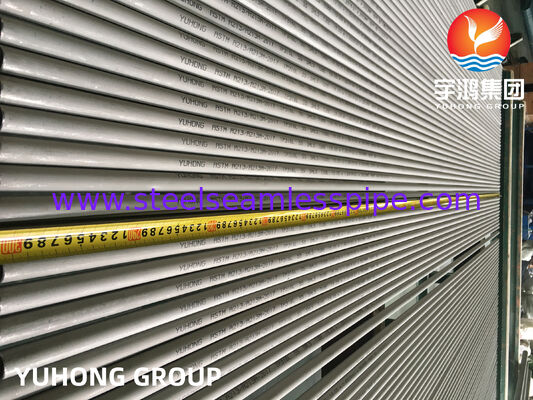
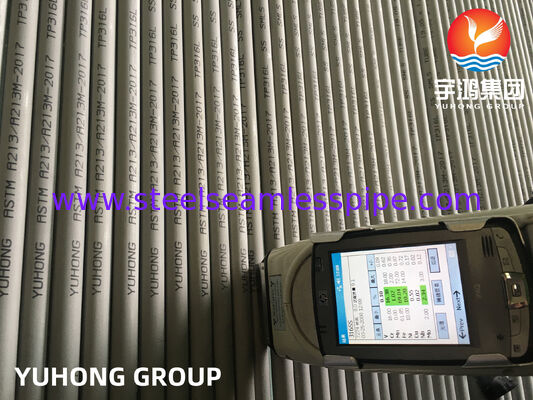
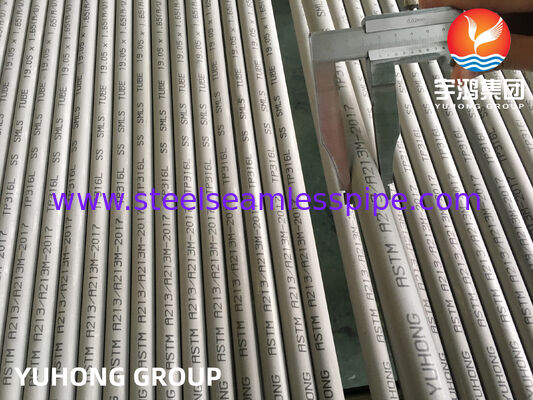
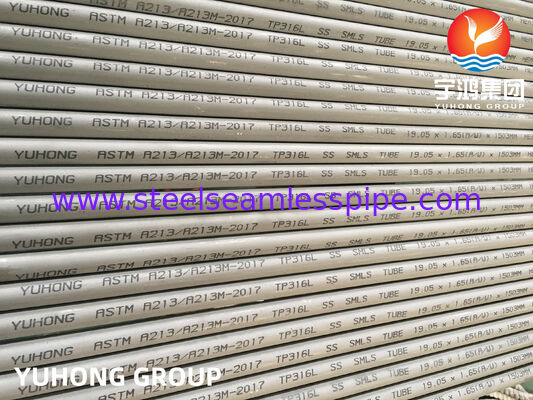
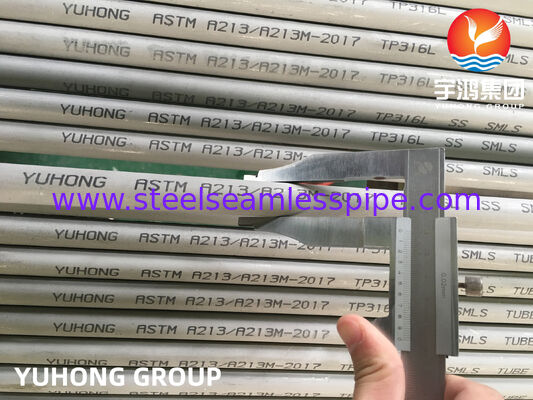
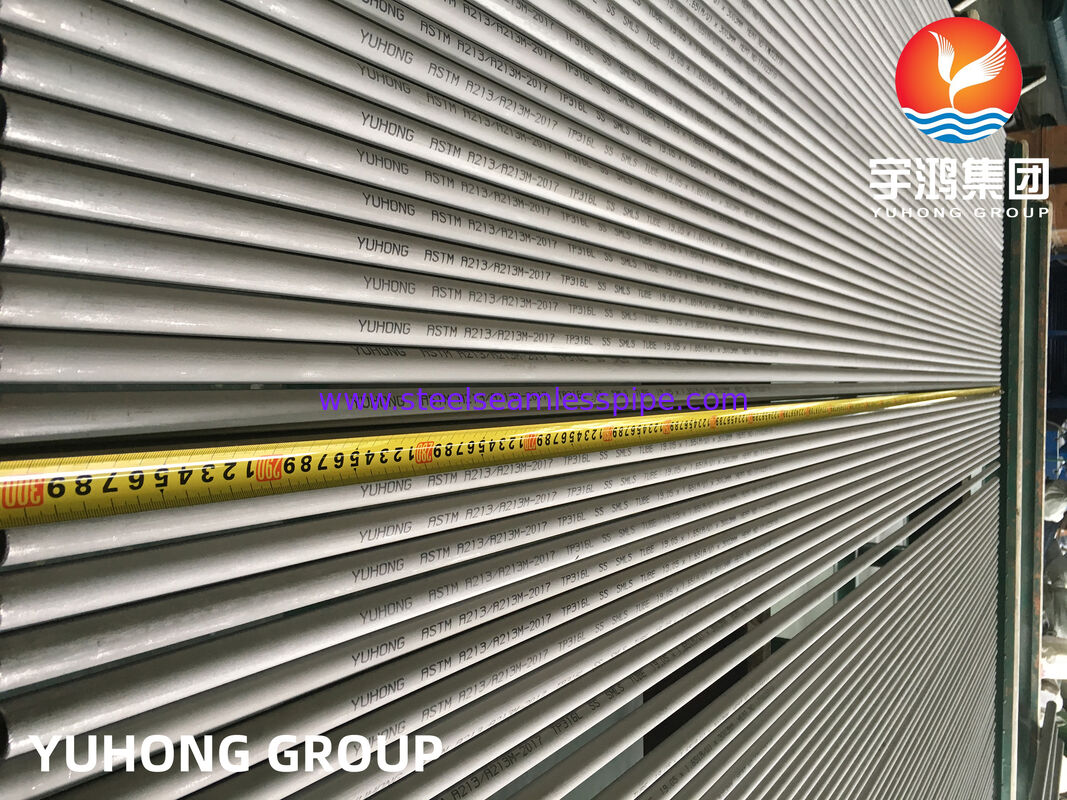
ASTM A213 TP316L seamless stainless steel tubes are designed for use as heat transfer tubes and base tubes in industrial waste heat recovery equipment, particularly in systems where elevated operating temperatures, corrosive exhaust gases, moisture condensation, and demanding thermal operating conditions require reliable material performance. Manufactured in accordance with ASTM A213/A213M, these tubes are made from low-carbon austenitic stainless steel UNS S31603, offering a combination of corrosion resistance, mechanical strength, weldability, and structural consistency for industrial heat exchanger applications
The chemical composition of TP316L includes approximately 16.0–18.0% chromium, 10.0–14.0% nickel, and 2.0–3.0% molybdenum, with a maximum carbon content of 0.035%. Chromium contributes to the formation of a protective passive surface layer, while molybdenum improves resistance to localized corrosion, particularly pitting and crevice corrosion in chloride-containing environments. The low carbon content helps reduce the risk of sensitization and intergranular corrosion associated with welding and subsequent thermal exposure when appropriate fabrication and operating procedures are followed. These characteristics make TP316L a practical material choice for waste heat recovery equipment exposed to certain corrosive industrial exhaust environments and heat transfer media.
For equipment manufacturers and EPC contractors, the dimensional consistency of the parent tube is particularly important when tubes are subsequently processed into high-frequency welded finned tubes. Accurate outside diameter, controlled wall thickness, straightness, surface condition, and consistent material properties help support stable tube feeding, fin attachment, fabrication, and final heat exchanger assembly. The tubes can be supplied in customized outside diameters, wall thicknesses, and lengths according to equipment drawings, heat transfer calculations, tube-sheet designs, and downstream fin-welding requirements.
The product is manufactured and inspected in accordance with the applicable requirements of ASTM A213/A213M. Depending on the purchase order and project specifications, inspection can include chemical composition analysis, tensile testing, hardness testing, flattening testing, flaring testing, hydrostatic testing or permitted nondestructive electrical testing, and dimensional and visual examination. Material traceability and inspection documentation can be provided to support incoming material verification, fabrication quality control, and project documentation requirements.
Our ASTM A213 TP316L seamless tubes are intended for industrial heat recovery applications where material reliability, corrosion resistance, dimensional control, and downstream fabrication compatibility are essential. Each order can be configured according to the actual operating conditions and technical requirements of the waste heat recovery system.
The following specifications describe the available product configuration. Final supply dimensions and tolerances should be confirmed against the applicable ASTM A213 edition and purchase order.
|
Parameter |
Product Specification |
|---|---|
|
Product Name |
TP316L Seamless Heat Exchanger Tube |
|
Material Grade |
ASTM A213 TP316L |
|
UNS Number |
S31603 |
|
Material Type |
Austenitic Stainless Steel |
|
Manufacturing Process |
Seamless |
|
Tube Form |
Straight Bare Tube |
|
Applicable Standard |
ASTM A213 / A213M |
|
Equivalent Designation |
ASME SA213, when specified |
|
Outside Diameter |
Customizable |
|
Wall Thickness |
Customizable |
|
Length |
Fixed Length / Random Length / Cut Length |
|
Surface Condition |
Annealed & Pickled / Bright Annealed |
|
Heat Treatment |
Solution Annealed |
|
Tube Ends |
Plain End / Customized |
|
Delivery Condition |
As specified in purchase order |
|
Fin Attachment |
Not included |
|
Inspection Documents |
EN 10204 3.1 MTC, when ordered and agreed |
For industrial waste heat recovery equipment and high-frequency finned tube manufacturing, the following are practical suggested dimensional ranges. These are proposed commercial supply ranges, not a claim that every size is stocked or that the entire range is mandatory under ASTM A213.
|
Parameter |
Typical Range |
Common Specifications |
|---|---|---|
|
Outside Diameter |
12.7–76.2 mm |
12.7 / 15.88 / 19.05 / 25.4 / 31.75 / 38.1 / 50.8 mm |
|
Wall Thickness |
0.8–6.0 mm |
1.0 / 1.2 / 1.5 / 2.0 / 2.5 / 3.0 mm |
|
Tube Length |
3–12 m |
6 m / 9 m / 12 m |
|
Manufacturing Type |
Seamless |
Hot Finished / Cold Finished |
|
Surface Finish |
AP / BA |
Annealed & Pickled / Bright Annealed |
|
Tube Ends |
Plain End |
Other finishes upon request |
Note: Actual availability depends on manufacturing capability, tube dimensions, and order quantity. ASTM A213 covers a wider dimensional scope, including outside diameters up to 127 mm and specified wall thicknesses from 0.40 mm to 12.7 mm. Other dimensions may be supplied subject to compliance with the standard.
|
Outside Diameter (mm) |
Wall Thickness (mm) |
Typical Application |
|---|---|---|
|
12.7 |
1.0 / 1.2 / 1.5 |
Compact heat exchangers |
|
15.88 |
1.0 / 1.2 / 1.65 |
Finned tube parent material |
|
19.05 |
1.2 / 1.5 / 2.0 |
Waste heat recovery bundles |
|
25.4 |
1.5 / 2.0 / 2.5 |
Industrial heat exchangers |
|
31.75 |
1.5 / 2.0 / 3.0 |
Exhaust gas heat recovery |
|
38.1 |
2.0 / 2.5 / 3.0 |
Waste heat boilers |
|
50.8 |
2.0 / 2.5 / 3.0 |
Large heat exchanger systems |
|
76.2 |
2.5 / 3.0 / 4.0 |
Heavy-duty heat transfer equipment |
The above combinations are representative engineering and purchasing options, not guaranteed stock dimensions. Final selection must consider design pressure, temperature, corrosion allowance, heat transfer requirements, and tube fabrication process.
Waste Heat Recovery from Industrial Exhaust Gas
In industrial facilities such as chemical plants, petrochemical plants, steel mills, cement plants, and thermal processing facilities, exhaust gases often contain recoverable thermal energy. TP316L seamless tubes can be used as heat transfer tubes in waste heat recovery equipment to transfer energy from hot exhaust gas to water, steam, or other process media.
The tubes provide a corrosion-resistant heat transfer surface where the exhaust gas composition and operating conditions are compatible with 316L stainless steel.
Problems Addressed:
Material degradation caused by certain corrosive exhaust gas components.
Tube damage associated with moisture condensation in suitable acidic or chloride-containing environments.
Material quality and dimensional inconsistencies during heat exchanger fabrication.
Reliability requirements for industrial heat transfer systems operating under repeated thermal cycles.
TP316L seamless tubes can be supplied as bare parent tubes for subsequent high-frequency welded finned tube manufacturing. In this process, external steel fins are attached to the tube surface using high-frequency resistance welding.
The parent tube must provide consistent outside diameter, wall thickness, surface quality, and material properties to support stable fin-welding operations and the required dimensional quality of the finished finned tube.
Key Benefits for Downstream Processing:
Consistent tube dimensions for automated feeding and positioning.
Suitable material characteristics for qualified fin attachment procedures.
Low-carbon stainless steel composition for improved resistance to sensitization during appropriate fabrication.
Traceable material identification for finned tube production and project quality control.
Important: The supplied product is the bare TP316L seamless tube. Fins, fin welding, and finished finned tube fabrication are not included in this product scope.
|
Standard / Specification |
Description |
Application |
|---|---|---|
|
ASTM A213/A213M |
Seamless Ferritic and Austenitic Alloy-Steel Boiler, Superheater, and Heat-Exchanger Tubes |
Primary product standard |
|
ASME SA213 |
ASME specification for boiler, superheater, and heat exchanger tubes |
Pressure equipment projects when specified |
|
ASTM A999/A999M |
General requirements for alloy and stainless steel pipe |
Applicable general requirements where referenced |
|
UNS S31603 |
TP316L material identification |
Material grade traceability |
|
EN 10204 Type 3.1 |
Inspection certificate |
Material quality documentation when ordered |
ASTM A213 is the primary manufacturing and product specification. ASME SA213 may be specified for projects designed and manufactured under applicable ASME requirements. The standards are related, but project compliance must be assessed against the actual edition and purchase order rather than assumed solely from the grade designation.
ASTM A213 TP316L is a low-carbon molybdenum-bearing austenitic stainless steel. Its chemical composition is controlled to provide corrosion resistance and mechanical properties suitable for industrial heat exchanger tube applications.
|
Element |
Symbol |
ASTM A213 TP316L |
|---|---|---|
|
Carbon |
C |
≤ 0.035 |
|
Manganese |
Mn |
≤ 2.00 |
|
Silicon |
Si |
≤ 1.00 |
|
Phosphorus |
P |
≤ 0.045 |
|
Sulfur |
S |
≤ 0.030 |
|
Chromium |
Cr |
16.00–18.00 |
|
Nickel |
Ni |
10.00–14.00 |
|
Molybdenum |
Mo |
2.00–3.00 |
|
Iron |
Fe |
Balance |
Source: ASTM A213/A213M, TP316L chemical composition requirements. Actual heat analysis and product analysis must follow the applicable standard and order requirements.
Chromium (Cr): Supports passive film formation and provides general corrosion resistance in industrial environments.
Nickel (Ni): Stabilizes the austenitic microstructure and contributes to toughness and ductility.
Molybdenum (Mo): Improves resistance to pitting and crevice corrosion, particularly in certain chloride-containing environments.
Low Carbon (C): Helps reduce the risk of sensitization and intergranular corrosion during suitable welding and thermal processing operations.
These characteristics make TP316L suitable for selected industrial exhaust heat recovery applications where conventional TP304L may not provide sufficient corrosion resistance. Material selection should nevertheless be based on the actual gas composition, condensate chemistry, chloride concentration, and operating temperature.
The following table lists the minimum mechanical requirements for ASTM A213 TP316L seamless tubes.
|
Mechanical Property |
Requirement |
Unit |
|---|---|---|
|
Tensile Strength |
≥ 485 |
MPa |
|
Yield Strength (0.2% Offset) |
≥ 170 |
MPa |
|
Elongation |
≥ 35 |
% |
|
Brinell Hardness |
≤ 192 |
HBW |
|
Vickers Hardness |
≤ 200 |
HV |
|
Rockwell Hardness |
≤ 90 |
HRB |
Mechanical Performance in Heat Exchanger Applications
Tensile strength provides the required resistance to tensile loading during equipment operation and fabrication.
Yield strength is an important consideration when evaluating tube wall integrity under internal pressure and mechanical loading.
Elongation indicates the material's ductility and its ability to accommodate suitable forming and fabrication processes.
Hardness testing helps verify material condition and consistency.
The specified values are minimum or maximum acceptance requirements, not guaranteed design stresses at elevated temperatures. Actual allowable stress must be determined using the applicable design code and temperature-dependent material data.
Our ASTM A213 TP316L seamless tubes are manufactured through controlled seamless tube production processes to meet the dimensional and material requirements of industrial heat exchanger applications.
|
Production Stage |
Process Description |
Quality Control Focus |
|---|---|---|
|
Raw Material Selection |
Selection of qualified TP316L steel billets |
Material grade and traceability |
|
Billet Heating |
Heating billets to the required processing temperature |
Temperature control |
|
Piercing |
Formation of hollow tube shells |
Internal and external surface condition |
|
Rolling / Drawing |
Reduction to specified outside diameter and wall thickness |
Dimensional accuracy |
|
Heat Treatment |
Solution annealing |
Metallurgical condition |
|
Pickling / Finishing |
Removal of oxide scale and surface contamination |
Surface cleanliness |
|
Straightening |
Correction of tube straightness |
Straightness and dimensional control |
|
Cutting |
Cutting to specified delivery lengths |
Length accuracy |
|
Final Inspection |
Mechanical, dimensional, and nondestructive examination |
Product conformity |
|
Packaging |
Protection and identification |
Traceability and transportation protection |
TP316L tubes require appropriate solution heat treatment in accordance with ASTM A213 requirements.
Solution annealing is used to restore the suitable austenitic structure and improve the material's corrosion resistance after hot or cold processing.
The heat treatment process involves heating to the specified solution treatment temperature, followed by rapid cooling as required by the standard.
For production planning, the commonly referenced solution treatment temperature for TP316L is at least 1040°C. The exact treatment conditions and cooling requirements must follow the applicable standard and manufacturing procedure.
For waste heat recovery equipment, the quality of the parent tube directly influences downstream fabrication, tube-bundle assembly, and long-term equipment reliability.
Our inspection program can be arranged according to ASTM A213 and the specific project requirements.
|
Inspection / Test |
Testing Method |
Purpose |
|---|---|---|
|
Chemical Composition Analysis |
Optical Emission Spectrometry (OES) / Laboratory Analysis |
Verification of TP316L chemical composition |
|
Tensile Test |
Universal Testing Machine |
Verification of tensile strength and yield strength |
|
Elongation Test |
Tensile Specimen Measurement |
Verification of ductility |
|
Hardness Test |
Brinell / Rockwell / Vickers |
Verification of hardness requirements |
|
Flattening Test |
Mechanical Flattening Test |
Evaluation of ductility and integrity |
|
Flaring Test |
Tube End Expansion Test |
Evaluation of resistance to deformation |
|
Hydrostatic Test |
Water Pressure Testing |
Verification of pressure integrity |
|
Eddy Current Testing |
Electromagnetic NDT |
Detection of relevant discontinuities |
|
Ultrasonic Testing |
Ultrasonic NDT, when specified |
Detection of internal discontinuities |
|
Dimensional Inspection |
Calipers / Micrometers / Measuring Equipment |
Verification of OD, WT, and length |
|
Visual Inspection |
Surface Examination |
Detection of visible surface defects |
Important testing note: ASTM A213 provides for hydrostatic testing or the permitted nondestructive electric test route, subject to the applicable requirements. Additional UT, PMI, or other examinations should be specified in the purchase order where required. Not every test in the table is automatically mandatory for every order.
|
Document |
Information Provided |
|---|---|
|
Mill Test Certificate (MTC) |
Chemical composition and mechanical test results |
|
Heat Number Traceability |
Identification of the manufacturing heat |
|
Dimensional Inspection Report |
Actual OD, wall thickness, and length measurements |
|
NDT Report |
Results of specified nondestructive testing |
|
Hydrostatic Test Report |
Test pressure and inspection results, when applicable |
|
Heat Treatment Record |
Solution heat treatment documentation, when available |
|
Third-Party Inspection Report |
Independent inspection results, when agreed |
Material certificates and inspection records can be supplied according to the agreed order requirements. EN 10204 Type 3.1 certification and third-party inspection can be arranged when specified and available for the order.
TP316L is particularly useful when heat recovery equipment must operate in environments where corrosion resistance is an important material selection factor.
However, the material must be evaluated against the actual process conditions rather than selected solely because the equipment operates at high temperature.
|
Operating Parameter |
Engineering Consideration |
|---|---|
|
Heat Source |
Industrial exhaust gas and waste heat streams |
|
Heat Transfer Medium |
Water, steam, thermal oil, or process fluids |
|
Operating Temperature |
Determined by actual process conditions and design code |
|
Operating Pressure |
Determined by tube dimensions and equipment design |
|
Corrosive Components |
Chlorides, moisture, acidic condensates, and other process contaminants |
|
Thermal Cycling |
Requires consideration of thermal expansion and fatigue |
|
Corrosion Risk |
Pitting, crevice corrosion, and condensate-related corrosion |
|
Tube Configuration |
Straight bare tube or downstream finned tube assembly |
|
Material Grade |
Main Characteristics |
Typical Selection Consideration |
|---|---|---|
|
TP304L |
General corrosion resistance and low carbon content |
Less aggressive heat recovery environments |
|
TP316L |
Molybdenum-bearing, low-carbon austenitic stainless steel |
Improved resistance to pitting and crevice corrosion |
|
TP321 |
Titanium-stabilized austenitic stainless steel |
Certain elevated-temperature applications |
|
TP310S |
High chromium and nickel content |
Certain high-temperature oxidation environments |
|
TP317L |
Higher molybdenum content than TP316L |
More demanding localized corrosion environments |
Why choose TP316L?
For industrial waste heat recovery systems exposed to moisture, certain chlorides, or corrosive process condensates, TP316L can offer a better corrosion-resistance balance than TP304L.
Nevertheless, TP316L is not universally suitable for all high-temperature exhaust conditions. In particular, severe chloride exposure, concentrated acidic condensates, high-temperature creep requirements, and thermal cycling must be assessed separately. Where long-term elevated-temperature strength is critical, a higher-temperature grade such as TP316H or another engineered alloy may need to be evaluated.
To maintain tube surface quality and dimensional integrity during storage and international transportation, suitable packaging can be arranged according to order quantity, tube dimensions, and destination requirements.
|
Packaging Item |
Description |
|---|---|
|
Tube Protection |
Plastic end caps when required |
|
Surface Protection |
Protective wrapping or plastic covering |
|
Bundle Packaging |
Steel straps with protective separators |
|
Wooden Packaging |
Wooden supports or cases when required |
|
Product Identification |
Grade, size, standard, and heat number |
|
Shipping Documents |
Packing List, Commercial Invoice, MTC, and agreed inspection documents |
Customized packaging and shipping arrangements are available for international projects and bulk orders.
Q1: Is ASTM A213 TP316L suitable for high-frequency welded finned tube manufacturing?
Yes. TP316L seamless tubes can be used as parent tubes for high-frequency welded finned tube production. However, the fin attachment process must be qualified for the selected base tube material and fin material.
Q2: Are these tubes supplied with fins?
No. This product is supplied as bare seamless stainless steel tubes without fins. It is intended for customers who manufacture finned tubes or assemble heat exchanger equipment.
Q3: What is the difference between ASTM A213 TP316L and ASTM A312 TP316L?
ASTM A213 TP316L specifically covers seamless alloy-steel boiler, superheater, and heat exchanger tubes. ASTM A312 covers seamless, welded, and heavily cold-worked austenitic stainless steel pipes for general corrosive and high-temperature service. The two standards are not interchangeable.
Q4: Can you supply customized tube dimensions?
Yes. Outside diameter, wall thickness, and tube length can be customized according to equipment drawings and project specifications, subject to manufacturing capability and minimum order requirements.
Q5: What inspection documents can be provided?
Depending on the order requirements, documentation can include EN 10204 3.1 MTC, chemical composition reports, mechanical testing reports, dimensional inspection reports, and applicable NDT reports.
Q6: Is TP316L suitable for all waste heat recovery applications?
No. Suitability depends on operating temperature, pressure, exhaust gas composition, condensate chemistry, and corrosion conditions. A technical review is recommended before final material selection.
Contact Person: Mr. Jikin Cai
Tel: +86-13819835483
Fax: 0086-574-88017980