Yuhong Holding Group Co.,LTD
 |
| Place of Origin: | CHINA |
| Brand Name: | YUHONG |
| Certification: | ABS, GL, DNV, NK, PED, AD2000, GOST9941-81, CCS, ISO 9001-2015 |
| Model Number: | ASTM A213 T11 |
| Minimum Order Quantity: | 500kgs |
|---|---|
| Price: | Negotiable |
| Packaging Details: | Ply-wooden Case /Iron Case/ Bundle with plastic Cap |
| Delivery Time: | Depend on quantity |
| Payment Terms: | L/C,T/T |
| Supply Ability: | According to Clients' requirements |
| Highlight: | ASTM A213 T11 Alloy Steel Seamless Tube,Power Plant Boiler Alloy Steel Boiler Tube,High-Temperature Chromium-Molybdenum Seamless Tube |
||
|---|---|---|---|
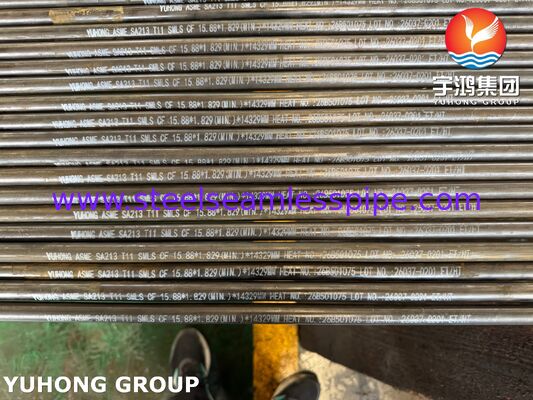
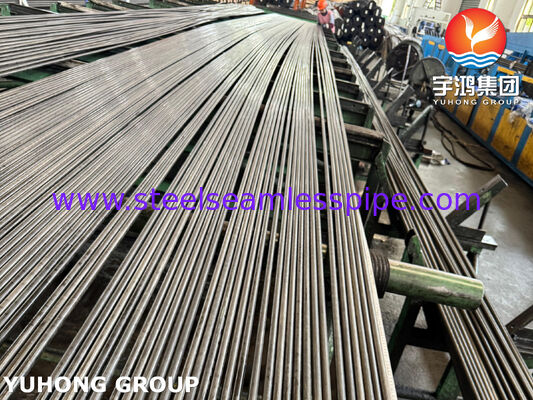
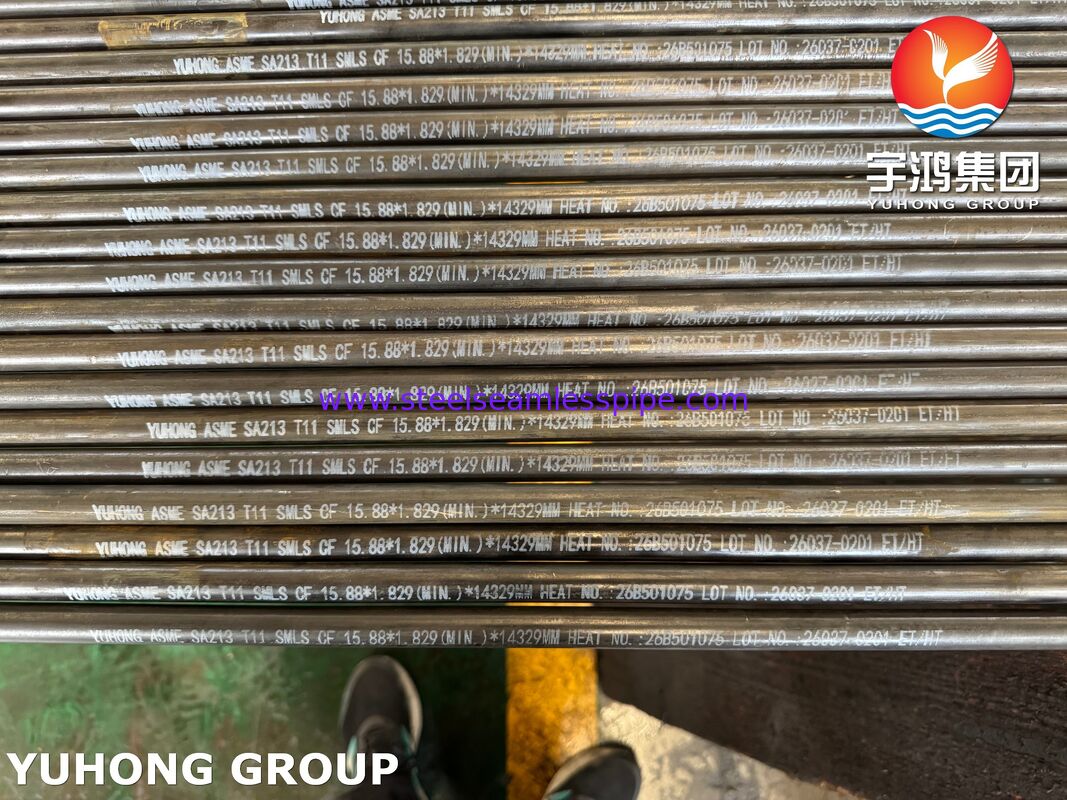
ASTM A213 T11 Alloy Steel Seamless Tubes are manufactured for high-temperature boiler, superheater, reheater, and heat-transfer applications in thermal power plants and industrial steam generation systems. Produced from chromium-molybdenum low-alloy steel, Grade T11 is designed to provide a balanced combination of high-temperature strength, oxidation resistance, pressure-bearing capability, and long-term structural stability under elevated operating temperatures. Its nominal alloy composition, containing approximately 1.25% chromium and 0.5% molybdenum, helps improve resistance to high-temperature oxidation and enhances the material's mechanical performance compared with conventional carbon steel boiler tubes.
Each supply batch can be supported by material traceability and inspection documentation, including chemical composition analysis, tensile test results, hardness testing, dimensional inspection, heat-treatment records, and hydrostatic or applicable nondestructive electrical examination. Additional ultrasonic examination, eddy-current testing, or other supplementary inspections can be arranged when required by the purchase specification. For projects requiring ASME compliance, the applicable SA-213 requirements and the project's governing construction code should be confirmed before production.
Our ASTM A213 T11 alloy steel seamless tubes can be customized according to boiler design requirements, including outside diameter, wall thickness, cutting length, manufacturing condition, and inspection scope. They are intended for engineering applications where stable high-temperature performance, material consistency, and documented quality control are essential to the reliability of power plant boiler systems.
技术定位:T11 是低合金铬钼钢,不应宣传为适用于所有超临界,超超临界锅炉的通用材料.最终选材必须由设计温度,设计压力,管壁金属温度及锅炉设计规范确定.
1. Boiler Superheater Tubes
T11 tubes can be used in selected superheater circuits to transfer heat to saturated or partially heated steam, increasing steam temperature before it enters the turbine system.
2. Boiler Reheater Tubes
Used in selected reheater circuits where steam is reheated after partial expansion in the turbine. The tubes operate under repeated thermal cycles and elevated metal temperatures.
3. Boiler Heating Surface Tubes
Applied in suitable boiler heating surface components where heat is transferred from combustion gases to the working fluid.
4. Boiler Tube Replacement and Maintenance
Suitable for replacement projects involving existing T11 boiler tube systems, provided the original design specification and engineering assessment permit the material.
|
Operating parameter |
Engineering consideration |
|---|---|
|
Service medium |
High-temperature steam / boiler water |
|
Operating environment |
Elevated temperature and internal pressure |
|
Thermal loading |
Continuous heating and thermal cycling |
|
Pressure loading |
Internal steam pressure |
|
External exposure |
Combustion gas and high-temperature oxidation |
|
Material selection |
Based on design metal temperature and pressure |
|
Service life |
Based on creep strength, corrosion allowance and inspection plan |
Engineering note: ASTM A213 T11 is a low-alloy Cr-Mo steel intended for elevated-temperature service. It should not be assigned a universal maximum working temperature or pressure without a specific design calculation. Actual allowable stress values must be obtained from the applicable ASME Boiler and Pressure Vessel Code, Section II, Part D, and the governing construction code.
|
Standard |
Description |
Application |
|---|---|---|
|
ASTM A213/A213M |
Seamless Ferritic and Austenitic Alloy-Steel Boiler, Superheater and Heat-Exchanger Tubes |
Primary product standard |
|
ASME SA213/SA213M |
ASME material specification corresponding to A213 |
ASME boiler projects |
|
ASME BPVC Section II |
Material specifications and allowable stress data |
Material qualification |
|
ASME BPVC Section I |
Power Boilers |
Power boiler construction |
|
ASME BPVC Section V |
Nondestructive Examination |
Applicable NDE procedures |
|
ASME BPVC Section IX |
Welding, Brazing and Fusing Qualifications |
Welding procedure and personnel qualification |
Important: ASTM A213 and ASME SA213 are related but should not automatically be described as interchangeable certifications. The purchase order must specify the applicable edition and project code. Compliance with a material specification alone does not establish that the complete boiler or component is ASME certified.
|
Item |
Specification |
|---|---|
|
Product name |
Alloy Steel Seamless Tube |
|
Material grade |
T11 |
|
Standard |
ASTM A213/A213M |
|
ASME equivalent specification |
SA213/SA213M |
|
Steel type |
Ferritic low-alloy chromium-molybdenum steel |
|
UNS designation |
K11597 |
|
Manufacturing process |
Seamless |
|
Manufacturing condition |
Hot Finished / Cold Finished |
|
Heat treatment |
According to ASTM A213 T11 requirements |
|
Outside diameter |
Customizable |
|
Wall thickness |
Customizable |
|
Length |
Random / Fixed / Cut Length |
|
End finish |
Plain End / Beveled End, as specified |
|
Surface condition |
Black / Pickled / Machined, as agreed |
|
Inspection |
According to ASTM A213 and purchase requirements |
ASTM A213/A213M specifies customary tube dimensions extending from 1/8 in. [3.2 mm] inside diameter to 5 in. [127 mm] outside diameter, with wall thicknesses generally from 0.015 in. [0.4 mm] to 0.500 in. [12.7 mm]. Other dimensions may be supplied when all applicable standard requirements are met.
The following table provides representative commercial dimensions for power boiler applications. These are suggested supply ranges, not a guarantee that every combination is standard stock.
|
Outside Diameter (mm) |
Outside Diameter (inch) |
Common Wall Thickness (mm) |
|---|---|---|
|
21.3 |
1/2" nominal pipe size |
2.0–4.0 |
|
25.4 |
3/4" nominal pipe size |
2.0–4.5 |
|
31.8 |
1" nominal pipe size |
2.5–5.0 |
|
38.1 |
1-1/4" nominal pipe size |
2.5–5.5 |
|
44.5 |
1-1/2" nominal pipe size |
3.0–6.0 |
|
50.8 |
2" nominal pipe size |
3.0–7.0 |
|
57.0 |
— |
3.5–7.0 |
|
60.3 |
2" nominal pipe size |
3.5–8.0 |
|
63.5 |
— |
3.5–8.0 |
|
76.1 |
2-1/2" nominal pipe size |
4.0–10.0 |
|
88.9 |
3" nominal pipe size |
4.0–10.0 |
|
101.6 |
4" nominal pipe size |
4.5–12.0 |
|
114.3 |
4" nominal pipe size |
5.0–12.0 |
|
127.0 |
5" nominal pipe size |
5.0–12.7 |
|
Parameter |
Available options |
|---|---|
|
Diameter |
According to customer drawings and requirements |
|
Wall thickness |
According to design pressure and project specifications |
|
Length |
5.8 m / 6 m / 11.8 m / 12 m / custom length |
|
Manufacturing |
Hot Finished / Cold Finished |
|
End preparation |
Plain End / Beveled End |
|
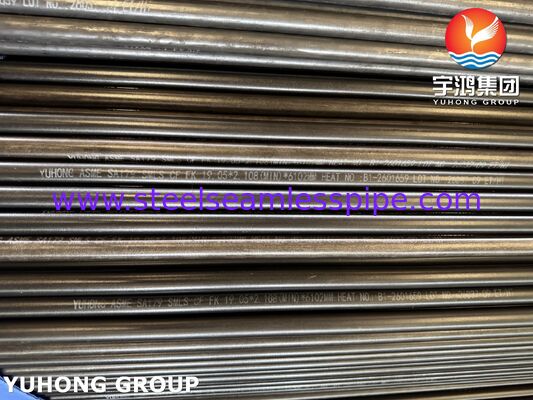
Marking |
Grade / Standard / Size / Heat Number |
|
Packaging |
Steel Bundles / Wooden Cases / Seaworthy Packing |
|
Documentation |
EN 10204 3.1 or project-required documentation, subject to agreement |
T11 is a chromium-molybdenum alloy steel. Chromium contributes to high-temperature oxidation resistance, while molybdenum helps improve strength and resistance to deformation under elevated-temperature conditions.
|
Element |
Chemical Composition (%) |
|---|---|
|
Carbon (C) |
0.05–0.15 |
|
Manganese (Mn) |
0.30–0.60 |
|
Silicon (Si) |
0.50–1.00 |
|
Phosphorus (P) |
≤ 0.025 |
|
Sulfur (S) |
≤ 0.025 |
|
Chromium (Cr) |
1.00–1.50 |
|
Molybdenum (Mo) |
0.44–0.65 |
|
Alloying element |
Function in T11 steel |
Engineering benefit |
|---|---|---|
|
Carbon |
Contributes to strength and hardenability |
Supports required mechanical properties |
|
Chromium |
Improves oxidation resistance |
Helps reduce high-temperature surface oxidation |
|
Molybdenum |
Improves high-temperature strength |
Supports resistance to creep deformation |
|
Manganese |
Contributes to strength and steel processing |
Supports material consistency |
|
Silicon |
Acts as a deoxidizing element |
Contributes to oxidation resistance |
|
Phosphorus |
Controlled impurity |
Limits undesirable material degradation |
|
Sulfur |
Controlled impurity |
Helps maintain material quality and ductility |
|
Mechanical Property |
Requirement |
|---|---|
|
Tensile Strength |
≥ 415 MPa |
|
Yield Strength |
≥ 205 MPa |
|
Elongation (Longitudinal) |
≥ 30% |
|
Hardness |
According to applicable ASTM A213 requirements |
T11 mechanical properties are determined through tensile testing and other applicable inspection requirements. The mechanical values above represent commonly specified minimum tensile and yield strengths and minimum longitudinal elongation.
Why these properties matter in power boilers
Tensile strength: Helps verify the material's resistance to tensile loading during manufacturing and service.
Yield strength: Indicates the stress level at which permanent deformation begins under the test conditions.
Elongation: Provides an indication of ductility and the material's ability to accommodate deformation.
Hardness: Helps assess material consistency and the effectiveness of the specified heat-treatment condition.
ASTM A213 T11 tubes require heat treatment appropriate to the specified grade and product condition.
For T11, the typical normalized and tempered treatment involves:
|
Process |
Typical temperature range |
Purpose |
|---|---|---|
|
Normalizing |
Approximately 900–960°C |
Refines the microstructure and establishes a suitable structural condition |
|
Tempering |
Approximately 650–730°C |
Reduces residual stresses and adjusts strength and toughness |
1. Chemical Composition Analysis
Optical emission spectroscopy (OES) or other suitable chemical analysis methods are used to verify C, Mn, Si, Cr, Mo and controlled residual elements.
Purpose: Confirm that each material heat complies with T11 chemical composition requirements.
2. Tensile Testing
Specimens are tested to determine tensile strength, yield strength and elongation.
Purpose: Verify the mechanical performance required for pressure-bearing service.
3. Hardness Testing
Hardness measurements are performed using an appropriate test method.
Purpose: Check material consistency and verify compliance with the applicable hardness limits.
4. Ultrasonic Testing (UT)
Ultrasonic waves are used to detect internal discontinuities and other specified material defects.
Purpose: Provide additional inspection of tube integrity where required by the purchase order.
5. Eddy Current Testing (ET)
Electromagnetic testing is used to identify relevant discontinuities in electrically conductive tubes.
Purpose: Support inspection of tube integrity and surface or near-surface defects.
6. Hydrostatic Testing
Each tube is subjected to the applicable hydrostatic test requirements unless the permitted alternative examination is used.
Purpose: Verify pressure integrity according to the specified testing procedure.
7. Dimensional Inspection
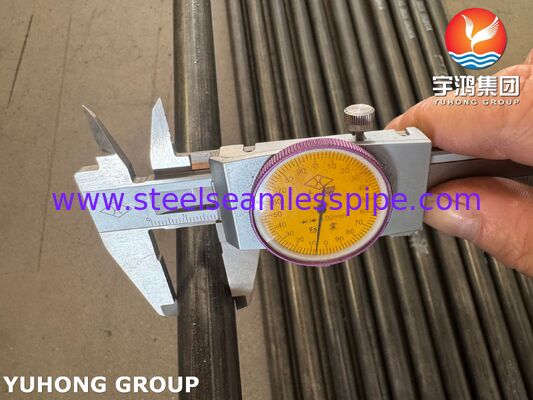
Outside diameter, wall thickness, length, straightness and surface condition are checked.
Purpose: Ensure compatibility with boiler drawings, fabrication tolerances and installation requirements.
|
Inspection item |
Purpose |
Requirement |
|---|---|---|
|
Tension Test |
Determine tensile properties |
Applicable ASTM A213 |
|
Hardness Test |
Verify hardness |
Applicable ASTM A213 |
|
Flattening Test |
Evaluate deformation behavior |
Applicable ASTM A213 |
|
Flaring Test |
Evaluate tube-end expansion |
Applicable ASTM A213 |
|
Hydrostatic Test |
Verify pressure integrity |
Required unless an allowed alternative applies |
|
Nondestructive Electric Test |
Examine tube integrity |
Applicable alternative or specified requirement |
|
Dimensional Inspection |
Check dimensions and tolerances |
ASTM A213 / applicable tolerances |
|
Visual Inspection |
Check surface condition |
Purchase specification |
Important quality requirement: ASTM A213 requires tension, hardness, flattening and flaring tests as applicable, together with hydrostatic testing or the permitted nondestructive electric test for each tube. Supplementary UT or ET requirements should be clearly stated in the purchase order rather than represented as universally mandatory ASTM A213 tests.
For power plant boiler projects, material traceability and inspection documentation are essential for material acceptance, fabrication control and future maintenance.
|
Document |
Main contents |
|---|---|
|
Mill Test Certificate (MTC) |
Grade, standard, heat number, chemical composition and mechanical properties |
|
Chemical Analysis Report |
Actual chemical analysis results |
|
Mechanical Test Report |
Tensile, yield, elongation and hardness results |
|
Heat Treatment Record |
Heat-treatment parameters and batch traceability |
|
Hydrostatic / NDE Report |
Testing method and inspection results |
|
Dimensional Inspection Report |
OD, WT, length and dimensional tolerances |
|
Material Identification Record |
Heat number and product identification |
|
Packing List |
Quantity, sizes, lengths and package details |
|
Material |
Main Alloy Elements |
Typical Characteristics |
Common Applications |
|---|---|---|---|
|
ASTM A213 T11 |
1.0–1.5% Cr, Mo |
Moderate high-temperature strength and oxidation resistance |
Boiler tubes, superheaters |
|
ASTM A213 T9 |
8–10% Cr, Mo |
Higher chromium content and oxidation resistance |
Selected high-temperature boiler applications |
|
ASTM A213 T22 |
1.9–2.6% Cr, Mo |
Higher chromium and molybdenum content than T11 |
Superheaters, reheaters, high-temperature boilers |
|
ASTM A213 T91 |
8–9.5% Cr, Mo, V, Nb |
Higher creep strength for demanding high-temperature service |
Advanced power plant boilers |
|
ASTM A213 T5 |
4–6% Cr, Mo |
Higher chromium content than T11 |
High-temperature boiler and heat exchanger systems |
Why choose T11?
Suitable for selected boiler applications requiring better high-temperature performance than conventional carbon steel.
Provides a practical Cr-Mo alloy option for specified operating conditions.
Offers a balance between alloy content, mechanical properties and material cost.
Can be used for maintenance and replacement of existing T11 boiler tube systems.
T11 should not automatically replace T22 or T91 in an existing boiler design. Material substitution requires engineering approval and verification of allowable stresses, operating temperature and applicable construction code.
|
Comparison |
Carbon Steel Boiler Tubes |
ASTM A213 T11 |
|---|---|---|
|
Material type |
Carbon steel |
Cr-Mo low-alloy steel |
|
Chromium content |
Generally no intentional Cr alloy addition |
1.00–1.50% |
|
Molybdenum content |
Generally no intentional Mo alloy addition |
0.44–0.65% |
|
High-temperature oxidation resistance |
Lower |
Improved |
|
High-temperature strength |
Lower for comparable service conditions |
Improved |
|
Typical use |
Lower-temperature boiler sections |
Selected elevated-temperature sections |
|
Material cost |
Generally lower |
Generally higher |
ASTM A213 T11 seamless tubes are manufactured through a controlled production process to achieve the required dimensions, material properties and quality consistency.
Raw Material Selection
Select suitable alloy steel billets with controlled chemical composition.
Heating and Piercing
Heat the billet and pierce it to form a hollow tube shell.
Rolling and Sizing
Control the outside diameter and wall thickness through rolling and sizing operations.
Heat Treatment
Apply the required T11 heat-treatment condition.
Straightening and Cutting
Straighten the tube and cut it to the specified delivery length.
Inspection and Testing
Conduct chemical, mechanical, dimensional and applicable nondestructive examinations.
Marking and Packaging
Mark the material grade, size, standard and traceability information before shipment.
ASTM A213 T11 seamless tubes are packed according to their dimensions, order quantity, transportation method and project requirements.
Steel-strapped bundles for standard export shipments.
Protective end caps to reduce transportation damage and contamination.
Waterproof wrapping for moisture protection.
Wooden cases for smaller-diameter or special-length tubes when required.
Clear product marking and heat-number identification.
Customized packing for containerized and break-bulk shipments.
Available delivery options:
Standard commercial lengths.
Fixed lengths according to project drawings.
Cut-to-length supply.
Customized marking and packaging.
ASTM A213 T11 is a ferritic chromium-molybdenum low-alloy steel grade used for seamless boiler, superheater and heat-exchanger tubes. It contains approximately 1.0–1.5% chromium and 0.44–0.65% molybdenum.
It is used in selected power plant boiler applications, including superheater and reheater circuits, boiler heating surfaces and other high-temperature pressure-containing heat-transfer equipment.
T11 contains approximately 1.0–1.5% chromium and 0.44–0.65% molybdenum, while T22 contains approximately 1.9–2.6% chromium and 0.87–1.13% molybdenum. T22 has a higher alloy content and is used in different elevated-temperature design conditions.
Yes. ASTM A213 specifies seamless ferritic and austenitic alloy-steel boiler, superheater and heat-exchanger tubes. T11 is supplied as seamless tubing.
The minimum tensile strength is 415 MPa, and the minimum yield strength is 205 MPa. Minimum longitudinal elongation is 30%.
Yes. Outside diameter, wall thickness, length, manufacturing condition, inspection requirements and packaging can be specified according to project requirements, subject to manufacturing capability and applicable standards.
Typical documents include Mill Test Certificates, chemical analysis reports, mechanical test reports, heat-treatment records, hydrostatic or NDE reports and dimensional inspection reports, according to the purchase order.
Looking for reliable ASTM A213 T11 alloy steel seamless tubes for your power plant boiler project?
We can provide customized tube dimensions, material documentation and inspection arrangements according to your technical specifications.
Please send us the following information:
Required outside diameter and wall thickness
Required quantity and delivery length
Applicable ASTM / ASME standard edition
Project operating conditions
Inspection and certification requirements
Our sales team can review your specifications and provide a technical quotation.
Contact Person: Mr. Jikin Cai
Tel: +86-13819835483
Fax: 0086-574-88017980