Yuhong Holding Group Co.,LTD
 |
| Place of Origin: | China |
| Brand Name: | YUHONG |
| Certification: | ISO9001:2015; ISO14001:2015; ISO45001:2018; PED 2014/68/EU; WPS/PQR/WPQ; ISO 3834 |
| Model Number: | N/A |
| Minimum Order Quantity: | 500kgs |
|---|---|
| Price: | To be discussed |
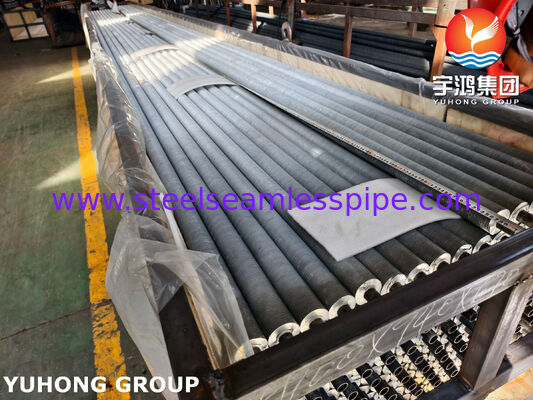
| Packaging Details: | Plywood case or Iron frame wooden case |
| Delivery Time: | 50-120 days |
| Payment Terms: | L/C,T/T |
| Supply Ability: | 5000 meters/day |
| Product: | Extruded Fin Tube | Material: | ASME SA179 SA179 |
|---|---|---|---|
| Application: | HVAC And Industrial Refrigeration | Package: | Plywood Case Or Iron Frame Wooden Case |
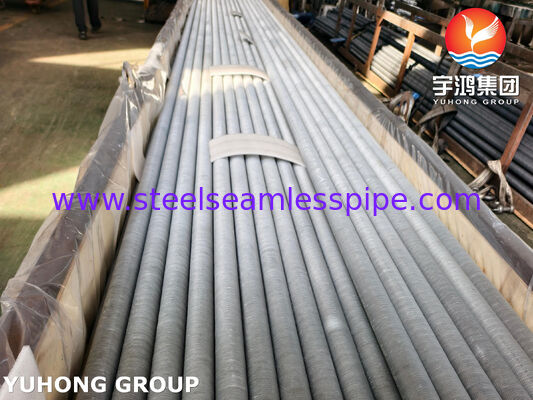
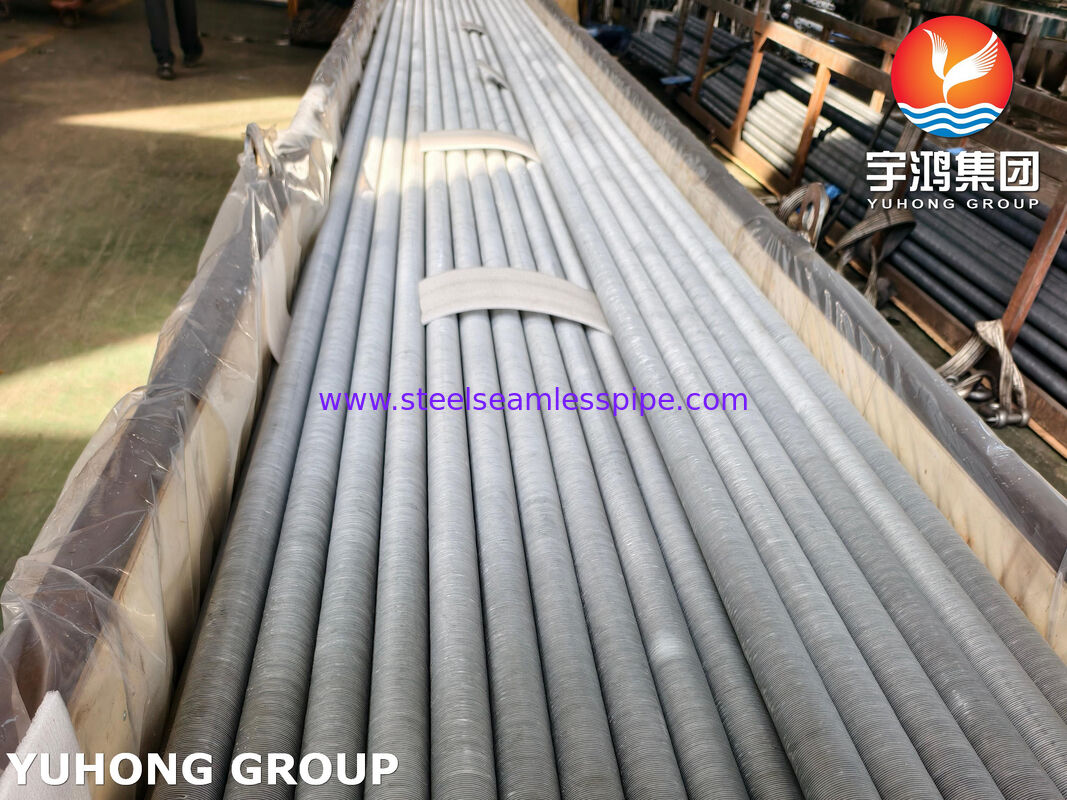
Extruded finned tubes for HVAC and industrial refrigeration are high-efficiency heat-transfer components designed to improve thermal performance in air-cooled heat exchangers, refrigeration condensers, evaporators, and industrial cooling equipment.
Our extruded finned tubes use ASME SA179 seamless, cold-drawn low-carbon steel as the base tube material. Aluminum fins are mechanically bonded to the tube through an extrusion process, creating an integrated fin-and-tube structure with excellent contact between the fin material and the tube surface.
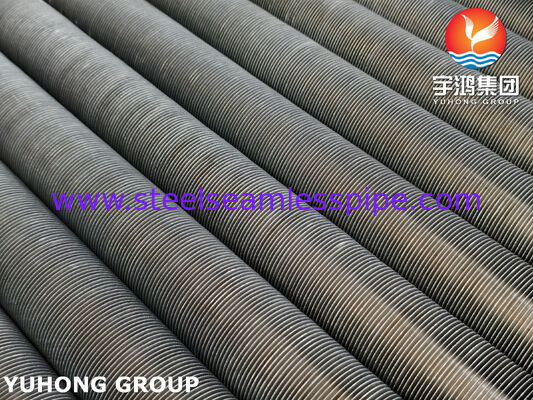
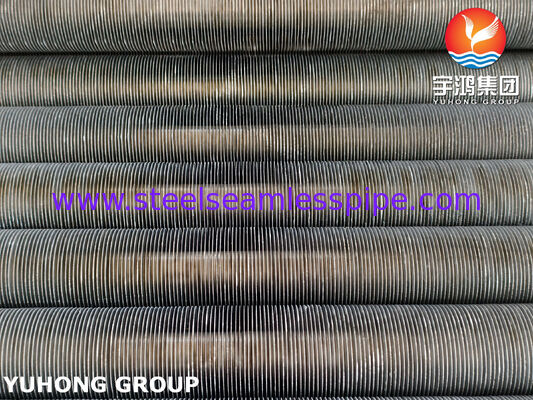
During manufacturing, an aluminum sleeve or tubular outer layer is placed over the base tube. Specialized extrusion rollers then form continuous external fins while compressing the aluminum tightly against the steel tube. This process produces a strong mechanical bond and helps minimize thermal contact resistance.
The combination of a carbon steel pressure-bearing tube and aluminum external fins provides an economical heat-transfer solution for applications requiring efficient air-side heat exchange.
Our extruded finned tubes are manufactured with controlled dimensions, consistent fin geometry, and strict quality inspection to meet the requirements of HVAC equipment manufacturers, refrigeration system suppliers, and industrial heat-exchanger engineering companies.
Product specifications
|
Item |
Description |
|---|---|
|
Product name |
Extruded Finned Tubes |
|
Main applications |
HVAC and industrial refrigeration |
|
Base tube standard |
ASME SA179 / ASTM A179 |
|
Base tube material |
Seamless low-carbon steel |
|
Fin material |
Aluminum 1060 or specified aluminum alloy |
|
Fin manufacturing process |
Mechanical extrusion |
|
Fin configuration |
Integral extruded helical fins |
|
Fin attachment |
Mechanical interference bond |
|
Main advantages |
High heat-transfer area, reliable bonding, corrosion protection of the covered tube surface |
1. High heat-transfer efficiency
Extruded fins substantially increase the external surface area available for heat exchange, improving the air-side heat-transfer capability of refrigeration and HVAC equipment.
2. Strong mechanical bonding
The extrusion process creates close contact between the aluminum fins and steel base tube, reducing thermal resistance at the interface.
3. Excellent corrosion protection
The aluminum outer layer covers much of the underlying carbon steel tube surface. This can provide additional protection in suitable atmospheric environments, although exposed ends and damaged areas still require consideration.
4. Lightweight construction
Aluminum fins offer a favorable surface-area-to-weight ratio, helping reduce the overall weight of heat-exchanger tube bundles.
5. Uniform fin geometry
Continuous extruded fins provide consistent fin height, pitch, and thickness, supporting predictable heat-transfer performance.
6. Flexible material selection
Different aluminum grades and base tube dimensions can be selected according to operating temperature, pressure, cooling medium, and project requirements.
7. Long-term operating stability
The mechanically bonded structure is designed to maintain close fin-to-tube contact during normal operating conditions and thermal cycling.
Extruded finned tubes are widely used in HVAC systems and industrial refrigeration equipment where efficient heat exchange between process fluids and surrounding air is required.
|
Application |
Main function |
|---|---|
|
HVAC air-cooled heat exchangers |
Improves air-side heat transfer |
|
Industrial refrigeration condensers |
Supports heat rejection from refrigerant systems |
|
Refrigeration evaporators |
Provides increased heat-transfer surface |
|
Air-cooled condensers |
Improves heat dissipation to ambient air |
|
Industrial cooling equipment |
Supports process-fluid cooling |
|
Chiller systems |
Enhances heat exchange in suitable equipment designs |
|
Refrigeration plants |
Supports thermal management in industrial cooling systems |
|
Commercial HVAC equipment |
Improves heat-exchanger capacity and space utilization |
Application consideration: ASME SA179 is a low-carbon steel heat-exchanger tube specification, not a universal refrigerant-system material specification. Its suitability depends on refrigerant compatibility, operating pressure, temperature, corrosion conditions, and applicable pressure-equipment codes.
Extruded finned tubes can be manufactured in various dimensions to accommodate different HVAC and industrial refrigeration designs.
The following table provides typical commercial manufacturing ranges. Final dimensions depend on extrusion equipment, material combinations, and customer drawings.
|
Parameter |
Typical specifications |
|---|---|
|
Base tube outside diameter |
12.7–38.1 mm |
|
Base tube wall thickness |
1.2–4.0 mm |
|
Tube length |
500–15,000 mm |
|
Fin height |
5–16 mm |
|
Fin thickness |
0.3–0.8 mm |
|
Fin pitch |
2.0–5.0 mm |
|
Fin material |
Aluminum 1060 / 1070 / specified alloy |
|
Base tube material |
ASME SA179 |
|
Fin type |
Integral extruded helical fin |
|
Fin attachment |
Mechanical extrusion |
|
Fin coverage |
Full-length or partial-length |
|
Surface treatment |
Natural aluminum finish or specified coating |
Available customization:
Different base tube diameters and wall thicknesses.
Customized aluminum fin height and pitch.
Various fin thicknesses and fin density configurations.
Customized tube lengths and un-finned end sections.
Different aluminum alloys according to project requirements.
Special configurations for condensers, evaporators, and air-cooled heat exchangers.
The selected fin geometry should be evaluated according to heat-transfer requirements, air velocity, pressure drop, operating temperature, and potential dust accumulation.
Standard reference: ASME SA179 covers seamless cold-drawn low-carbon steel heat-exchanger and condenser tubes with nominal outside diameters from 3.2 mm to 76.2 mm. The extruded fin dimensions are determined separately by the product design and manufacturing specification.
Precision Stainless Steel Pipe Solutions+1
ASME SA179 is a low-carbon steel material specification designed for seamless, cold-drawn heat-exchanger and condenser tubes.
Its chemical composition provides suitable strength, ductility, and manufacturing characteristics for heat-transfer applications.
The following table presents the specified chemical composition limits.
|
Chemical element |
Composition (wt.%) |
|---|---|
|
Carbon (C) |
0.06–0.18 |
|
Manganese (Mn) |
0.27–0.63 |
|
Phosphorus (P) |
≤ 0.035 |
|
Sulfur (S) |
≤ 0.035 |
Gnee+1
Material characteristics:
Carbon contributes to the strength and hardness of the steel.
Manganese improves strength and supports the metallurgical quality of the material.
Phosphorus is controlled to maintain suitable ductility and toughness.
Sulfur is limited to reduce the risk of undesirable material characteristics.
The above composition applies to the SA179 carbon steel base tube only. The aluminum fin material must comply with its own applicable material specification.
The base tube must satisfy the mechanical property requirements specified by ASME SA179.
|
Mechanical property |
Requirement |
|---|---|
|
Tensile strength |
≥ 325 MPa |
|
Yield strength |
≥ 180 MPa |
|
Elongation in 50.8 mm (2 in.) |
≥ 35% |
|
Hardness |
≤ 72 HRB |
Botop Steel Pipes+1
Mechanical performance characteristics:
Good tensile strength for conventional heat-exchanger tube applications.
Adequate ductility for cold-drawing and subsequent manufacturing operations.
Suitable machinability for tube preparation and processing.
Good formability for manufacturing heat-transfer components.
Stable material characteristics when manufactured and tested according to the applicable specification.
These mechanical properties apply to the SA179 base tube before finning. They should not be represented as guaranteed properties of the completed extruded finned tube assembly.
Our extruded finned tubes are manufactured through a controlled mechanical extrusion process to achieve consistent fin geometry and close contact between the aluminum fins and steel base tube.
Step 1 – Raw material selection
Seamless ASME SA179 carbon steel tubes are selected according to the required outside diameter, wall thickness, and length. Material certificates are reviewed to verify chemical composition and mechanical properties.
Step 2 – Base tube preparation
The external surface of the steel tube is cleaned and inspected. Surface condition, dimensional accuracy, and straightness are checked before extrusion.
Step 3 – Aluminum sleeve preparation
An aluminum sleeve or outer layer is prepared according to the required dimensions and material grade. Aluminum 1060 is a commonly specified option because of its good ductility and thermal conductivity.
Step 4 – Mechanical extrusion
The aluminum-covered base tube passes through specialized extrusion rollers. The rollers progressively form the external helical fins while compressing the aluminum layer tightly against the steel tube.
Step 5 – Fin forming and dimensional adjustment
The extruded fins are checked for height, thickness, pitch, uniformity, and surface condition. The tube is adjusted to achieve the specified dimensional tolerances.
Step 6 – End finishing
Un-finned sections are prepared according to the customer's drawings. Tube ends can be cut, deburred, and protected as required.
Step 7 – Final inspection
Completed tubes undergo dimensional checks, visual inspection, fin-bond evaluation, and the agreed quality-control procedures before packaging.
Quality inspection is essential for extruded finned tubes used in HVAC and industrial refrigeration systems.
Our inspection program can include the following procedures according to the purchase order and project requirements.
|
Inspection method |
Inspection purpose |
|---|---|
|
Mill Test Certificate (MTC) review |
Confirms SA179 base tube grade and traceability |
|
Chemical composition analysis |
Verifies compliance with SA179 requirements |
|
Tensile testing |
Checks tensile strength, yield strength, and elongation |
|
Hardness testing |
Verifies base tube hardness |
|
Dimensional inspection |
Measures tube diameter, wall thickness, and length |
|
Fin height measurement |
Checks the uniformity of extruded fin height |
|
Fin pitch inspection |
Verifies spacing between adjacent fins |
|
Fin thickness measurement |
Confirms fin dimensions |
|
Fin-bond inspection |
Evaluates the mechanical contact between aluminum and steel |
|
Visual inspection |
Identifies surface damage, fin deformation, and visible defects |
|
Eddy current testing |
Detects relevant tube-wall discontinuities where specified |
|
Hydrostatic testing |
Verifies pressure integrity of the base tube when required |
|
Final inspection |
Confirms dimensions, surface condition, marking, and packaging |
Additional quality-control considerations:
Base tubes must meet the applicable ASME SA179 requirements.
Flattening and flaring tests should be performed as required by the applicable specification.
Hydrostatic testing and specified nondestructive examinations should follow the applicable tube standard and purchase order.
Fin-bond evaluation should use an agreed inspection procedure and acceptance criteria.
The extrusion process must not cause unacceptable thinning, deformation, or damage to the pressure-bearing tube wall.
ASTM A179 includes chemical analysis, tensile and hardness requirements, flattening, flaring, and hydrostatic testing provisions.
1. Higher heat-transfer efficiency
The increased external surface area improves air-side heat exchange, helping HVAC and refrigeration equipment achieve the required thermal capacity.
2. Excellent fin-to-tube contact
Mechanical extrusion creates a tight interface between the aluminum fin layer and steel base tube, reducing contact thermal resistance.
3. Improved corrosion protection
The aluminum outer layer protects much of the carbon steel tube surface from direct atmospheric exposure. Additional protection may be needed at exposed ends and in aggressive environments.
4. Lightweight heat-transfer construction
Aluminum fins reduce the weight of the heat-transfer surface while providing good thermal conductivity.
5. Flexible equipment integration
Customized tube lengths, fin pitches, and fin heights allow the products to be integrated into different air-cooled heat exchangers, condensers, and evaporators.
6. Economical material combination
Using an SA179 carbon steel pressure tube with aluminum extruded fins provides a practical balance of material cost, heat-transfer performance, and mechanical properties.
To maintain product quality during transportation and storage, extruded finned tubes can be supplied with customized protective packaging.
Bundled tubes with suitable supports to prevent bending.
Protective end caps to prevent contamination.
Moisture-resistant wrapping for overseas transportation.
Wooden cases or export-standard packaging.
Clear identification labels showing material grade, dimensions, quantity, and order number.
Customized packaging according to customer requirements.
Material certificates, inspection reports, and other agreed quality documentation can be supplied with each order.
For accurate quotations and technical evaluation, customers are encouraged to provide the following information:
|
Item |
Required information |
|---|---|
|
Product |
Extruded finned tubes for HVAC and industrial refrigeration |
|
Base tube standard |
ASME SA179 / ASTM A179 |
|
Base tube material |
Low-carbon steel |
|
Fin material |
Aluminum 1060 / 1070 / specified alloy |
|
Base tube OD |
As per drawing |
|
Wall thickness |
As per drawing |
|
Tube length |
As required |
|
Fin height |
As required |
|
Fin thickness |
As required |
|
Fin pitch |
As required |
|
Fin configuration |
Extruded helical fins |
|
Quantity |
As per purchase order |
|
Inspection requirements |
As per project specification |
|
Packaging |
Export or customized packaging |
We welcome inquiries from HVAC equipment manufacturers, industrial refrigeration companies, air-cooled heat exchanger manufacturers, EPC contractors, and engineering procurement companies worldwide.
Contact Person: Nacy
Tel: +8619965117039
Fax: 0086-574-88017980