Yuhong Holding Group Co.,LTD
 |
| Place of Origin: | China |
| Brand Name: | YUHONG |
| Certification: | ISO9001:2015; ISO14001:2015; ISO45001:2018; PED 2014/68/EU; WPS/PQR/WPQ; ISO 3834 |
| Model Number: | N/A |
| Minimum Order Quantity: | 500kgs |
|---|---|
| Price: | To be discussed |
| Packaging Details: | Iron frame wooden case |
| Delivery Time: | 50-120 days |
| Payment Terms: | L/C,T/T |
| Supply Ability: | 5000 meters/day |
| Product: | HFW Fin Tube | Material: | ASTM A213 T9 |
|---|---|---|---|
| Application: | Superheater | Package: | Iron Frame Wooden Case |
| Highlight: | High-Frequency Welded Finned Tubes,Finned Tubes for Superheater,ASTM A213 T9 Finned Tubes |
||
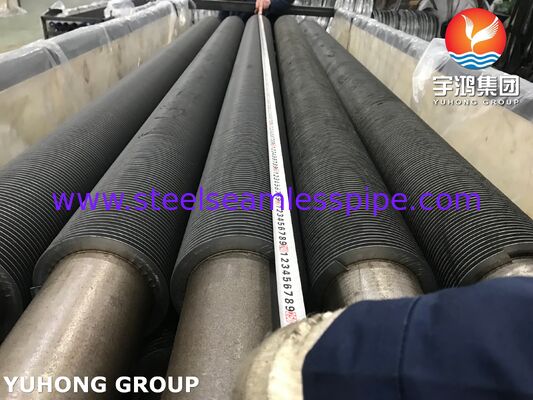
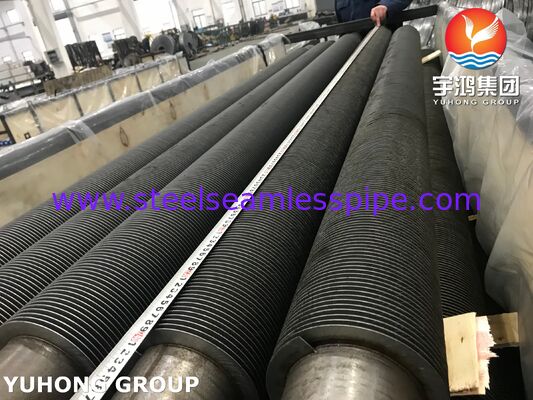
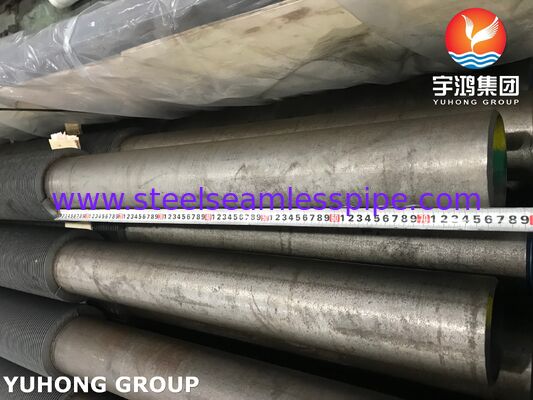
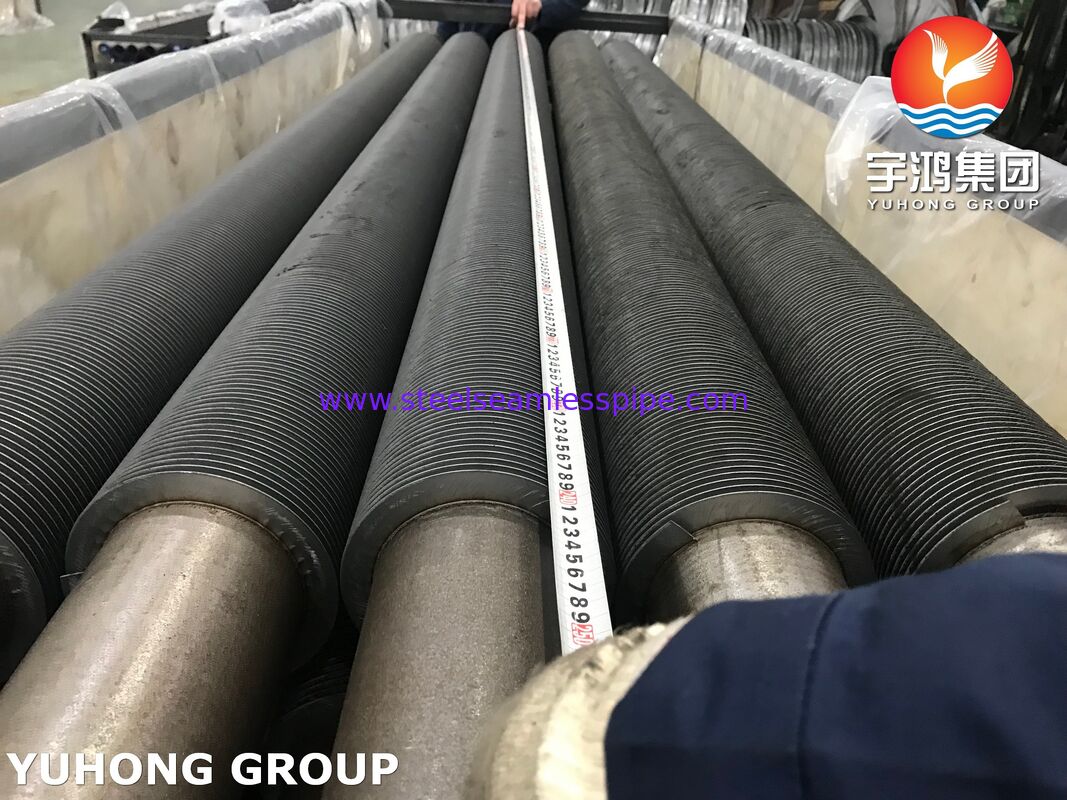
ASTM A213 T9 high-frequency welded finned tubes for superheaters are high-temperature heat-transfer components designed for demanding boiler, power-generation, waste heat recovery, and industrial heating applications. The tubes use ASTM A213 T9 alloy steel as the base tube, while fins are continuously welded to the tube surface using a high-frequency electrical resistance welding process.
T9 is a chromium-molybdenum alloy steel developed for elevated-temperature service. Its combination of chromium, molybdenum, high-temperature strength, oxidation resistance, and thermal stability makes it suitable for superheater sections exposed to hot combustion gases.
The high-frequency welded fin structure significantly increases the external heat-transfer area compared with a bare tube. This allows the superheater to achieve efficient gas-side heat transfer while maintaining a compact heat-transfer surface.
For superheater applications, these tubes can be manufactured according to the customer's required tube diameter, wall thickness, fin height, fin thickness, fin pitch, tube length, fin configuration, and material requirements.
A superheater transfers heat from high-temperature flue gas to saturated or partially heated steam, producing higher-temperature superheated steam for downstream turbine or process use.
The heat-transfer surface needs to withstand:
ASTM A213 T9 is advantageous in this environment because its chromium and molybdenum alloying provides better elevated-temperature performance than conventional carbon-steel tubing.
The high-frequency welded fin further improves heat-transfer efficiency by expanding the gas-side surface area. This can allow a larger heat-transfer duty to be achieved within a relatively compact superheater arrangement.
ASTM A213 T9 HFW finned tubes are particularly suitable for:
This is the primary application for this product. T9 finned tubes can be used in convection-type superheater sections where hot flue gas transfers heat to steam.
They can be incorporated into high-pressure and high-temperature boiler heat-transfer surfaces used in power-generation plants.
T9 finned tubes can be used where high-temperature exhaust gas is recovered to generate or superheat steam.
They may be considered for selected high-temperature heat-transfer sections of heat recovery steam generators, subject to the HRSG designer's temperature, pressure, metallurgy, and welding requirements.
Process industries requiring high-temperature steam generation can use alloy-steel finned tubes in appropriate superheater and heat-recovery sections.
The final dimensions should always be determined by the boiler or heat-exchanger design. The following ranges are typical manufacturing possibilities rather than a limitation of the product.
| Item | Common Range |
|---|---|
| Outside diameter | 25.4–63.5 mm |
| Wall thickness | 2.5–8.0 mm |
| Tube length | 3,000–15,000 mm |
| Fin height | 8–25 mm |
| Fin thickness | 0.8–2.5 mm |
| Fin pitch | 2.5–10 mm |
| Fin type | Solid / serrated, depending on design |
For large industrial projects, special tube diameters, wall thicknesses, fin dimensions and lengths can be manufactured according to customer drawings and project specifications.
A common configuration may consist of:
ASTM A213 T9 tube + carbon/alloy-steel fin + continuous HFW attachment
The fin material should be selected according to the flue-gas temperature, corrosion environment, thermal expansion requirements, welding procedure, and purchaser specification.
The following values represent the typical chemical requirements for ASTM A213 T9. The applicable edition of the standard and purchase specification should be used for final acceptance.
| Element | Typical ASTM A213 T9 Requirement, % |
|---|---|
| Carbon (C) | 0.15 max. |
| Manganese (Mn) | 0.30–0.60 |
| Phosphorus (P) | 0.025 max. |
| Sulfur (S) | 0.025 max. |
| Silicon (Si) | 0.25–1.00 |
| Chromium (Cr) | 8.00–10.00 |
| Molybdenum (Mo) | 0.90–1.10 |
The Cr-Mo alloy system is particularly important for elevated-temperature service. Chromium contributes to oxidation resistance, while molybdenum improves high-temperature strength and resistance to deformation.
Note: Chemical composition should be verified against the exact ASTM A213/ASME SA213 edition specified in the purchase order.
Typical ASTM A213 T9 minimum mechanical requirements include:
| Property | ASTM A213 T9 Requirement |
|---|---|
| Tensile strength | 415 MPa min. |
| Yield strength | 205 MPa min. |
| Elongation | 30% min. |
Mechanical properties are normally verified using material test certificates and applicable mechanical testing procedures.
For actual procurement, the latest applicable ASTM/ASME edition and project specification take precedence over the general values shown above.
The fin is continuously attached to the T9 tube using a controlled high-frequency resistance welding process.
During manufacturing:
Unlike mechanically attached fins, a properly produced HFW fin provides a continuous attachment along the fin-to-tube interface, which is important for thermal conduction and long-term service reliability.
Quality control should cover both the ASTM A213 T9 base tube and the high-frequency welded fin attachment.
Spectrometric or other suitable chemical analysis can be used to verify the T9 alloy composition.
Tensile testing verifies the required tensile strength, yield strength, and elongation of the base tube material.
Hardness testing can be performed to verify material condition and production consistency when required by the applicable specification.
Hydrostatic pressure testing may be performed on the base tubes or finished assemblies according to the applicable ASTM/ASME standard and purchaser requirements.
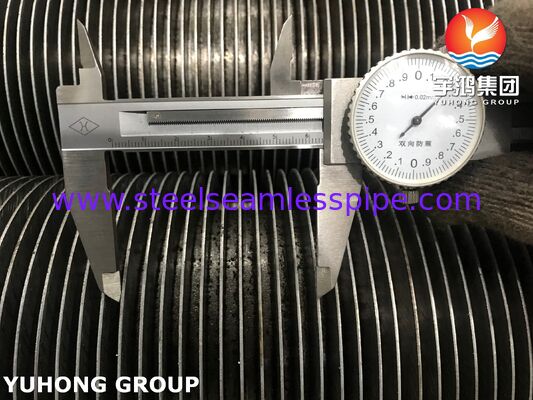
Typical dimensional inspections include:
The tube and fin surfaces are visually inspected for:
The HFW seam should be evaluated according to the purchaser's quality requirements. Destructive weld checks, metallographic examination, peel/attachment testing, or other applicable inspection methods may be specified for qualification and production control.
Where required by the project specification, applicable NDE methods can include:
The exact NDE method should be selected based on the tube specification, design code, service conditions, and purchaser's inspection plan.
T9 Cr-Mo steel is designed for elevated-temperature boiler and heat-exchanger service.
The fins provide substantially more gas-side surface area than a bare tube of the same diameter.
Continuous HFW attachment provides a direct heat-transfer path between the tube and fin.
Higher surface-area density can help engineers achieve the required heat-transfer duty within a smaller heat-transfer section.
The combination of T9 alloy steel and welded fin construction makes the product appropriate for selected high-temperature superheater and heat-recovery applications.
Each production batch can be supplied with appropriate quality documentation, such as:
Inspection requirements can be customized according to ASME, ASTM, EN, API, project specifications, or purchaser-approved inspection and test plans.
Finished finned tubes are normally protected against mechanical damage during transportation. Depending on tube length and customer requirements, packaging may include:
For international shipments, packaging should be selected according to tube length, weight, destination, handling method, and customer requirements.
ASTM A213 T9 high-frequency welded finned tubes are engineered heat-transfer components for high-temperature boiler and heat-recovery applications. Their main advantage is the combination of a Cr-Mo alloy-steel T9 base tube with a continuous high-frequency welded fin, providing both elevated-temperature material performance and increased gas-side heat-transfer area.
They are particularly suitable for superheaters, reheaters, power boilers, waste heat recovery boilers, HRSGs, and selected industrial heat-recovery systems.
For a superheater manufacturer or EPC contractor, the most important purchasing parameters are T9 tube specification, tube OD and wall thickness, fin material, fin height, fin thickness, fin pitch, fin attachment quality, design temperature, design pressure, and applicable inspection requirements.
Contact Person: Vantin
Tel: 19537363734
Fax: 0086-574-88017980