Yuhong Holding Group Co.,LTD
 |
| Place of Origin: | China |
| Brand Name: | YUHONG |
| Certification: | ISO9001:2015; ISO14001:2015; ISO45001:2018; PED 2014/68/EU; WPS/PQR/WPQ; ISO 3834 |
| Model Number: | N/A |
| Minimum Order Quantity: | 500kgs |
|---|---|
| Price: | To be discussed |
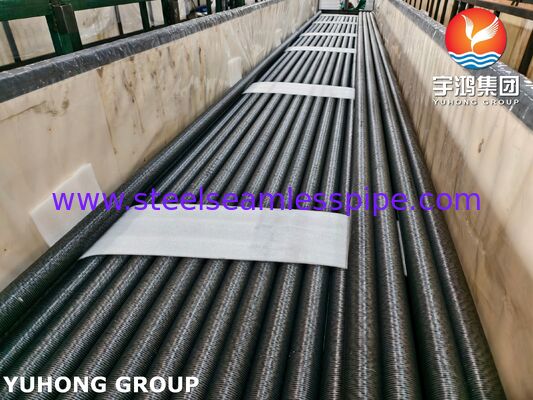
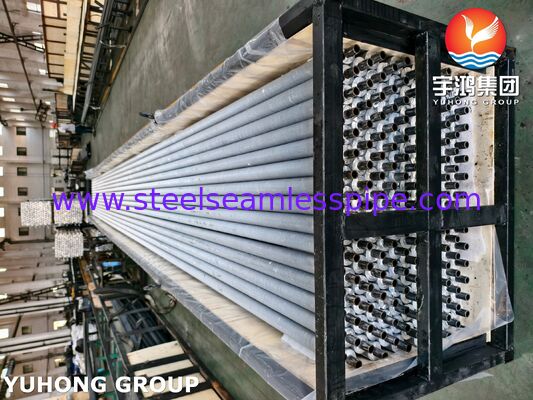
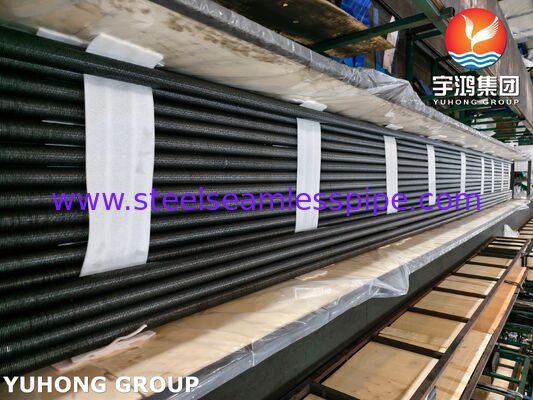
| Packaging Details: | Plywood case or Iron frame wooden case |
| Delivery Time: | 50-120 days |
| Payment Terms: | L/C,T/T |
| Supply Ability: | 5000 meters/day |
| Product: | Embedded Fin Tube | Material: | ASTM A179 |
|---|---|---|---|
| Application: | Air-cooler | Package: | Plywood Case Or Iron Frame Wooden Case |
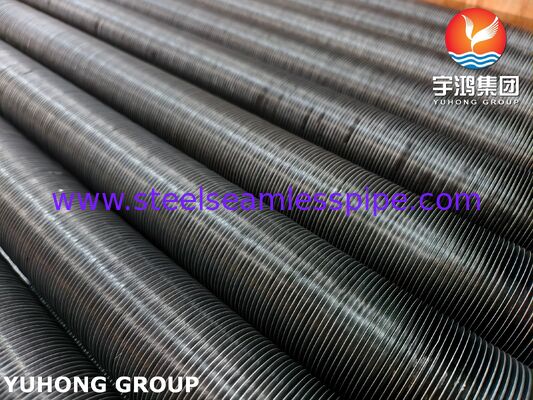
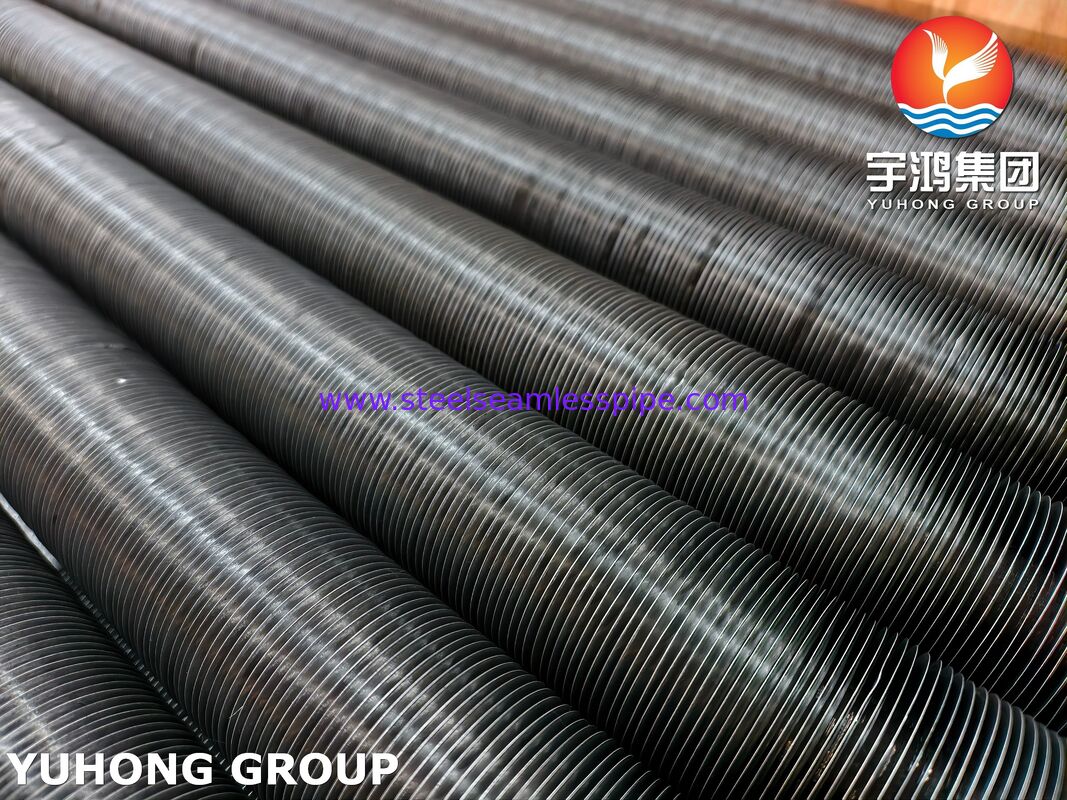
Embedded finned tubes for air coolers are designed to enhance heat-transfer efficiency by increasing the external surface area available for air-side heat exchange. Manufactured with a seamless, cold-drawn carbon steel base tube conforming to ASTM A179, these tubes are widely used in industrial air-cooled heat exchangers, fin-fan coolers, and process-cooling equipment.
Also known as G-type finned tubes, embedded finned tubes are produced by machining a helical groove into the outer surface of the base tube and mechanically embedding a continuous fin strip into the groove. The displaced tube material is pressed back over the fin root to secure it in place. This construction provides a firm mechanical connection and helps maintain thermal contact during operation and temperature cycling.
The base tube is typically manufactured from low-carbon steel, while the fins may be aluminum alloy or another material selected according to the operating temperature, corrosion environment, and thermal design.
ASTM A179 specifies the base tubing rather than the complete finned assembly. Fin material, fin geometry, attachment quality, and finished dimensions must therefore be established separately in the technical specification.
Enhanced heat-transfer area: Helical fins increase the external surface available for heat exchange with air.
Secure mechanical fin attachment: The embedded fin root helps resist loosening under suitable operating conditions.
Consistent thermal contact: Mechanical embedment supports effective heat transfer between the base tube and fin.
Customizable design: Tube diameter, wall thickness, fin height, pitch, material, and length can be adapted to project requirements.
Traceable material quality: Base tubes can be supplied with material certificates and inspection records as agreed in the purchase order.
The following table provides representative commercial dimensions for ASTM A179 embedded finned tubes used in air coolers. Final dimensions should be confirmed against the customer's thermal design, pressure requirements, and approved drawings.
|
Parameter |
Typical range or option |
|---|---|
|
Base tube standard |
ASTM A179 / ASTM A179M |
|
Base tube manufacturing |
Seamless, cold-drawn low-carbon steel |
|
Fin type |
G-type / embedded helical fin |
|
Base tube outside diameter |
16–63.5 mm |
|
Base tube wall thickness |
1.65–5.0 mm |
|
Overall tube length |
Up to approximately 18,000 mm |
|
Fin material |
Aluminum alloy, carbon steel, stainless steel, or other specified material |
|
Fin height |
8–16 mm |
|
Fin thickness |
0.30–0.60 mm |
|
Fin pitch |
2.0–6.0 mm |
|
Fin density |
Approximately 4–13 fins per inch |
|
Fin attachment |
Mechanical embedment in a helical groove |
|
Tube ends |
Plain, beveled, or prepared to customer drawings |
|
Surface protection |
As specified for the tube and fin materials |
Important specification note: ASTM A179 covers seamless cold-drawn heat-exchanger and condenser tubes with outside diameters from 3.2 to 76.2 mm. The ranges above are typical product configurations, not a complete list of mandatory standard dimensions.
For accurate quotation and manufacturing, specify:
Tube outside diameter, wall thickness, and total length.
Effective finned length and unfinned end length.
Fin material, height, thickness, pitch, and required fin density.
Groove dimensions and fin-root embedment requirements.
Design pressure, operating temperature, and process-fluid conditions.
Inspection scope, material certification, applicable standard edition, and quantity.
ASTM A179 is a low-carbon steel tubing specification. Chemical analysis is used to verify the base material's compliance with the specified composition limits. The principal controlled elements are carbon, manganese, phosphorus, and sulfur.
|
Element |
Composition by weight (%) |
|---|---|
|
Carbon (C) |
0.06–0.18 |
|
Manganese (Mn) |
0.27–0.63 |
|
Phosphorus (P) |
0.035 max. |
|
Sulfur (S) |
0.035 max. |
These values are for the ASTM A179 base tube. Fin-strip chemistry depends on the selected fin material. For example, aluminum-alloy fins require a separate material designation and corresponding material certificate.
The following are commonly specified mechanical requirements for ASTM A179 base tubing. Acceptance should be determined using the applicable edition of the standard and the purchase specification.
|
Mechanical property |
Requirement |
|---|---|
|
Tensile strength |
325 MPa minimum |
|
Yield strength |
180 MPa minimum |
|
Elongation in 50.8 mm (2 in.) |
35% minimum |
|
Hardness |
72 HRB maximum |
The cold-drawing process helps achieve dimensional consistency and surface quality. ASTM A179 also requires heat treatment after the final cold-drawing pass at a temperature of at least 650°C.
These mechanical properties apply to the base tube. The completed embedded finned tube must also meet the project's requirements for groove integrity, fin retention, dimensional accuracy, and service conditions.
Quality control for embedded finned tubes should cover both the ASTM A179 base tube and the finished G-type finned assembly. The inspection plan should identify mandatory standard tests separately from any additional tests agreed upon with the customer.
Measure tube outside diameter, wall thickness, length, straightness, fin height, fin pitch, fin thickness, finned length, and groove dimensions. Compare the results with approved drawings and specified tolerances.
Verify the base-tube chemistry through heat analysis and, where required, product analysis. Check the fin material against its own specified grade and certification.
Perform tensile, hardness, flattening, flaring, and flange tests as required by the applicable specification and purchase order. These tests help verify the base tube's strength, ductility, and forming characteristics.
Test the base tube using the method required by the applicable ASTM A179 requirements. Nondestructive electrical testing may be used as permitted by the specification and purchase requirements.
Inspect groove geometry, fin-root embedment, fin alignment, spacing, and attachment integrity. Additional fin pull-off or bond-integrity tests can be agreed upon where appropriate to the design.
Check for cracks, dents, scratches, corrosion, damaged fins, irregular winding, and unacceptable tube-end conditions. Eddy-current testing, ultrasonic testing, or other NDE methods may be specified when suitable for the material and geometry.
ASTM A179 includes requirements for chemical analysis, mechanical tests, and hydrostatic or permitted nondestructive electrical testing. Finished fin-attachment inspections are additional product-specific controls.
Material Test Certificate (MTC), with heat-number traceability.
Chemical composition and mechanical test reports.
Base-tube dimensional inspection records.
Hydrostatic or nondestructive electrical test records.
Fin material certificates and finished-tube inspection reports.
Third-party inspection and project-specific documentation, where required.
The primary target application. Embedded fins increase the external heat-transfer area, helping transfer heat from process fluids to air in forced-draft or induced-draft cooling equipment.
Used in suitable fin-fan coolers for hydrocarbon streams, lubricating oils, and other process-fluid cooling duties.
Suitable for selected intercooler, aftercooler, and gas-cooling applications, subject to the operating pressure, temperature, and material requirements.
Used in compatible process-cooling systems where increased air-side surface area supports efficient equipment design.
Our ASTM A179 embedded finned tubes can be manufactured to project-specific drawings and technical requirements, helping customers match the finished product to their heat-exchanger design.
Material compliance: Seamless, cold-drawn ASTM A179 base tubing.
Precision finning: Controlled groove geometry and fin embedment.
Flexible configurations: Fin materials, pitch, height, thickness, and tube lengths tailored to the order.
Inspection and traceability: Quality records aligned with the agreed inspection and test plan.
Project support: Technical review of drawings, dimensions, operating conditions, and documentation requirements.
Export-ready packaging: Protection designed to reduce handling and transport damage.
Contact Person: Nacy
Tel: +8619965117039
Fax: 0086-574-88017980