Yuhong Holding Group Co.,LTD
 |
| Place of Origin: | China |
| Brand Name: | YUHONG |
| Certification: | ISO9001:2015; ISO14001:2015; ISO45001:2018; PED 2014/68/EU; WPS/PQR/WPQ; ISO 3834 |
| Model Number: | N/A |
| Minimum Order Quantity: | 500kgs |
|---|---|
| Price: | To be discussed |
| Packaging Details: | Plywood case or Iron frame wooden case |
| Delivery Time: | 50-120 days |
| Payment Terms: | L/C,T/T |
| Supply Ability: | 5000 meters/day |
| Product: | Corrugated Fin Tube | Material: | ASTM A269 TP316L |
|---|---|---|---|
| Application: | Condensers | Package: | Plywood Case Or Iron Frame Wooden Case |
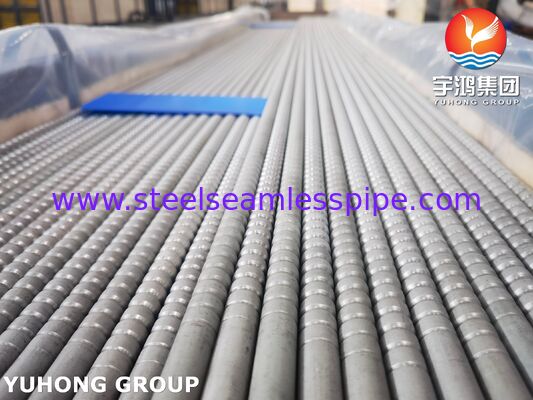
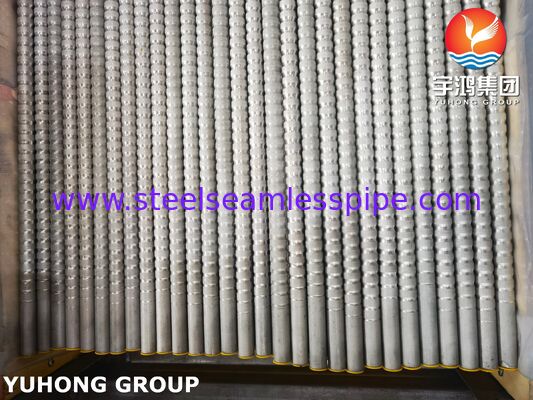
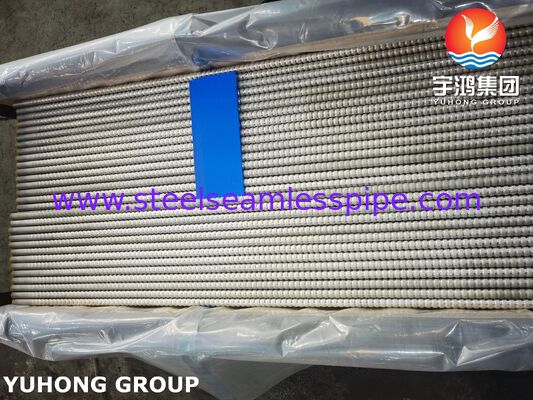
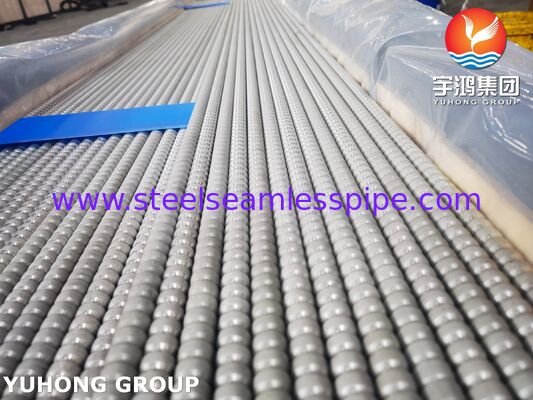
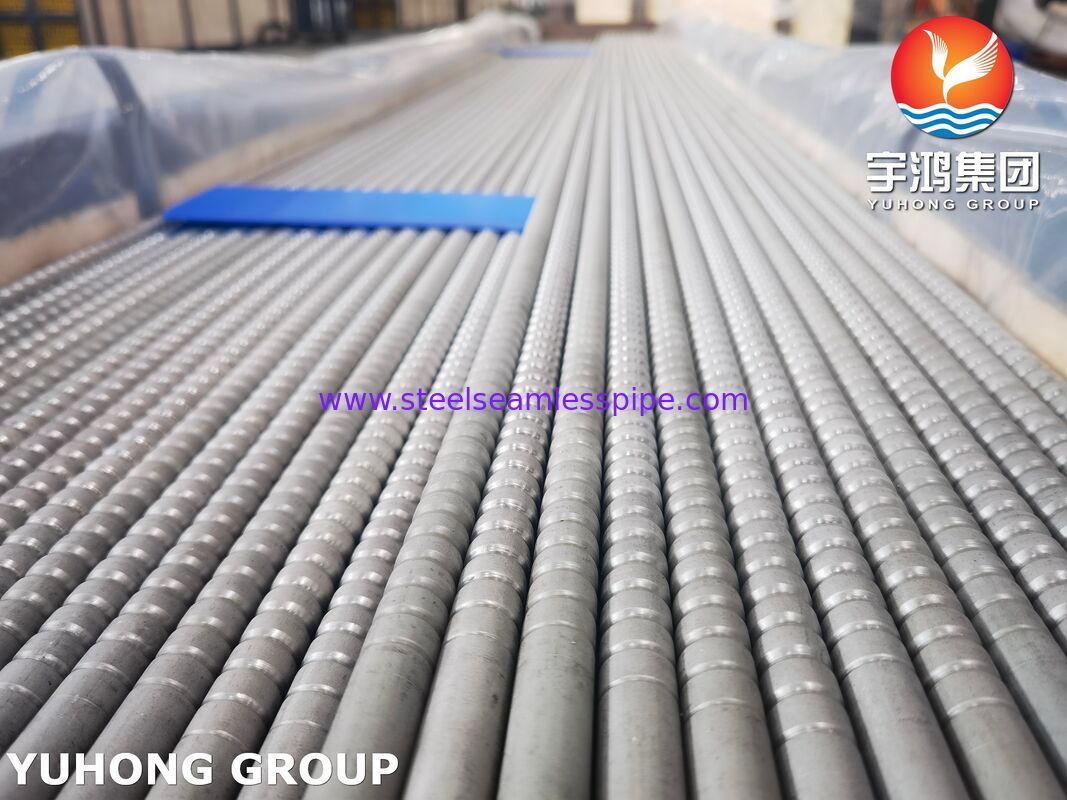
ASTM A269 TP316L corrugated tubes for condensers are stainless-steel heat-transfer tubes designed to improve thermal performance through a specially formed corrugated tube profile. Manufactured from low-carbon TP316L austenitic stainless steel, these tubes combine enhanced heat-transfer characteristics with strong resistance to corrosion, particularly in applications involving moisture, chlorides, process chemicals, and contaminated cooling media.
Corrugation creates a turbulent flow pattern compared with a conventional smooth tube. This can increase fluid mixing at the tube wall, improve heat-transfer efficiency, and allow a more compact heat-exchanger or condenser design when properly engineered for the operating conditions.
TP316L contains molybdenum and has a low carbon content, providing improved resistance to localized corrosion compared with conventional 304L stainless steel in many service environments. The grade is therefore particularly suitable for industrial condensers, chemical-process condensers, marine cooling systems, refrigeration equipment, and other corrosion-sensitive heat-transfer applications.
ASTM A269/A269M covers nominal-wall-thickness seamless and welded austenitic stainless-steel tubing and requires the material to be supplied in the heat-treated condition. The standard also includes mechanical testing and either nondestructive electric testing or hydrostatic testing.
ASTM A269 TP316L corrugated tubes are particularly suitable for:
These tubes can be used in condensers where process vapor must be converted into liquid through indirect heat exchange. Corrugation promotes fluid turbulence and can contribute to improved heat transfer.
Typical applications include:
TP316L is frequently selected for heat-transfer equipment exposed to corrosive process environments. The combination of low carbon content and molybdenum makes it suitable for many chemical-processing duties.
316L is often considered for cooling equipment exposed to marine environments or chloride-containing water. However, actual seawater service should be evaluated carefully because 316L is not immune to localized corrosion in severe chloride conditions.
Corrugated tubes can be used in refrigeration and industrial cooling systems where enhanced heat transfer and compact equipment are desirable.
The corrosion-resistant stainless-steel construction and cleanable surface make TP316L suitable for selected hygienic heat-transfer applications, subject to the required surface finish and sanitary design.
The tubes can be considered for selected water-treatment and desalination heat-transfer applications where the fluid chemistry is compatible with 316L.
| Item | Typical Specification |
|---|---|
| Product | Corrugated Tubes for Condensers |
| Material | ASTM A269 TP316L |
| UNS | S31603 |
| Tube Type | Seamless / Welded |
| Manufacturing Condition | Heat treated |
| Tube Form | Corrugated |
| Outside Diameter | Approx. 6.35–127 mm |
| Wall Thickness | Approx. 0.5–8.0 mm |
| Standard Length | 3,000–12,000 mm |
| Surface | Annealed, pickled, bright annealed or customized |
| End Condition | Plain end / cut end / customized |
| Inspection | Dimensional, visual, chemical, mechanical and NDT |
| Certification | EN 10204 3.1 / 3.2 available upon request |
The ASTM specification commonly covers tubing with nominal wall thicknesses from approximately 0.020 in. (0.51 mm) and above, while actual commercially supplied sizes can vary according to manufacturing capability and purchase requirements.
Common condenser tube dimensions may include:
Important: These are typical manufacturing ranges rather than mandatory ASTM A269 dimensions. Final OD, wall thickness, corrugation pitch, corrugation depth, length, and tolerances should be confirmed against the customer's heat-exchanger drawing or purchase specification.
The corrugated profile is engineered according to the required heat-transfer duty and pressure drop.
Typical design parameters include:
The corrugation can generate secondary flow and greater fluid mixing, potentially increasing the heat-transfer coefficient compared with a smooth tube. The final design should therefore balance heat-transfer enhancement, pressure drop, fouling characteristics, mechanical strength, and manufacturability.
For condenser projects, we can customize the corrugated geometry according to:
The typical chemical requirements for ASTM A269 TP316L are:
| Element | Requirement, wt.% |
|---|---|
| Carbon (C) | ≤ 0.035 |
| Manganese (Mn) | ≤ 2.00 |
| Silicon (Si) | ≤ 1.00 |
| Phosphorus (P) | ≤ 0.045 |
| Sulfur (S) | ≤ 0.030 |
| Chromium (Cr) | 16.0–18.0 |
| Nickel (Ni) | 10.0–15.0 |
| Molybdenum (Mo) | 2.0–3.0 |
| Iron (Fe) | Balance |
These limits are consistent with the ASTM A269 TP316L grade requirements. For small-diameter or light-wall tubing requiring many drawing passes, ASTM A269 includes a specific carbon provision.
The 2–3% molybdenum content is an important feature of TP316L because it improves resistance to localized corrosion in many chloride-containing environments.
Typical minimum mechanical requirements for ASTM A269 TP316L tubing include:
| Property | Minimum / Maximum Requirement |
|---|---|
| Tensile Strength | ≥ 485 MPa |
| Yield Strength, 0.2% Offset | ≥ 170 MPa |
| Elongation | ≥ 35% |
| Hardness | ≤ 90 HRB / approximately 192 HBW |
The low-carbon TP316L grade provides good ductility and forming characteristics while maintaining the corrosion resistance expected from the 316 family of stainless steels.
Our typical manufacturing route for corrugated TP316L condenser tubes includes:
Raw Material Selection → Tube Forming → Welding/Seamless Processing → Heat Treatment → Surface Treatment → Corrugation Forming → Sizing → Cutting → Inspection → Cleaning → Packing
For welded tubes, the weld seam is carefully controlled before the tube undergoes subsequent forming and corrugation operations.
The corrugation process is controlled to maintain consistent:
Solution heat treatment is used to obtain the required metallurgical condition and corrosion resistance of the stainless-steel tube.
Quality control is performed according to ASTM A269 and the applicable purchase specification.
Positive material identification and chemical analysis verify the TP316L composition, including:
A mill test certificate can be supplied with the shipment.
Tensile testing verifies:
The mechanical requirements are checked against the applicable ASTM A269 grade requirements.
Hardness testing confirms that the finished tube remains within the specified hardness limit.
Hydrostatic testing can be performed to verify pressure integrity and detect leakage.
ASTM A269 requires each tube to undergo either a nondestructive electric test or hydrostatic test, subject to the applicable requirements and ordering conditions.
Eddy-current examination can be used as a nondestructive method for detecting discontinuities in stainless-steel tubing. ASTM E426 provides practice for electromagnetic examination of seamless and welded tubular products made from austenitic stainless steels and similar alloys.
For applicable welded tubing, flattening/reverse-flattening inspection can be used to assess tube and weld integrity.
Where applicable, flaring testing evaluates the ductility and forming quality of the tube.
Each production lot can be checked for:
The tube surface is inspected for:
Positive Material Identification can be provided for projects requiring additional verification of TP316L material.
Available surface conditions may include:
For condenser and process applications, the appropriate surface condition should be selected according to the fluid, cleaning method, fouling tendency, and hygiene requirements.
The corrugated geometry promotes turbulence and fluid mixing, which can improve heat-transfer performance.
TP316L provides better resistance to many corrosive environments than conventional 304/304L stainless steel.
The low carbon content helps reduce the risk of sensitization and associated intergranular corrosion after welding or thermal exposure.
Improved heat transfer can potentially allow designers to achieve the required thermal duty with a more compact heat-transfer surface.
TP316L offers good ductility, making it suitable for tube forming and corrugation processes.
Tube dimensions and corrugation parameters can be manufactured according to condenser design requirements.
We manufacture corrugated heat-transfer tubes with a focus on dimensional consistency, tube integrity, corrosion resistance, and reliable heat-transfer performance.
Our production capability supports customized:
For condenser manufacturers and EPC contractors, we can manufacture tubes according to customer drawings, technical specifications, and applicable ASTM requirements.
Typical industries: chemical processing, petrochemical, oil & gas, refrigeration, HVAC, marine engineering, water treatment, desalination, food processing, pharmaceutical processing, and industrial heat recovery.
Corrugated Tubes for Condensers – ASTM A269 TP316L provide a combination of enhanced heat-transfer characteristics, corrosion resistance, low-carbon stainless-steel construction, and customizable corrugated geometry.
They are particularly appropriate for condenser and heat-exchanger applications where conventional smooth tubes may not provide the desired balance of thermal performance, equipment compactness, and corrosion resistance.
For demanding applications, tube dimensions and corrugation geometry should be selected based on the complete thermal and mechanical design rather than by tube size alone.
Contact Person: Nacy
Tel: +8619965117039
Fax: 0086-574-88017980