Yuhong Holding Group Co.,LTD
 |
| Place of Origin: | China |
| Brand Name: | YUHONG |
| Certification: | ISO9001:2015; ISO14001:2015; ISO45001:2018; PED 2014/68/EU; WPS/PQR/WPQ; ISO 3834 |
| Model Number: | N/A |
| Minimum Order Quantity: | 500kgs |
|---|---|
| Price: | To be discussed |
| Packaging Details: | Plywood case |
| Delivery Time: | 50-120 days |
| Payment Terms: | L/C,T/T |
| Supply Ability: | 5000 meters/day |
| Material: | ASTM A312 310S | Application: | Waste Heat Recovery |
|---|---|---|---|
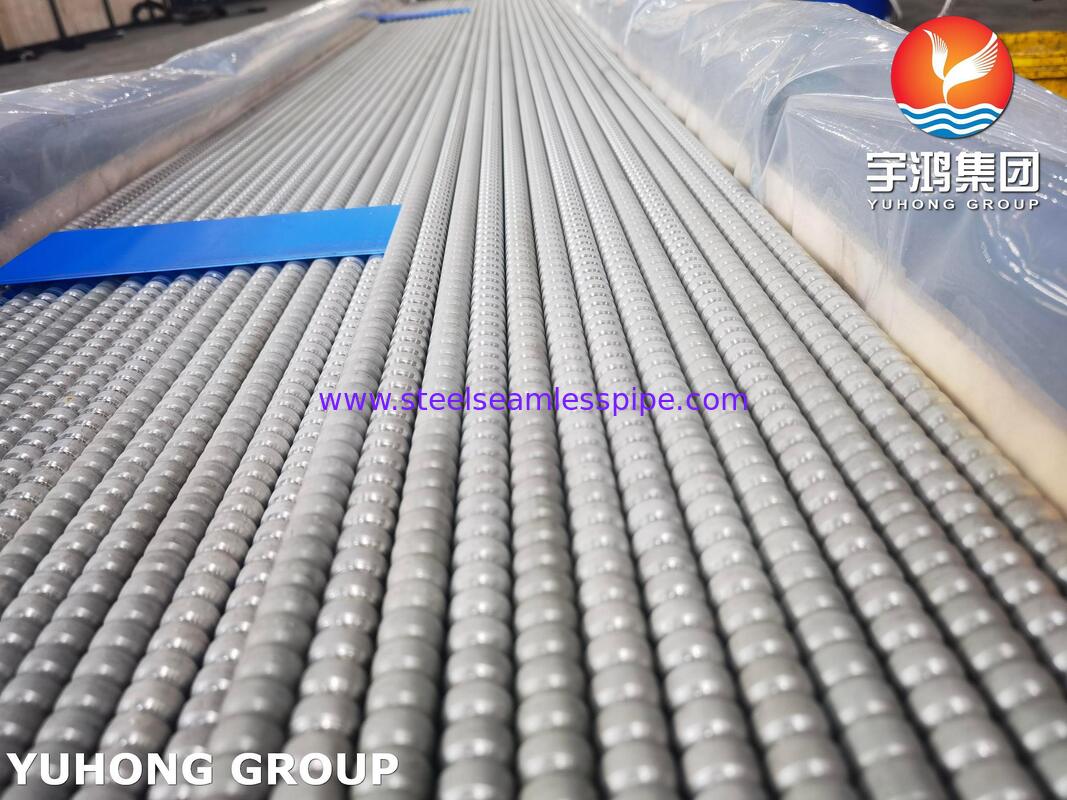
| Product: | Corrugated Fin Tube | Package: | Plywood Case |
| Highlight: | TP310S Stainless Steel Corrugated Tube,Waste Heat Recovery Corrugated Fin Tube,Corrugated Corrugated Tube |
||
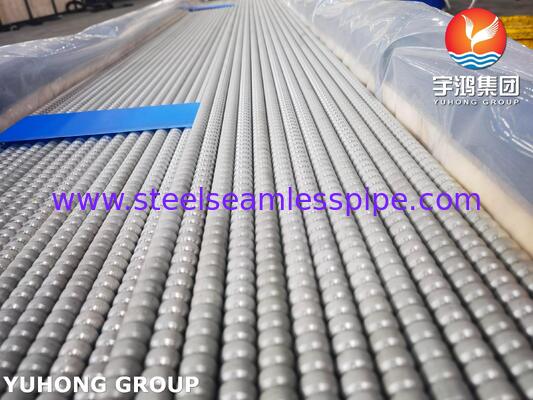
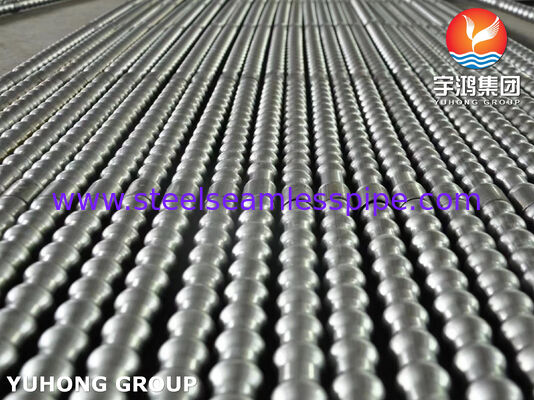
Corrugated tubes, also known as bellows-type tubes or formed corrugated tubes, manufactured from ASTM A312 TP310S stainless steel, are designed for specialized heat-transfer applications involving elevated temperatures, thermal cycling, and demanding industrial operating conditions. Their corrugated geometry increases the effective heat-transfer surface area and can provide greater flexibility than straight tubes, depending on the design and operating conditions.
ASTM A312 TP310S is an austenitic stainless steel grade with high chromium and nickel contents. It is commonly selected for high-temperature service where oxidation resistance and resistance to thermal degradation are important considerations.
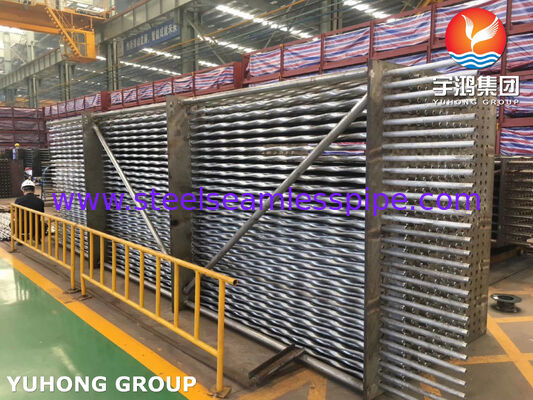
In waste heat recovery systems, corrugated tubes can be considered for custom-designed heat exchangers that recover energy from hot exhaust gases, combustion products, and industrial process streams. Typical potential applications include furnace exhaust heat recovery, industrial incineration systems, high-temperature gas coolers, and specialized waste heat boilers.
The final suitability of a corrugated tube depends on its geometry, wall thickness, design pressure, temperature, fluid chemistry, fatigue requirements, and applicable pressure-equipment code.
High-temperature oxidation resistance: TP310S stainless steel is suitable for many elevated-temperature environments, subject to the actual gas composition and operating conditions.
Enhanced heat-transfer potential: Corrugations disturb fluid flow and can increase heat-transfer performance compared with a smooth tube of similar nominal dimensions.
Improved geometric flexibility: Corrugated profiles can accommodate certain movements and dimensional variations, although pressure and fatigue performance must be verified.
Thermal cycling capability: Properly engineered corrugations can help accommodate thermal expansion and contraction.
Corrosion resistance: The chromium-rich alloy provides resistance to oxidation and many corrosive environments, but resistance to sulfur-bearing gases, chlorides, and other aggressive media requires specific evaluation.
Customizable construction: Tube diameter, corrugation pitch, corrugation depth, wall thickness, and length can be tailored to the heat exchanger design.
Corrugated tubes are frequently manufactured to project-specific dimensions. The following ranges are indicative commercial design ranges, not universal dimensions mandated by ASTM A312.
|
Parameter |
Indicative range or option |
|---|---|
|
Outside diameter |
Approximately 12.7–114.3 mm |
|
Wall thickness |
Approximately 0.8–4.0 mm |
|
Tube length |
Approximately 0.5–12,000 mm, subject to equipment and design requirements |
|
Corrugation pitch |
Approximately 3–25 mm, depending on profile and diameter |
|
Corrugation depth |
Custom-designed according to pressure, flexibility, and heat-transfer requirements |
|
Material |
ASTM A312 TP310S |
|
Construction |
Seamless or welded starting tube, subject to product specification and manufacturing route |
|
Surface finish |
Pickled, annealed, or other agreed finish |
|
End preparation |
Plain ends or project-specific end connections |
These dimensions should be confirmed with the manufacturer before being presented as guaranteed supply limits. Corrugation pitch and depth are design variables rather than standardized ASTM A312 dimensions.
Important specification note: ASTM A312 covers seamless, straight-seam welded, and heavily cold-worked welded austenitic stainless steel pipe. A corrugated or bellows-type finished product may require additional manufacturing, dimensional, pressure, and fatigue specifications beyond ASTM A312. The purchase specification should clearly define the finished geometry and inspection acceptance criteria.
TP310S is a high-alloy austenitic stainless steel known for its elevated chromium and nickel content. The following table gives typical specification limits for the grade, expressed as percentage by mass.
|
Element |
Chemical composition (%) |
|---|---|
|
Carbon (C) |
≤ 0.08 |
|
Manganese (Mn) |
≤ 2.00 |
|
Silicon (Si) |
≤ 1.50 |
|
Phosphorus (P) |
≤ 0.045 |
|
Sulfur (S) |
≤ 0.030 |
|
Chromium (Cr) |
24.00–26.00 |
|
Nickel (Ni) |
19.00–22.00 |
|
Iron (Fe) |
Balance |
The composition should be verified against the applicable ASTM A312 edition and the material test certificate supplied with each production lot.
The following are typical minimum tensile requirements commonly specified for TP310S pipe in the annealed condition. The applicable product standard, edition, dimensions, and manufacturing route must be checked before final acceptance.
|
Property |
Typical requirement |
|---|---|
|
Minimum tensile strength |
515 MPa (75 ksi) |
|
Minimum yield strength, 0.2% offset |
205 MPa (30 ksi) |
|
Minimum elongation in 50 mm |
40% |
|
Hardness |
Verify the applicable specification and product condition |
|
Material structure |
Austenitic stainless steel |
Elevated-temperature performance: Suitable for many high-temperature applications where oxidation resistance is important. Actual allowable stress and service temperature depend on the design code and operating environment.
Ductility: Austenitic structure provides useful ductility for forming corrugated profiles.
Thermal expansion: Thermal movement must be included in exchanger design, especially during repeated start-up and shutdown cycles.
Creep and stress-rupture considerations: For sustained high-temperature pressure service, evaluate the design requirements carefully. TP310S should not automatically be treated as interchangeable with the higher-carbon TP310H grade.
Mechanical properties of the finished corrugated tube may differ from those of the original straight pipe because forming can introduce cold work and residual stresses. Final product acceptance should therefore include agreed requirements for the finished geometry and service conditions.
Quality assurance for corrugated tubes used in waste heat recovery systems should cover both the incoming stainless steel material and the finished formed tube.
Chemical analysis and Positive Material Identification (PMI)
Verify the alloy grade through mill test certificates and, where required, PMI testing. X-ray fluorescence can help identify chromium and nickel content, while carbon measurement requires a suitable method such as optical emission spectroscopy.
Dimensional and visual inspection
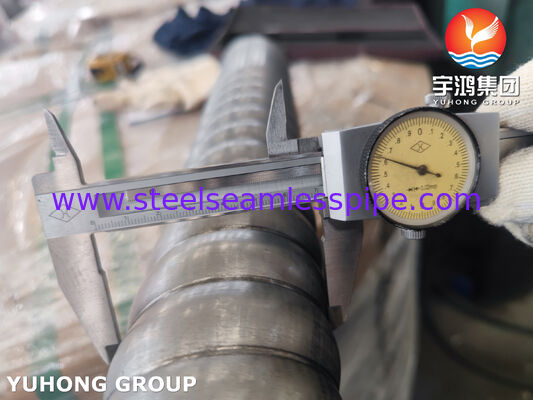
Check outside diameter, wall thickness, overall length, corrugation pitch, corrugation depth, ovality, end preparation, and surface condition. Inspect for cracks, folds, laps, dents, and forming irregularities.
Mechanical testing
Perform tensile testing and other applicable tests on the parent pipe or representative specimens. For formed tubes, additional checks may be required to assess forming effects and dimensional stability.
Pressure and leak testing
Conduct hydrostatic, pneumatic, or other specified leak testing according to the approved design and safety procedures. The test method and acceptance pressure must be established for the finished corrugated geometry.
Nondestructive examination (NDE)
Liquid penetrant testing can identify surface-breaking discontinuities. Radiographic or ultrasonic examination may be applicable to welds or parent material, depending on thickness, geometry, and the specified inspection procedure.
Wall-thickness verification and traceability
Verify the minimum wall thickness after forming and check that the corrugations meet the approved drawing. Maintain material identification, heat numbers, inspection records, and material test certificates.
Recommended documentation: EN 10204 3.1 material inspection certificates, chemical and mechanical test reports, dimensional inspection records, applicable NDE reports, and pressure-test records when required by the purchase specification.
ASTM A312 includes requirements for material testing and hydrostatic or nondestructive electric testing of covered pipe. Those requirements do not, by themselves, establish every inspection criterion for a finished bellows-type product.
Corrugated tubes made from ASTM A312 TP310S can be considered for custom-engineered heat exchangers operating under demanding thermal conditions.
Industrial furnace exhaust recovery: Recover useful energy from high-temperature exhaust streams.
Waste heat recovery boilers: Support heat recovery from combustion gases where the temperature and gas chemistry are compatible with the selected material and design.
Incineration and thermal treatment systems: Used in specially designed heat exchangers handling hot process gases.
Petrochemical and chemical processing: Applied to selected high-temperature gas cooling and heat-recovery duties.
Industrial exhaust heat exchangers: Suitable for applications where thermal expansion, corrosion resistance, and heat-transfer performance must be considered together.
The final selection should account for gas-side fouling, particulate loading, pressure drop, thermal fatigue, corrosion, and the possibility of condensate formation. TP310S is not universally resistant to every waste-gas environment.
We supply corrugated stainless steel tubes for industrial heat-transfer and waste heat recovery projects, with product specifications tailored to the customer's design requirements.
Material options based on ASTM A312 TP310S, subject to the agreed product specification.
Custom corrugation profiles, dimensions, wall thicknesses, and tube lengths.
Material traceability and inspection documentation.
Quality checks covering dimensional accuracy, surface condition, and specified performance tests.
Technical coordination for project drawings, manufacturing tolerances, and inspection requirements.
Packaging and identification suitable for industrial shipment and installation.
Contact Person: Nacy
Tel: +8619965117039
Fax: 0086-574-88017980