Yuhong Holding Group Co.,LTD
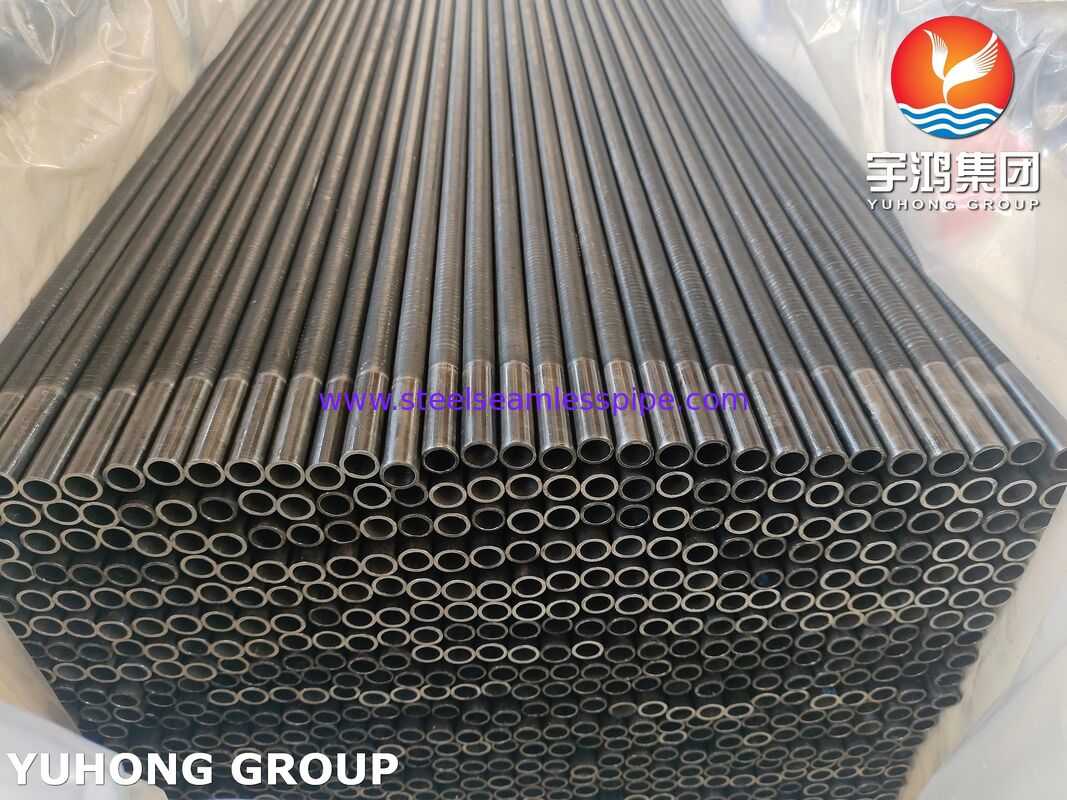 |
| Place of Origin: | China |
| Brand Name: | YUHONG |
| Certification: | ISO9001:2015; ISO14001:2015; ISO45001:2018; PED 2014/68/EU; WPS/PQR/WPQ; ISO 3834 |
| Model Number: | N/A |
| Minimum Order Quantity: | 500kgs |
|---|---|
| Price: | To be discussed |
| Packaging Details: | Plywood case |
| Delivery Time: | 50-120 days |
| Payment Terms: | L/C,T/T |
| Supply Ability: | 5000 meters/day |
| Product: | Low Fin Tube | Material: | ASTM A333 GR.1 |
|---|---|---|---|
| Application: | Air-Cooled Condensers | Package: | Plywood Case |
| Highlight: | Low-Finned Tubes for Air-Cooled Condensers,ASTM A333 Gr. 1 Fin Tubes,Low-Finned Tubes for Condensers |
||
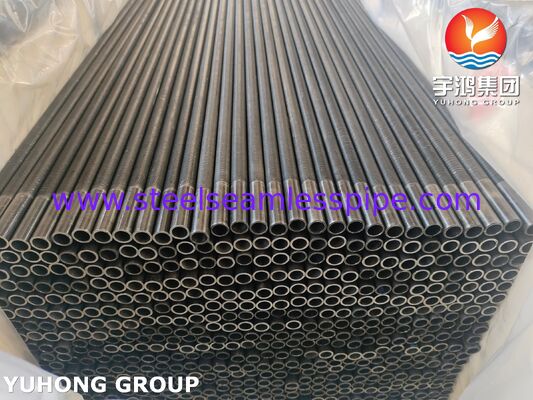
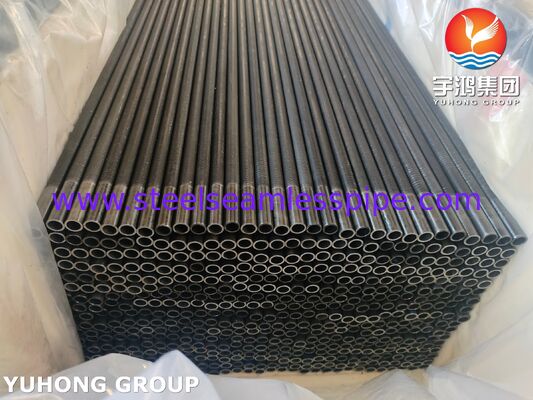
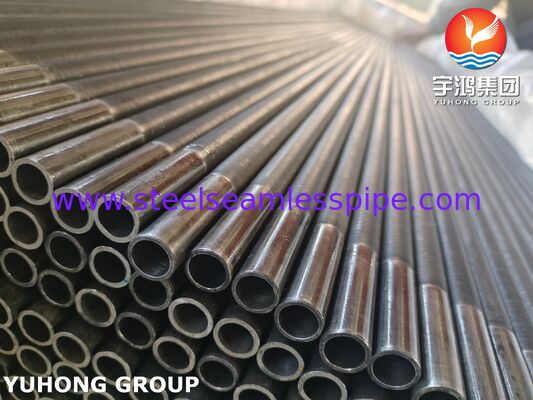
Our low-finned tubes for air-cooled condensers are engineered to improve heat-transfer performance in industrial cooling and condensation systems. Manufactured using ASTM A333 Grade 1 carbon-steel base material, these tubes combine a pressure-containing tube wall with an enhanced external heat-transfer surface designed for specific exchanger requirements.
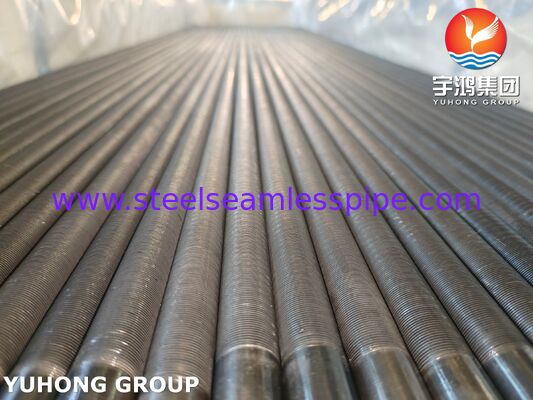
Low fins increase the available surface area while retaining a relatively compact tube profile. Depending on the exchanger configuration, they can support efficient heat rejection, help optimize equipment dimensions, and improve thermal performance when the air-side heat-transfer resistance is significant.
ASTM A333 Grade 1 is intended for low-temperature service where the specified notch-toughness requirements apply. It may be considered for compatible condenser and process-cooling duties, subject to operating temperature, pressure, fluid compatibility, corrosion allowance, and the equipment designer's approval.
Product name: Low-Finned Tubes for Air-Cooled Condensers
Base tube material: ASTM A333 Grade 1 carbon steel
Product type: Integral low-finned heat-exchanger tube
Manufacturing options: Cold-formed or rolled integral fins, subject to material and dimensional feasibility
Supply condition: As agreed in the purchase specification
Documentation: Material test certificate, dimensional inspection report, and agreed test records
Enhanced heat-transfer area: Low-profile fins increase the external surface available for heat exchange.
Compact exchanger design: The increased surface area may help reduce the required tube count or exchanger footprint, subject to thermal design calculations.
Low-temperature material option: Grade 1 carbon steel is intended for qualifying low-temperature applications.
Integral fin construction: Fins formed from the parent tube eliminate a separate fin-to-tube attachment interface.
Customizable dimensions: Base-tube diameter, wall thickness, fin height, fin pitch, finned length, and plain-end dimensions can be specified to suit the equipment design.
Traceable quality control: Material identification, dimensional verification, and specified inspection records support project quality assurance.
For selected condenser designs where the specified tube geometry and material are suitable for the process conditions.
For compatible hydrocarbon, chemical, and industrial process streams requiring controlled heat rejection.
For selected cooling and heat-exchange duties in which low-temperature toughness and carbon-steel construction are appropriate.
For applications whose minimum design metal temperature, pressure, and impact-test requirements are satisfied by the specified material and product construction.
Final suitability must be confirmed by the exchanger designer. ASTM A333 Grade 1 should not be assumed suitable for every cryogenic or LNG duty.
The following are indicative manufacturing and design ranges for inquiry purposes, not dimensional limits mandated by ASTM A333. Actual availability depends on the selected base-tube condition, fin-forming process, tooling, and project specification.
| Parameter | Indicative range |
|---|---|
| Base-tube outside diameter | 12.7–38.1 mm |
| Base-tube wall thickness | 1.5–4.0 mm |
| Low-fin height | 0.5–1.5 mm |
| Fin pitch | 1.0–2.5 mm |
| Tube length | 1,000–12,000 mm |
| Plain-end length | As specified by drawing |
| Fin profile | Integral external low fins |
| Dimensional tolerances | As agreed in the purchase specification |
These ranges are preliminary selection guidance only. They must not be interpreted as a guarantee that every diameter and wall thickness combination can be produced in ASTM A333 Grade 1. Confirm the minimum wall remaining beneath the fins, finished dimensions, tolerances, and applicable pipe requirements before placing an order.
Base-tube procurement: Select seamless or welded pipe meeting the applicable ASTM A333 Grade 1 requirements and approved product specification.
Material verification: Check material identification, certificates, heat numbers, and specified chemical and mechanical test results.
Surface preparation: Inspect the tube surface and prepare the tube for controlled fin forming.
Fin forming: Produce integral external low fins using an approved forming process that is compatible with the tube material and required dimensions.
Dimensional control: Verify base diameter, fin geometry, fin pitch, finned length, wall thickness requirements, and plain ends.
Final inspection: Perform the specified visual, dimensional, and pressure-integrity or nondestructive examinations.
Marking and packing: Maintain traceability and protect the tubes against mechanical damage, corrosion, and contamination during transport.
Testing shall be selected according to the applicable ASTM A333 edition, the approved product specification, the manufacturing process, and the purchaser's inspection requirements.
1. Chemical composition analysis
Verify the heat analysis and, where required, product analysis against the chemical limits for Grade 1.
2. Tensile testing
Determine tensile strength, yield strength, and elongation to confirm compliance with the specified mechanical requirements.
3. Charpy V-notch impact testing
Verify low-temperature impact toughness at the applicable test temperature and specimen requirements. The applicable ASTM A333 edition and order requirements govern acceptance.
4. Hydrostatic testing
Perform hydrostatic testing when required by the applicable pipe specification and purchase order.
5. Nondestructive electric testing
Apply the relevant permitted examination method to the base pipe where required by the applicable specification.
6. Dimensional inspection
Measure outside diameter, wall thickness, overall length, fin height, fin pitch, finned length, and plain-end dimensions.
7. Visual and surface inspection
Check for unacceptable cracks, laps, dents, forming damage, corrosion, and other surface discontinuities.
8. Fin-profile and minimum-wall verification
Confirm the finished fin geometry and the minimum remaining wall beneath the fins against the approved drawing and acceptance criteria.
9. Additional examinations
Ultrasonic testing, magnetic-particle examination, or other supplementary tests may be specified where technically applicable and agreed between purchaser and manufacturer.
Testing should not be described as completed or certified unless the relevant inspection has actually been performed and documented.
Tubes are prepared for transport according to the order requirements. Packaging may include protective end caps, bundled or crated packing, moisture protection, and durable identification labels. Each package can be marked with the product designation, material grade, dimensions, quantity, heat number or traceability reference, and purchase-order information as applicable.
To obtain an accurate quotation, please provide:
ASTM A333 Grade 1 specification and required edition
Seamless or welded base-tube construction
Base-tube outside diameter and wall thickness
Fin height, pitch, and profile
Total tube length and plain-end length
Quantity and delivery requirements
Operating temperature, design pressure, and process medium
Required impact tests, nondestructive examinations, and documentation
Applicable equipment code and purchaser-specific quality requirements
The following table provides the commonly specified limits for Grade 1 carbon-steel pipe. Confirm the values against the edition of ASTM A333 stated in the purchase order.
|
Element |
Chemical requirement, wt.% |
|---|---|
|
Carbon (C) |
≤ 0.30 |
|
Manganese (Mn) |
0.40–1.06 |
|
Phosphorus (P) |
≤ 0.025 |
|
Sulfur (S) |
≤ 0.025 |
|
Silicon (Si) |
≥ 0.18 |
Note: The applicable standard contains additional provisions, including permitted manganese adjustments based on carbon content. Heat analysis and product analysis requirements should be checked against the specified edition.
|
Property |
Typical specified minimum |
|---|---|
|
Tensile strength |
380 MPa (55 ksi) |
|
Yield strength |
205 MPa (30 ksi) |
|
Elongation, longitudinal specimen |
35% |
|
Elongation, transverse specimen |
25% |
|
Charpy V-notch impact test |
Required where applicable |
|
Heat treatment |
As required by ASTM A333 |
Contact Person: Nacy
Tel: +8619965117039
Fax: 0086-574-88017980