Yuhong Holding Group Co.,LTD
 |
| Place of Origin: | China |
| Brand Name: | YUHONG |
| Certification: | ISO9001:2015; ISO14001:2015; ISO45001:2018; PED 2014/68/EU; WPS/PQR/WPQ; ISO 3834 |
| Model Number: | N/A |
| Minimum Order Quantity: | 500kgs |
|---|---|
| Price: | To be discussed |
| Packaging Details: | Plywood Case |
| Delivery Time: | 50-120 days |
| Payment Terms: | L/C,T/T |
| Supply Ability: | 5000 meters/day |
| Material: | ASTM A269 TP316 | Application: | Heat Exchanger |
|---|---|---|---|
| Package: | Plywood Case Or Iron Frame Wooden Case |
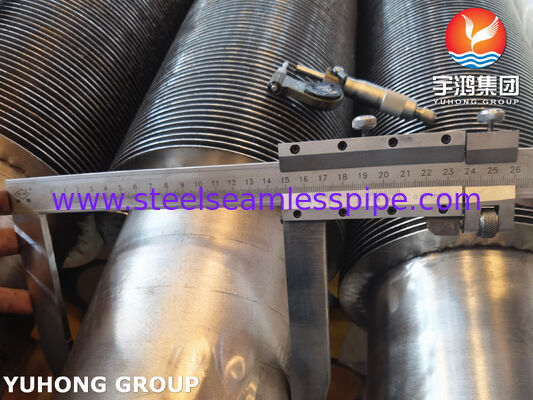
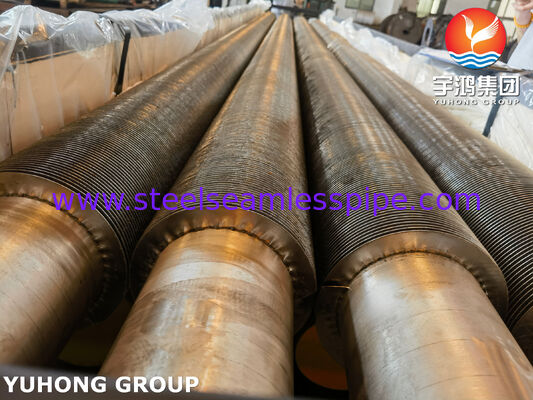
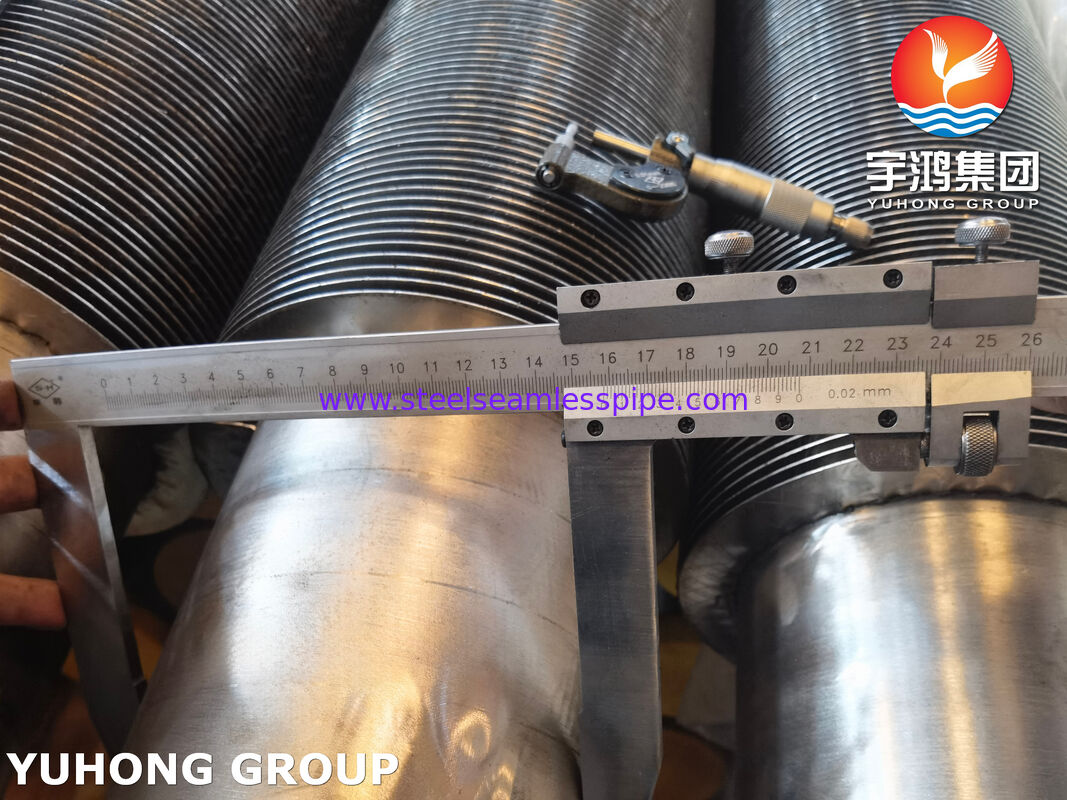
High-Frequency Welded Finned Tubes (HFW Finned Tubes) manufactured with ASTM A269 TP316 stainless steel are engineered heat-transfer components for heat exchangers requiring corrosion resistance, reliable thermal performance, and durable fin-to-tube bonding.
The fin is continuously welded to the outside surface of the tube using a high-frequency electrical resistance welding process. This creates a strong metallurgical/mechanical connection between the fin and tube while maintaining a consistent fin profile along the complete tube length.
ASTM A269 TP316 is an austenitic stainless steel containing molybdenum, providing improved resistance to chloride-containing and many chemical environments compared with conventional 304 stainless steel. This makes TP316 HFW finned tubes suitable for demanding heat-exchanger applications involving humid, corrosive, or chemically active operating conditions.
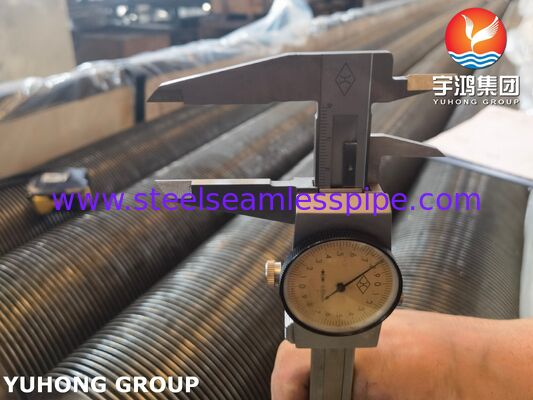
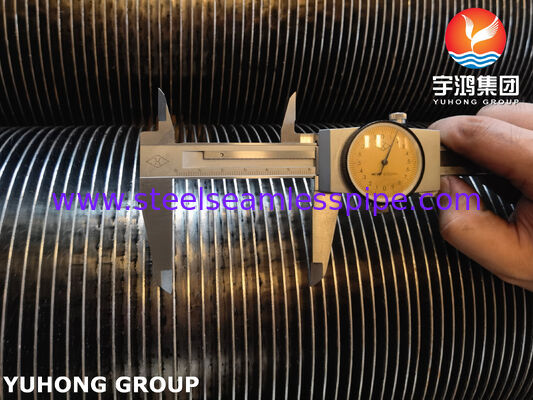
Our HFW finned tubes can be manufactured according to customer drawings and heat-exchanger requirements, including specified tube diameter, wall thickness, fin height, fin thickness, fin pitch, tube length, and surface finish.
| Item | Typical Range |
|---|---|
| Standard | ASTM A269 / A269M |
| Tube Grade | TP316 |
| UNS | S31600 |
| Tube OD | 12.7–50.8 mm typical |
| Tube Wall Thickness | 1.0–3.5 mm typical |
| Overall Tube Length | Up to approximately 12,000 mm |
| Fin Height | 5–25 mm typical |
| Fin Thickness | 0.3–1.2 mm typical |
| Fin Pitch | 2.0–10.0 mm typical |
| Fin Type | Solid or serrated, according to design |
| Fin Attachment | High-frequency welded |
| Surface Condition | Pickled, annealed, bright annealed, or customer specified |
| End Finish | Plain, beveled, threaded, or customer specified |
The dimensions above represent commonly manufactured ranges rather than limitations of ASTM A269. Final dimensions should be selected according to heat-exchanger thermal design, pressure-drop requirements, fabrication requirements, and purchaser drawings.
ASTM A269 historically identifies commonly furnished tubing from approximately 6.4 mm ID upward and 0.51 mm nominal wall thickness upward, while actual HFW finned-tube dimensions are normally determined by the heat-exchanger design.
Typical ASTM A269 TP316 chemical requirements are shown below. Values are maximum unless a range is specified.
| Element | TP316 Requirement, % |
|---|---|
| Carbon (C) | ≤ 0.080 |
| Manganese (Mn) | ≤ 2.00 |
| Silicon (Si) | ≤ 1.00 |
| Phosphorus (P) | ≤ 0.045 |
| Sulfur (S) | ≤ 0.030 |
| Chromium (Cr) | 16.0–18.0 |
| Nickel (Ni) | 10.0–14.0 |
| Molybdenum (Mo) | 2.0–3.0 |
| Nitrogen (N) | ≤ 0.10 |
| Iron (Fe) | Balance |
ASTM's specification identifies TP316 as UNS S31600 and includes chemical-composition controls for carbon, manganese, phosphorus, sulfur, silicon, nickel, chromium, and molybdenum.
Typical minimum mechanical requirements for ASTM A269 TP316 tubing are:
| Property | Requirement |
|---|---|
| Tensile Strength | ≥ 515 MPa |
| Yield Strength, 0.2% Offset | ≥ 205 MPa |
| Elongation in 2 in. / 50 mm | ≥ 35% |
| Hardness | ASTM A269 requirement, depending on product condition |
The final mechanical-property values should be confirmed against the applicable edition of ASTM A269/A269M and the agreed delivery condition. ASTM A269 includes tensile/mechanical testing provisions as well as hardness and other tube-quality requirements.
During production, the stainless-steel fin strip is continuously positioned against the tube surface while high-frequency electrical energy generates localized heat at the contact interface. Pressure is applied to produce a continuous welded attachment.
The HFW process provides:
For heat-exchanger manufacturers, the continuous welded interface is particularly important because poor fin attachment can increase thermal contact resistance and reduce the effective heat-transfer performance of the finned surface.
Each production batch can be inspected according to ASTM A269, purchaser specifications, and the applicable heat-exchanger manufacturing standard.
Heat or product analysis is performed to verify that the TP316 material conforms to the specified chemical composition.
Tensile testing verifies yield strength, tensile strength, and elongation of the tube material.
Hardness is checked to verify conformity with the applicable material and delivery requirements.
Hydrostatic testing can be performed to verify tube pressure integrity.
ASTM A269 requires each tube to undergo either a nondestructive electric test or a hydrostatic test, subject to the applicable specification requirements.
The tube may be subjected to flattening testing to evaluate ductility and resistance to deformation.
Flaring testing can be applied to evaluate tube ductility and resistance to cracking during deformation.
For welded tubing, reverse flattening can be used to evaluate the welded seam for imperfections.
The following dimensions can be checked:
The welded fin-to-tube interface is visually and dimensionally inspected. Additional inspection methods, including dye penetrant or other NDT methods, can be provided when required by the purchaser's specification.
ASTM A269 TP316 HFW finned tubes can be supplied with different surface conditions depending on the application:
For corrosive heat-exchanger service, appropriate cleaning and passivation can help maintain the stainless-steel surface condition after fabrication.
ASTM A269 TP316 HFW finned tubes are suitable for heat exchangers where increased heat-transfer area and enhanced corrosion resistance are required.
Typical applications include:
TP316 is particularly useful where the heat-transfer environment may contain chlorides or other corrosive contaminants. However, actual material selection should always consider the specific fluid chemistry, temperature, concentration, and operating conditions.
Improved heat-transfer capacity:
The external fins substantially increase the heat-transfer surface compared with a plain tube of the same nominal diameter.
Corrosion resistance:
The TP316 stainless-steel construction is suitable for many demanding industrial environments.
Reliable fin attachment:
High-frequency welding produces a continuous fin-to-tube connection designed for stable heat-transfer performance.
Flexible design:
Fin height, pitch, thickness, tube dimensions, and length can be adjusted to meet thermal and mechanical requirements.
Compact equipment design:
The increased external surface area can help heat-exchanger designers achieve the required thermal duty within a relatively compact bundle.
Our ASTM A269 TP316 HFW finned tubes can be supplied with complete quality documentation, including:
When requesting a quotation for HFW finned tubes, customers are encouraged to specify:
We can manufacture ASTM A269 TP316 high-frequency welded finned tubes according to customer drawings and project-specific heat-transfer requirements.
Contact Person: Nacy
Tel: +8619965117039
Fax: 0086-574-88017980