Yuhong Holding Group Co.,LTD
 |
| Place of Origin: | China |
| Brand Name: | YUHONG |
| Certification: | ISO9001:2015; ISO14001:2015; ISO45001:2018; PED 2014/68/EU; WPS/PQR/WPQ; ISO 3834 |
| Model Number: | N/A |
| Minimum Order Quantity: | 500kgs |
|---|---|
| Price: | To be discussed |
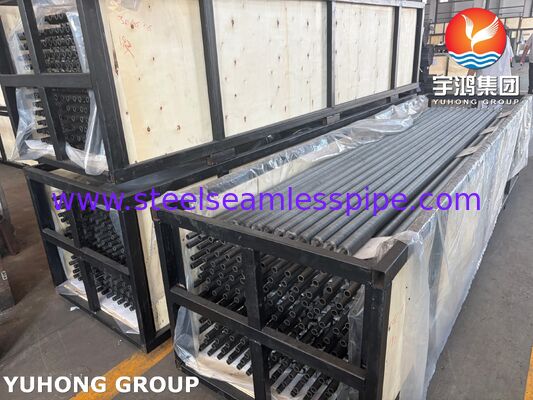
| Packaging Details: | Plywood case or Iron frame wooden case |
| Delivery Time: | 50-120 days |
| Payment Terms: | L/C,T/T |
| Supply Ability: | 5000 meters/day |
| Product: | Wound Fin Tube | Material: | ASME SA179 |
|---|---|---|---|
| Application: | Air Cooler Heat Exchanger | Package: | Plywood Case Or Iron Frame Wooden Case |
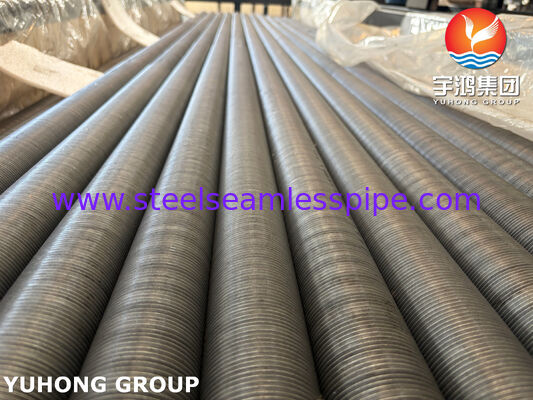
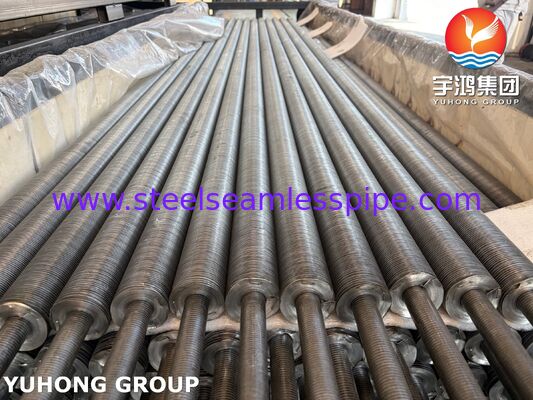
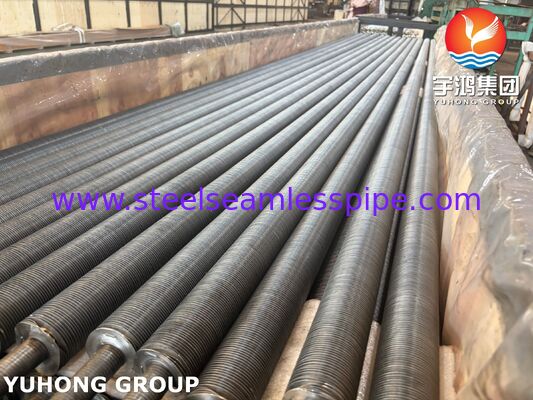
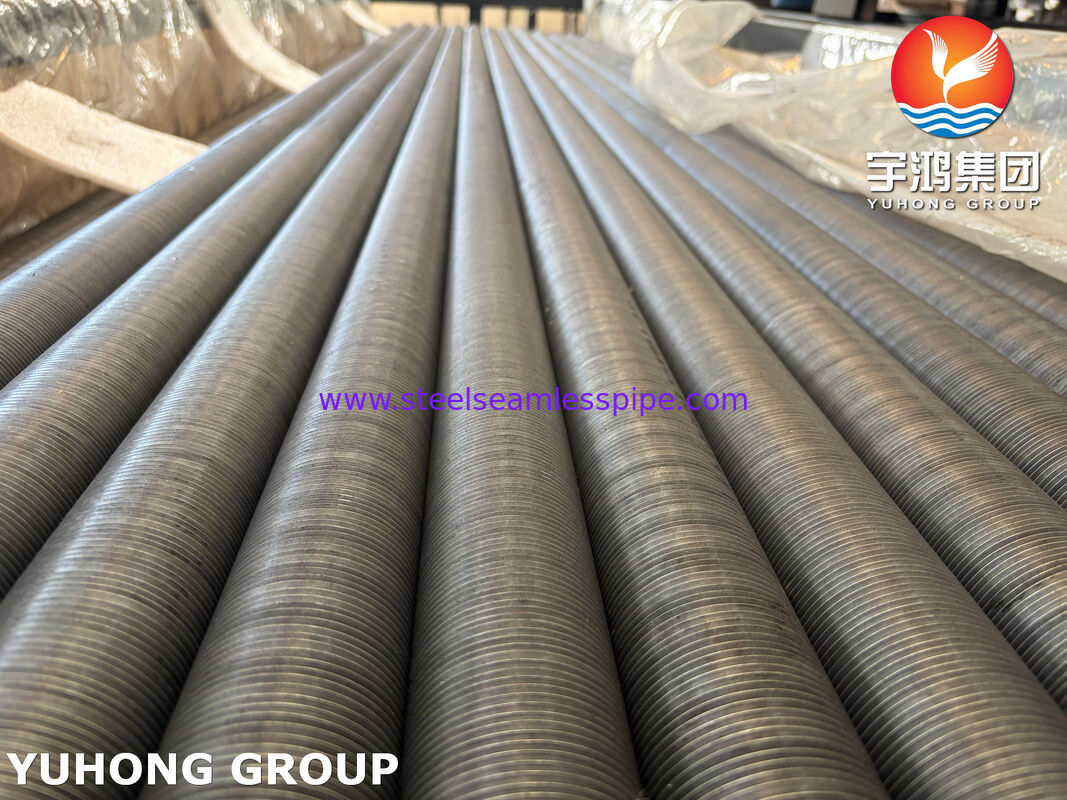
Our helically wound finned tubes manufactured with ASME SA179 / ASTM A179 seamless carbon steel base tubes are designed for efficient heat transfer in air-cooled heat exchangers, industrial air coolers, and other thermal processing equipment. By increasing the external heat-transfer surface area, these tubes help improve cooling performance, optimize equipment dimensions, and support reliable operation in demanding industrial environments.
The base tubes are produced from low-carbon steel in accordance with the applicable SA179/A179 requirements. Helically wound fins are attached around the tube circumference using a specified finning process, creating an extended surface that promotes heat exchange between the internal process fluid and the surrounding air.
Depending on the operating conditions and customer requirements, the tubes can be supplied with aluminum or other suitable fin materials, subject to design compatibility. Fin material, fin height, fin density, attachment method, and tube dimensions can be customized to meet the requirements of individual air-cooler projects.
We supply wound finned tubes for applications requiring a practical balance of heat-transfer efficiency, mechanical reliability, manufacturing flexibility, and cost control.
Enhanced heat-transfer area: Helically wound fins increase the external surface area available for air-side heat exchange.
Reliable carbon steel base tube: SA179/A179 seamless, cold-drawn low-carbon steel is intended for heat-exchanger and condenser tubing applications.
Flexible fin configurations: Fin height, thickness, pitch, and material can be selected according to the thermal design.
Customizable dimensions: Tube length, outside diameter, wall thickness, and fin geometry can be tailored to project specifications.
Broad industrial applicability: Suitable for properly engineered air coolers, process coolers, condensers, and selected heat-recovery applications.
Quality-focused manufacturing: Dimensional checks, material traceability, and specified tube and fin inspections help ensure consistent product quality.
Used in oil and gas processing, petroleum refining, and petrochemical plants to cool compatible process fluids when air is used as the cooling medium.
Applied in systems that require dependable heat rejection without relying entirely on cooling-water circuits.
Used in suitably designed equipment to remove heat from compressed gases and process streams.
Can be incorporated into compatible condenser and thermal-processing designs where the selected tube, fin material, and operating conditions meet the engineering requirements.
May be used in suitable low- or moderate-temperature heat-recovery equipment. Final selection must account for flue-gas temperature, corrosion, oxidation, thermal expansion, and fin-material limitations.
The following are representative manufacturing ranges for helically wound finned tubes, not universal requirements imposed by SA179/A179. Final dimensions depend on the heat-exchanger design, finning process, material selection, and customer drawings.
| Parameter | Typical supply range |
|---|---|
| Base tube material | ASME SA179 / ASTM A179 carbon steel |
| Base tube outside diameter | 12.7–76.2 mm |
| Base tube wall thickness | 1.2–5.0 mm |
| Tube length | 1,000–18,000 mm, subject to transport and equipment limits |
| Fin material | Aluminum, carbon steel, or another specified compatible material |
| Fin height | Approximately 6–25 mm |
| Fin thickness | Approximately 0.3–1.0 mm, depending on fin material and design |
| Fin pitch | Approximately 2.0–10.0 mm |
| Fin configuration | Helically wound, including specified L-foot, LL-foot, or KL-type designs where applicable |
| Surface condition | Bare, cleaned, coated, or otherwise protected as specified |
Standard compliance note: ASTM A179/A179M covers seamless, cold-drawn low-carbon steel heat-exchanger and condenser tubes with outside diameters of 3.2–76.2 mm. The standard governs the base tube, not the complete fin geometry or attachment design. Fin dimensions and manufacturing tolerances must therefore be agreed separately.
SA179/A179 is a low-carbon steel tubing specification intended for seamless, cold-drawn heat-exchanger and condenser tubes. It is commonly selected for thermal equipment where the operating temperature, pressure, fluid chemistry, and corrosion conditions are compatible with carbon steel.
The tubes are manufactured and heat-treated in accordance with the applicable specification and purchase requirements. For ASME Code applications, the relevant SA179 requirements and the governing construction code should be confirmed for the project.
The following limits are specified for ASTM A179/A179M steel. Values are percentages by weight.
| Element | Chemical requirement |
|---|---|
| Carbon (C) | 0.06–0.18% |
| Manganese (Mn) | 0.27–0.63% |
| Phosphorus (P) | 0.035% maximum |
| Sulfur (S) | 0.035% maximum |
Chemical composition is verified through the applicable heat analysis and, when required, product analysis. Actual values are documented on the material test certificate. The limits above refer to the steel base tube, not the fin material.
Typical ASTM A179 specified mechanical requirements are listed below. Acceptance criteria must be checked against the applicable edition and purchase specification.
| Property | Requirement |
|---|---|
| Tensile strength | Minimum 325 MPa |
| Yield strength | Minimum 180 MPa |
| Elongation | Minimum 35% for the applicable standard test specimen |
| Hardness | Maximum 72 HRB |
Mechanical properties apply to the base tube under the conditions and specimen requirements defined by the standard. They should not be interpreted as mechanical-property guarantees for the completed finned assembly or its fin attachment.
Quality assurance can be arranged according to the applicable standard, purchase order, approved inspection and test plan, and customer requirements.
Heat analysis and any required product analysis verify that the carbon steel meets the specified chemical limits. Material identification and traceability are maintained throughout production.
Tensile tests verify the specified tensile strength, yield strength, and elongation of the base tube material.
Hardness testing confirms compliance with the applicable base-tube hardness limit.
The tube specimen is flattened under the specified conditions to evaluate its ability to withstand deformation without unacceptable cracking or defects.
Flaring tests evaluate the tube's ductility and resistance to cracking during the specified expansion operation.
A flange test may be performed when required by the governing standard and purchase order, including where it is specified as an alternative to the flaring test.
Base tubes are examined using the testing method permitted by the applicable specification and agreed purchase requirements. Additional examination may be specified for particular projects.
Outside diameter, wall thickness, straightness, length, and end condition are checked against the purchase specification. For finned tubes, inspections also cover fin height, fin pitch, fin thickness, fin coverage, and overall dimensions.
Visual and dimensional checks assess fin continuity, spacing, deformation, surface condition, and attachment quality. Additional checks of fin retention or attachment strength can be performed when specified by the customer.
Inspection documentation can include material test certificates, chemical and mechanical test results, dimensional inspection records, and other agreed quality documents. Third-party inspection can be arranged when required.
Base tube preparation: Procure and verify seamless SA179/A179 tubes with the specified dimensions and material documentation.
Surface preparation: Clean and prepare the tube surface for the selected finning process.
Helical fin winding: Wind the specified fin material around the tube using the approved fin geometry and attachment method.
Dimensional control: Check fin pitch, height, thickness, overall length, and other drawing requirements.
Final inspection: Examine the completed product for surface defects, fin deformation, attachment consistency, and dimensional conformity.
Marking and packing: Apply agreed identification and traceability markings, protect the products against transit damage, and prepare them for shipment.
To obtain a technically suitable quotation, please provide the following details:
Base tube standard and grade: ASME SA179 / ASTM A179
Tube outside diameter and wall thickness
Tube length and quantity
Fin material and fin attachment type
Fin height, thickness, and pitch
Required operating temperature and pressure
Applicable design code and inspection requirements
Surface protection, packaging, and delivery requirements
Our technical team can review drawings and project specifications to recommend a suitable wound-fin configuration for the intended air-cooler duty.
We focus on material compliance, dimensional consistency, practical manufacturing tolerances, and inspection traceability. By coordinating base-tube selection with fin geometry and operating conditions, we help customers source wound finned tubes that are suitable for their air-cooled heat-exchanger designs.
Contact Person: Nacy
Tel: +8619965117039
Fax: 0086-574-88017980