Yuhong Holding Group Co.,LTD
 |
| Place of Origin: | China |
| Brand Name: | YUHONG |
| Certification: | ISO9001:2015; ISO14001:2015; ISO45001:2018; PED 2014/68/EU; WPS/PQR/WPQ; ISO 3834 |
| Model Number: | N/A |
| Minimum Order Quantity: | 500kgs |
|---|---|
| Price: | To be discussed |
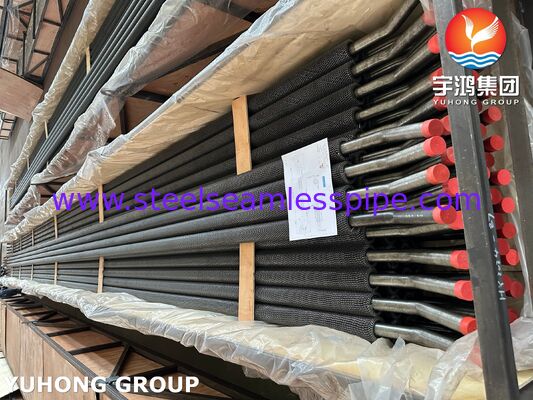
| Packaging Details: | Plywood case or Iron frame wooden case |
| Delivery Time: | 50-120 days |
| Supply Ability: | 5000 meters/day |
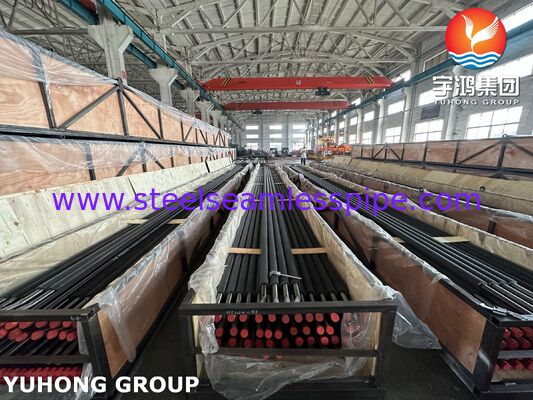
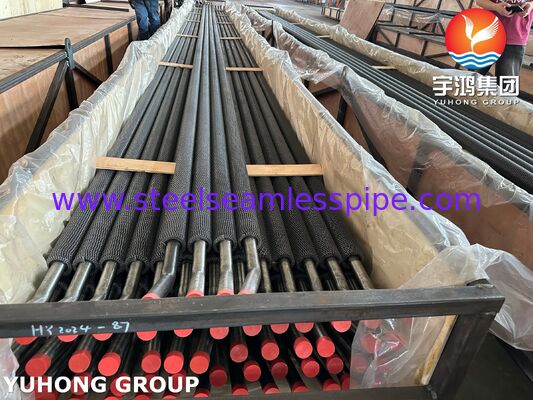
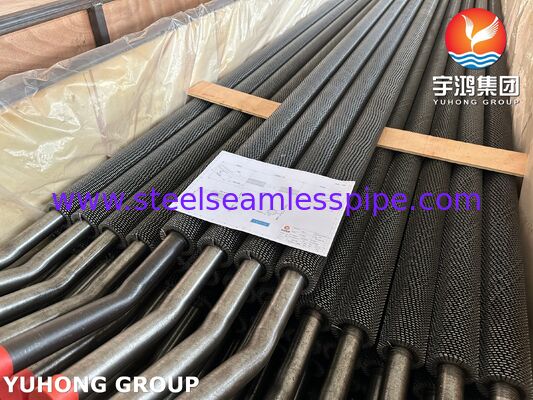
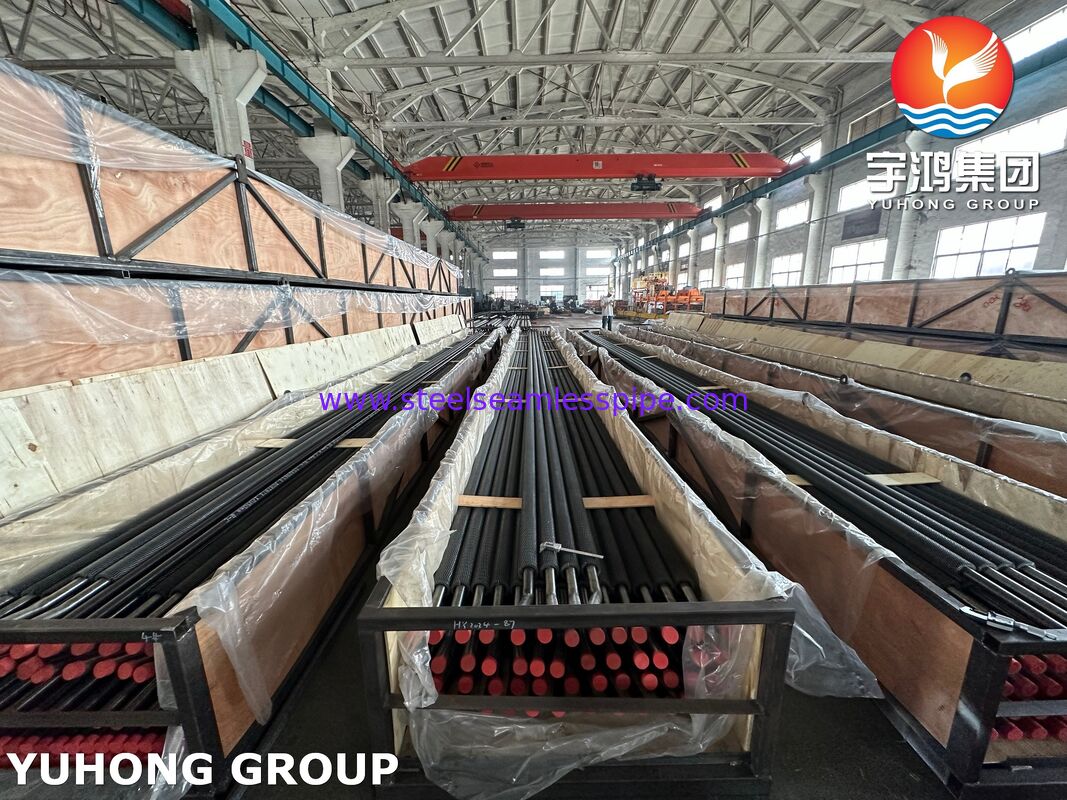
| Product: | Serrated Fin Tube | Material: | ASME SA213 T22 |
|---|---|---|---|
| Application: | Heat Exchanger | Package: | Plywood Case Or Iron Frame Wooden Case |
Serrated Finned Tubes for Heat Exchangers, manufactured with ASME SA213 T22 alloy steel tubes, are designed to improve heat-transfer efficiency in industrial thermal systems. Featuring segmented or notched fins, these tubes increase the effective heat-transfer surface area while promoting gas-side turbulence and reducing the insulating effect of boundary layers.
ASME SA213 T22 is a chromium-molybdenum alloy steel commonly selected for elevated-temperature service. Its combination of strength, thermal stability, and resistance to high-temperature oxidation makes it suitable for demanding applications in power generation, petrochemical processing, refinery equipment, waste-heat recovery, and industrial boilers.
Serrated finned tubes are particularly useful in gas-to-liquid heat exchangers where combustion gases or other process gases transfer heat to water, steam, or another working fluid. Their fin geometry can improve heat-transfer performance while helping engineers balance thermal efficiency, gas-side pressure drop, and equipment size.
We manufacture serrated finned tubes to project-specific drawings and agreed technical requirements, with base-tube dimensions, fin geometry, materials, fabrication methods, and inspection criteria selected according to the applicable design and purchase specifications.
High heat-transfer surface area: Segmented fins provide additional surface area for gas-side heat exchange.
High-temperature capability: T22 alloy steel is suitable for many elevated-temperature pressure-component applications when properly designed and specified.
Improved gas-side heat transfer: Serrations interrupt the fin surface and promote local mixing of the flowing gas.
Industrial durability: The chromium-molybdenum base material offers useful high-temperature strength and oxidation resistance in appropriate service conditions.
Flexible engineering options: Fin height, thickness, pitch, segment pattern, tube diameter, and tube length can be customized.
Application-specific inspection: Material verification, dimensional checks, weld examination, and pressure testing can be specified according to the product design and applicable code.
Serrated finned tubes made with ASME SA213 T22 base tubes may be used in:
Heat exchangers: Gas-to-liquid heat-transfer equipment operating at elevated temperatures.
Boiler economizers: Equipment that recovers heat from flue gas to preheat boiler feedwater, subject to the design temperature and corrosion environment.
Waste-heat recovery systems: Industrial units that recover useful energy from hot exhaust or process gases.
Power-generation equipment: Selected boiler and thermal-system components requiring chromium-molybdenum alloy steel.
Petrochemical and refinery facilities: Process heaters and heat-recovery equipment designed for appropriate T22 service conditions.
Industrial steam systems: Heat-transfer equipment operating within the pressure, temperature, and material limits established by the engineering design.
The final material selection must account for operating temperature, pressure, gas composition, corrosion mechanisms, thermal cycling, and the governing construction code.
| Item | Typical specification |
|---|---|
| Product name | Serrated Finned Tubes for Heat Exchangers |
| Base-tube material | ASME SA213 T22 |
| Material designation | 2.25Cr-1Mo alloy steel, commonly designated T22 |
| Product type | Serrated / segmented finned tube |
| Base-tube manufacturing | Seamless alloy-steel tube to the applicable specification |
| Fin manufacturing | Serrated strip fin, attached by the agreed welding process |
| Typical base-tube outside diameter | Approximately 19.05–76.2 mm |
| Typical base-tube wall thickness | Approximately 2.0–8.0 mm |
| Typical tube length | Approximately 1,000–18,000 mm |
| Typical fin height | Approximately 10–25 mm |
| Typical fin thickness | Approximately 0.8–2.5 mm |
| Typical fin pitch | Approximately 2.5–10 mm |
| Fin configuration | Straight or helical serrated strip, subject to design |
| Applicable standards | ASME SA213 for the base tube; applicable construction code and agreed fin-tube fabrication specification |
| Surface protection | As specified, such as temporary protective coating or suitable packaging |
| Documentation | Material test certificates, inspection records, and traceability documentation as agreed |
Important: The dimensional values above are indicative manufacturing ranges, not universal requirements established by ASME SA213. Actual availability depends on the finning process, tube dimensions, design conditions, and purchaser requirements. Fin geometry and attachment acceptance criteria should be confirmed in the purchase specification.
ASME SA213 T22 is a chromium-molybdenum alloy steel commonly associated with the UNS K21590 grade designation. The following table gives typical specification limits for the material. The applicable edition of the governing standard and the material test certificate must be used for final acceptance.
| Element | Typical specified range / limit, wt.% |
|---|---|
| Carbon (C) | 0.05–0.15 |
| Manganese (Mn) | 0.30–0.60 |
| Phosphorus (P) | 0.025 max. |
| Sulfur (S) | 0.025 max. |
| Silicon (Si) | 0.50 max. |
| Chromium (Cr) | 1.90–2.60 |
| Molybdenum (Mo) | 0.87–1.13 |
These alloying elements contribute to the material's elevated-temperature performance. Chromium improves oxidation resistance, while molybdenum supports high-temperature strength and resistance to softening. The actual heat analysis and product analysis requirements must comply with the ordered specification and edition.
The following are commonly specified minimum mechanical properties for T22 tube material. Confirm the applicable edition of ASME SA213 and the product's size-specific requirements before publication or procurement.
| Property | Typical requirement |
|---|---|
| Minimum tensile strength | 415 MPa |
| Minimum yield strength (0.2% offset) | 205 MPa |
| Minimum elongation in 2 in. (50.8 mm) | 30% longitudinal; transverse requirements may differ |
| Hardness | Subject to applicable specification requirements and product condition |
T22 is intended for suitable elevated-temperature service, but allowable stress decreases with temperature. Actual pressure and temperature limits must be determined from the governing design code rather than from room-temperature mechanical properties alone.
Our serrated finned tubes can be manufactured through a controlled sequence tailored to the agreed drawing and inspection plan.
Seamless ASME SA213 T22 tubes are selected to meet the specified outside diameter, wall thickness, length, material condition, and documentation requirements.
Tube identification, heat numbers, material certificates, and specified chemical or mechanical verification are checked before processing.
Fin strip material is selected according to the design requirements. The strip is formed into the specified profile and serrated to create the required segmented geometry.
The serrated fin strip is positioned around the base tube and attached using the agreed welding procedure and process parameters. Where required, welding procedure qualification and welder qualification records are maintained.
Finished tubes are checked for fin height, pitch, thickness, serration geometry, tube length, straightness, and other drawing-specific dimensions.
The product undergoes the specified inspection and documentation review before being protected and packed for transport.
Inspection requirements should be established in the purchase order, approved inspection and test plan (ITP), applicable construction code, and project specifications. Depending on the design, the following checks may be included.
Chemical composition analysis: Verification using the base-tube material test certificate and, where specified, laboratory analysis or positive material identification (PMI).
Tensile testing: Confirmation of tensile strength, yield strength, and elongation against the applicable material specification.
Hardness testing: Performed where required by the material specification, heat treatment requirements, or project ITP.
Dimensional inspection: Measurement of tube outside diameter, wall thickness, overall length, fin height, fin pitch, fin thickness, and serration dimensions.
Visual inspection: Examination for visible damage, surface defects, poor fin alignment, and workmanship issues.
Weld inspection: Visual examination of fin attachment welds and other specified welds; additional examination may be applied according to the agreed acceptance criteria.
Nondestructive examination (NDE): Methods such as liquid penetrant testing, magnetic particle testing, ultrasonic testing, or radiographic testing may be required for specified welds or product features, where technically appropriate.
Hydrostatic or alternative leak testing: Conducted on the base tube or completed assembly when required by the governing specification or purchase order. The test method and acceptance criteria depend on the design.
Traceability and documentation review: Verification of heat numbers, material certificates, inspection reports, and any required conformity documentation.
Not every test listed above is mandatory for every serrated finned tube. Testing must be selected according to the base-tube specification, attachment design, applicable code, and contractual requirements.
Quality assurance for serrated finned tubes should cover material traceability, dimensional conformity, attachment integrity, and documentation. We can align the inspection plan with customer drawings and project requirements, with agreed records such as:
Material Test Certificates (MTCs)
Chemical composition and mechanical test results
Dimensional inspection reports
Weld inspection or NDE reports, when applicable
Pressure or leak-test records, when specified
Product identification and packing lists
Specific certification, third-party inspection, and documentation requirements should be agreed before order confirmation.
Selecting a suitable finned tube involves more than increasing surface area. Base-tube material, fin geometry, attachment quality, gas-side pressure drop, fouling potential, and operating conditions all influence long-term performance.
T22 offers a useful combination of chromium-molybdenum alloying and elevated-temperature strength for properly engineered heat-transfer applications. When combined with a suitable serrated fin design, it can support compact heat-exchanger arrangements and effective waste-heat recovery.
For reliable selection, provide the operating temperature and pressure, process-gas composition, required heat duty, tube dimensions, fin material, and applicable design code. These details allow the product to be matched to the actual service conditions rather than selected solely by material grade.
Contact us with your technical requirements for serrated finned tubes for heat exchangers made from ASME SA213 T22. Please include:
Base-tube outside diameter and wall thickness
Tube length and quantity
Fin material, height, thickness, pitch, and serration pattern
Fin attachment requirements
Design pressure and operating temperature
Applicable code, inspection plan, and documentation requirements
Contact Person: Nacy
Tel: +8619965117039
Fax: 0086-574-88017980